
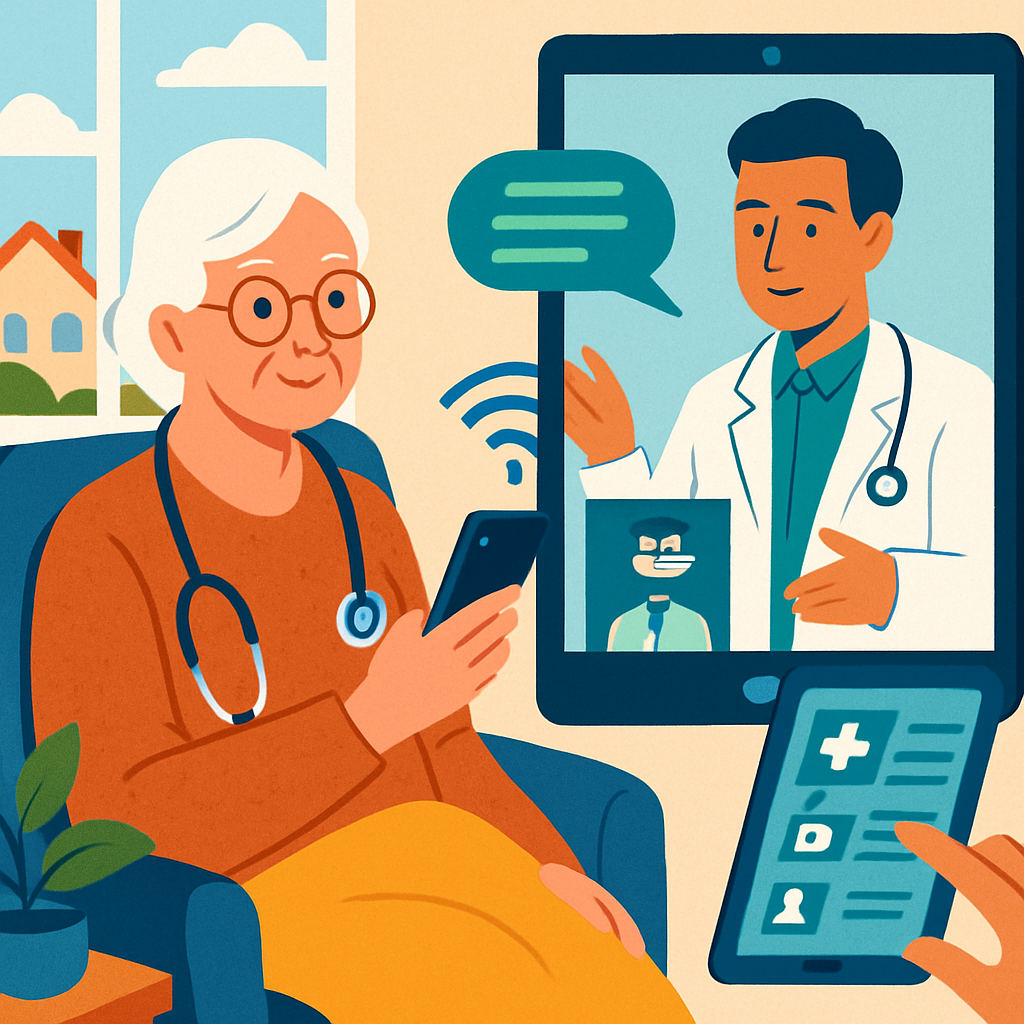
Health care at home is more than occasional visits; it means getting skilled nursing, therapy, monitoring, and telehealth wrapped into a coordinated plan so recovery and ongoing care happen safely in your own home. This article explains which medical and supportive services can be delivered at home, how to use telehealth alongside in-person visits, and step-by-step actions families and clinicians should take to coordinate care and reduce readmission risk. It includes practical Ontario-focused examples and funding pointers, showing how Cedar Home Health Care helps with assessments, Passport navigation, and creating shared care plans.
1. What medical services can be delivered at home and when to choose them
Straight to the point: most clinical tasks that do not require an operating room can be done at home when the clinical need, the home environment, and a clear care plan align. Choose home care for hands-on nursing, short courses of IV therapy, wound and ostomy management, rehabilitation, palliative symptom control, and ongoing chronic disease monitoring – but expect tradeoffs in acuity, equipment needs, and start time.
Common services and who provides them at Cedar
- Skilled nursing (RN / RPN): wound dressing changes, IV antibiotics, catheter management, and clinical assessments. Typical frequency: daily to weekly depending on acuity. Nurses also perform medication reconciliation and communicate changes to prescribers.
- Home medical care and IV therapy: delivered by RNs trained in infusion and central line care for time-limited needs. Not every infusion is appropriate at home – higher risk infusions may stay in hospital.
- Personal support workers (PSW): assistance with activities of daily living, safe transfers, and personal care. Usually scheduled multiple times per week or daily when needed for recovery or frailty support.
- In-home therapy services: physiotherapy and occupational therapy for mobility, fall prevention, and home setup. Sessions are usually 1 to 3 times per week early after surgery and taper as function returns.
- Palliative care at home: symptom control, psychosocial support, and caregiver coaching. Visits combine RN assessments, PSW support, and coordinated telehealth check-ins with palliative specialists.
- Remote patient monitoring and telehealth services at home: pulse oximetry, BP, weight tracking and virtual visits for follow up or triage. These are best used as an adjunct to scheduled in-person visits, not a replacement for hands-on care.
- Private duty nursing and pediatric home health care: one-to-one nursing for complex needs, including ventilator care or pediatric therapies; frequency depends on clinical plan and funding source.
Practical tradeoff: home care reduces hospital stays and improves comfort, but it shifts responsibilities for monitoring and contingency planning to teams and families. If there is no reliable caregiver or the home requires major modification, some services become unsafe to deliver at home. Also, public funding pathways can delay start times; private pay or Passport-assisted starts are faster.
Concrete example: a patient after knee replacement received RN wound checks on postoperative days 1 to 3, daily PSW visits for dressing and ADL support, and a telehealth orthopedics follow up via the Ontario Telemedicine Network. The result: shorter hospital stay and a scheduled in-home physiotherapy plan linked to the orthopedist through a shared care note.
2. How telehealth complements in person home visits
Direct point: Telehealth is most useful when it is deliberately scheduled to fill gaps between hands-on visits, not treated as a substitute for tasks that require physical contact.
Modes where telehealth adds real value
- Planned clinical follow up: short virtual reviews after an RN visit to confirm symptom trends, medication tolerance, or lab results.
- Rapid triage: a video check when a caregiver reports new shortness of breath or fever so the nurse or clinician decides whether an urgent in-person visit or ED transfer is needed.
- Caregiver training and observation: teach wound dressing technique or safe transfers on video and then verify competency in a later in-person visit.
- Bridging monitoring: intermittent remote metrics (weight, SpO2, BP) used with clear thresholds to trigger an in-person assessment.
Tradeoff to plan for: remote checks reduce travel and speed escalation, but they increase dependence on device accuracy, connectivity, and caregiver reporting. Expect false alarms and missing context. Teams that do not set thresholds and ownership end up with wasted visits or delayed escalation.
Preparing for a telehealth visit – practical steps
- Gather device information: have the device type and model available for the clinician to confirm validity of readings.
- Record baseline numbers: write down last in-person vitals before the call so the clinician can compare trends.
- Position camera and lighting: place the tablet or phone so the clinician can see the area of concern without the caregiver holding the device.
- Share the agenda: tell the clinician what you want to cover in the first 2 minutes so the visit stays focused.
- Confirm escalation plan: before ending the call, confirm who will follow up, within what timeframe, and when to call 911.
Troubleshooting checklist: test audio/video before the appointment, switch to a phone call if video fails, keep device chargers handy, and document the visit summary in your shared care notes.
| Platform | Best use | Cost to patient | Clinic integration / notes |
|---|---|---|---|
| Ontario Telemedicine Network | Specialist and hospital-linked virtual consults | Often covered via clinic or hospital | Strong clinic and hospital integration in Ontario |
| Maple | On-demand primary care and virtual urgent visits | Pay per visit or subscription | Good for quick clinician access but limited direct integration with home nursing records |
| Doxy.me | Simple, low-friction video visits | Free tier; paid for advanced features | Easy for patients with low digital literacy; clinicians export visit notes manually |
| MyChart / clinic portals | Secure scheduled follow ups tied to medical record | Usually free to patient through health system | Best when the clinic supports two-way messaging and uploads visit notes |
Concrete example: A person with congestive heart failure had RN visits twice weekly for medication titration and wound checks. Between those visits the patient recorded daily weight and BP at home; the nurse reviewed trends in a short video call and escalated to the cardiology team via OTN when persistent weight gain exceeded the agreed threshold. The hybrid approach avoided an unnecessary ED visit and triggered a timely diuretic adjustment.
3. Practical framework for coordinating care with your clinician
Clear mandate: coordinating health care at home requires a reproducible handoff process that reduces ambiguity about who monitors what, when to escalate, and where documentation lives. Use a five step protocol so clinicians, Cedar staff, and family caregivers share the same playbook rather than exchanging ad hoc updates.
Five step coordination protocol
Step 1 – Initial assessment and shared goals: conduct a joint visit or virtual intake with an RN, the primary clinician or case manager, and the family caregiver. Produce a 1 page problem list with 2 to 3 measurable goals for the next 7 to 30 days, for example: pain control to < 3/10 at rest, weight stable within 1 kg, wound closed without drainage.
Step 2 – Collaborative written care plan: convert the goals into a single shared care plan stored where the clinician will actually look for it, such as the clinic portal or a documented handover note sent to the primary clinician and the pharmacy. Do not rely only on verbal updates.
Step 3 – Medication reconciliation and communication protocol: complete reconciliation at the first home visit and after each discharge. Define how medication changes are authorized, documented, and communicated to the pharmacy and prescriber, and list who signs off for urgent adjustments.
Step 4 – Scheduling and documentation standards: set predictable visit cadence and a telehealth check schedule, and require brief visit summaries with the same headings: status, vitals, new problems, actions taken, next steps. Consistency saves clinician time and reduces missed issues.
Step 5 – Escalation and emergency plan: agree explicit thresholds that trigger a nurse visit, clinician call, or 911. Write these thresholds into the care plan and make sure the family has printed instructions and direct contact numbers.
Roles, tradeoffs, and limits
Who does what: Cedar RNs handle hands on clinical tasks, objective assessments, and medication reconciliation. Family caregivers monitor daily symptoms, basic vitals, and report changes. Primary clinicians retain responsibility for prescribing and major medical decisions. This division works when each party understands boundaries; it fails if caregivers are left without clear escalation instructions or if clinicians expect continuous informal updates instead of structured notes.
Practical limitation: too many low threshold triggers create unnecessary urgent visits and family anxiety. Too few triggers delay care. The practitioner judgement that determines thresholds should factor in caregiver capacity, device reliability, and proximity to emergency services.
| Field | Example entry |
|---|---|
| Primary concerns | Postoperative knee wound monitoring; overnight pain control |
| Current medications | List medication, dose, time; note recent changes |
| Allergies | Penicillin – rash |
| Visit frequency | RN: daily POD 1-3 then every 48 hours; PSW: twice daily for ADLs |
| Telehealth schedule | Virtual check with surgeon via OTN at POD 7; RN video twice weekly |
| Escalation thresholds | Temp > 38.0 C, SpO2 < 90, wound drainage increase |
| Advanced directives | DNR present; substitute decision maker: name and contact |
| Contacts | Primary clinician name and number; Cedar on call |
- Printable checklist: Bring this to the first clinician call
- Have the care plan and medication list available
- Record baseline vitals and device models
- Confirm who will authorize medication changes
- Make sure emergency numbers are printed and visible
Concrete example: A discharged patient with heart failure used the protocol above. The Cedar RN completed medication reconciliation at the first visit and uploaded a two line problem list to the clinic portal. When daily weights rose 2 kg in 48 hours, the nurse sent a concise message to the cardiology team: Weight +2 kg over 48h, BP 110/72, HR 88, increased dyspnea at exertion; request diuretic review which resulted in a same day phone order and avoided ED transport.
4. Medication management and safety at home
Straight fact: medication mistakes and poor storage are the most common preventable hazards when clinical care moves into the home. Managing medicines at home is not just about reminders — it requires reconciliation, storage, monitoring, and clear lines of communication between the nurse, the prescriber, the pharmacy, and the family.
Practical steps caregivers should take before the first home medication review
- Assemble a complete medication inventory: collect all prescription bottles, blister packs, over-the-counter medicines, supplements, and topical products; include strength, dose, and time.
- Photograph labels: take clear photos of drug labels and recent discharge prescriptions to share quickly with the nurse or prescriber.
- Note recent changes: write down medicines started, stopped, or dose-changed in hospital and the reason for the change.
- Identify pharmacy and prescribers: list the primary pharmacy, any specialty pharmacy, and the clinicians who prescribe each medicine.
- Prepare storage info: note where medicines are kept, whether there are pets, children, or temperature issues (bathroom heat/humidity).
Nurse actions and what to expect at the visit: a competent home nurse will verify the list against bottles, reconcile duplicates, assess for dangerous interactions (for example, NSAIDs with heart failure), and set up an adherence system. The nurse should also contact the pharmacy or prescriber when a change is needed and document the update in the shared care plan.
Tradeoffs to consider: simple pill organisers work for fixed daily regimens but fail for PRN drugs, liquid medications, or drugs needing monitoring like warfarin. Automated dispensers reduce missed doses but add new risks: mechanical failure, programming errors, and cost. For complex or high-risk meds, prioritize nurse oversight and pharmacy blistering over ad hoc reminders.
Concrete example: an older adult discharged after surgery was started on oxycodone, a loop diuretic, and an anticoagulant. At the first home visit the nurse discovered an over-the-counter NSAID the patient had been taking for chronic knee pain. The nurse contacted the prescriber, who stopped the NSAID and adjusted the pain plan; a pharmacy-prepared blister pack was arranged for the next week and the family received instruction on safe opioid storage and disposal.
What to say when you contact a clinician about a medication concern
Use this short script: Patient name, DOB, recent discharge on [meds]. Concern: started OTC [name] after discharge; increased swelling and shortness of breath noted. Current vitals: BP / , HR , SpO2 . Request: advise stop OTC and confirm plan for pain control or lab monitoring. Send this via the clinic portal or read it verbatim on a phone call to speed decision-making.
Where Cedar can help and next step: Cedar nurses perform the reconciliation, liaise with pharmacies for blistering or automated dispensers, and document changes into the shared care plan — ask about these services during your intake at Cedar Home Health Care services or check public guidance at Ontario Home Care Services.
5. Funding, eligibility, and how Cedar Home Health Care helps navigate Passport and other resources
Reality check: funding complexity — not clinical suitability — is the single biggest cause of delayed home starts. Many families assume public home care or Passport will pay for any nursing or support; that mismatch in expectations is what creates gaps and unsafe transitions.
Who the main programs serve and their practical limits
Public Home Care (Home and Community Care Support Services): provides clinically assessed nursing, therapy, and personal support for medically necessary needs. It prioritizes short-term and high-acuity needs after hospital discharge; coverage and start times vary by region.
Passport funding: designed for adults with developmental disabilities to support community participation, respite, and caregiver relief. Passport can fund personal support and community programs but is not a substitute for medically necessary nursing in many cases. See Passport funding for eligibility rules.
Private pay and third-party insurers: fastest route when timing is critical. The tradeoff is cost—private care buys speed and choice but shifts financial burden to the family.
Key practical tradeoff: if the need is time-sensitive (postoperative nursing, IV therapy), rely on private-start or Cedar-bridged care while eligibility or Passport approvals are pursued. If the need is longer term and fits Passport criteria, expect administrative lead time but lower ongoing cost if approved.
Concrete steps families should take now
- Gather these documents: recent physician or hospital discharge summary, developmental services diagnosis or assessment (if applicable), identification, proof of address, current care plan, and any existing funding case numbers.
- Request a supporting medical letter: ask the discharging clinician to state the specific services required at home and clinical rationale — this accelerates both Passport and public home care reviews.
- Decide on interim coverage: determine whether you will use private-pay for the first 48–72 hours to avoid a care gap while funding is confirmed.
How Cedar helps in practice: we run an eligibility pre-check, prepare the necessary medical summaries and budget justifications, submit documentation to the caseworker if requested, and provide private-start nursing or PSW visits while approvals are pending. Cedar also coaches families on family-managed care processes and can produce receipts and formal assessments that Passport reviewers expect.
Real-world example: A family sought ongoing PSW support for an adult with developmental disability. Cedar completed an eligibility checklist the same day, drafted a physician support letter within 48 hours, started private-pay PSW coverage within 24 hours, and submitted the Passport application with supporting documentation that reduced back-and-forth with the caseworker. The family avoided a break in service while the Passport decision (which took several weeks) was processed.
If you need a fast next step, prepare the discharge summary and a short clinician letter and contact Cedar through our assessments page at Cedar Home Health Care services. For program rules and formal criteria consult Home Care Services and Passport funding.
6. Palliative care and symptom management at home
Direct point: high quality palliative care at home is active clinical management, not only comfort measures. Effective home palliative care combines scheduled nursing assessments, agreed PRN medication plans, psychosocial support, and clear escalation rules so families are prepared when symptoms change.
Clinical practices that matter: nurses perform focused symptom assessments (pain, breathlessness, nausea, delirium), verify and administer PRN medications according to standing orders, and document response timelines. Coordination with a palliative consultant or the primary clinician ensures medication adjustments are authorized promptly and that controlled drug stewardship and safe storage are followed.
Practical tradeoff: staying at home usually improves comfort and continuity but shifts responsibility for early detection to family caregivers and visiting staff. If a patient needs continuous nursing for unstable symptoms, a home plan can still work but requires private duty nursing or short inpatient hospice stays for symptom control; assume extra cost and logistics when 24 hour skilled coverage is likely.
Concrete example: an older adult with progressive cancer received twice weekly RN visits for pain titration, daily PSW visits for help with meals and mobility, and weekly telehealth family meetings with a palliative consultant via OTN. When intermittent severe breathlessness occurred, the RN used the documented breakthrough plan to administer a prescribed short acting opioid and escalated to the consultant by secure message, changing the home plan to include additional PRN medications and an anticipatory prescription for the weekend.
What caregivers should watch for and document
Record simple, repeatable observations so clinicians can act fast. Note time stamped symptom onset, numeric pain score if possible, what reliever was used and the response time, oral intake changes, and any new confusion or respiratory change. Avoid vague reports such as not feeling well without at least one concrete sign or number.
- Urgent signs: increased difficulty breathing at rest, new or worsening confusion that prevents safe swallowing, uncontrolled pain despite two documented PRN doses, sudden heavy bleeding
Judgment call most families miss: do not wait for perfect information before escalating. In practice, a clear brief message to the clinician with times, simple vitals, and what was tried cuts days off problem solving. Teams that expect long narrative reports instead of concise, actionable updates are slower and less reliable.
Cedar nurses can help create and implement that anticipatory plan, provide caregiver training on safe medication handling, and set up telehealth check ins with palliative consultants. For provincial guidance consult Home Care Services.
7. Safety, infection prevention, and home environment modifications
Immediate reality: safety lapses and uncontrolled infection risk are the two things that most quickly make health care at home fail. A clean technique for wound care, predictable pathways for sharps and waste, and a simple, prioritized plan for reducing fall hazards are non negotiable before a nurse or therapist begins clinical work in the house.
For infection prevention focus on three practical layers: source control, barrier technique, and environmental cleaning. Source control means isolating symptomatic household members and using masks for anyone with cough. Barrier technique is not theatre-level sterility but it does require hand hygiene, glove use for dressing changes, and single-use consumables for wound care. Environmental cleaning means attention to high-touch surfaces, laundering at hot settings when indicated, and removing clutter that traps dust and contaminants.
Homes are not hospitals. Expect limits. You cannot achieve airborne isolation at home; certain infections (for example, active untreated pulmonary tuberculosis or complex multi‑resistant outbreaks) will require public health advice or placement in a controlled facility. Don’t assume home care is appropriate for every infectious situation—ask Cedar or your clinician for a risk assessment if contagion is a concern.
Prioritized safety checklist (by urgency)
- Immediate (before first visit): clear 1.2 m pathways from bedroom to bathroom, remove loose rugs, ensure working night-lighting on route to toilet.
- Within 24–72 hours: install temporary grab bars or adhesive rails at toilet and tub, secure non-slip mats, place a bedside commode if mobility is limited.
- Within 1 week: arrange hospital bed rental or bed-height adjustment if transfers are unsafe; book an occupational therapy home assessment for personalized recommendations.
Sharps and medical waste need a firm plan. Use a rigid, labelled sharps container from the pharmacy and arrange municipal or provider pickup. For controlled medicines, insist on locked storage and get a documented disposal plan from the nurse. Pets should be excluded from care areas during procedures.
Equipment tradeoffs are real. Renting is faster and cheaper for short-term needs (postoperative bed, hospital mattress, commode). Buying can be sensible for long-term mobility aids but comes with storage, maintenance, and fitting costs. Bedrails reduce falls in some cases but increase entrapment risk—an OT assessment should precede permanent installations. Cedar can help source rentals and arrange OT referrals via our intake at Cedar Home Health Care services.
Practical judgment most families miss: small, inexpensive fixes often prevent the majority of incidents. Replacing a loose lightbulb and clearing a pathway prevents more acute episodes than buying a lift the family cannot operate safely. Prioritize fixes that match caregiver capacity and the expected length of care.
Example use case: after a discharge for a leg wound an RN notices early increasing redness and mild fever. The nurse instructs strict hand hygiene for the caregiver, switches to sterile dressing technique, arranges same‑day sharps and medical waste containers, and escalates to the surgeon via the shared care plan. A hospital bed was rented the next day to reduce repeated transfers, and a brief telehealth follow up via Ontario Telemedicine Network was scheduled to review wound progress.
Do this now: designate a single, uncluttered treatment area in the home and store wound supplies there in a clean, labelled container; make sure the caregiver knows where the sharps box and emergency phone numbers are kept.
8. Real world examples and next steps for families
Postoperative recovery at home: A 72-year-old after hip replacement went home the day after surgery with a structured plan: RN visits POD 1–4 for wound checks and medication reconciliation, PSW visits twice daily for ADL support, scheduled physiotherapy three times the first week, and a virtual follow up with the surgeon via Ontario Telemedicine Network at POD 7. Practical tradeoff: the team deliberately limited remote monitoring to simple vitals and used nurse triage to avoid false alarms. Because a single nurse uploaded clear wound pictures and a one-line clinical note to the clinic portal, the surgeon adjusted analgesia without a re-admission.
Complex chronic disease managed at home: A person with recurrent heart failure had a hybrid plan: daily weight and BP measured on validated devices, RPN medication checks twice weekly, and cardiology check-ins by OTN when trends exceeded agreed thresholds. Limitation to expect: home device variability and inconsistent measurement technique create noise — the nurse filtered trends before escalating. The result was fewer ED visits, but the family accepted a modest increase in in-home visits to preserve safety.
Palliative care integrated with family supports: An older adult with advanced COPD received a written anticipatory symptom plan, twice-weekly RN symptom assessments, daily PSW companionship, and scheduled telehealth family meetings to review PRN plans. When night-time breathlessness escalated, a private duty nurse provided overnight coverage for three nights while the palliative consultant prescribed an adjusted PRN regimen. Judgment call families often miss: continuous unstable symptoms may require short hospice admission for stabilization rather than stretching 24-hour home nursing indefinitely.
Next steps checklist for Ontario families
- Start the paperwork: request the hospital discharge summary and a concise clinician note naming the exact services needed at home (nursing, PSW, IV therapy).
- Pick one coordinator: designate a single family contact who will hold appointments, documentation, and the escalation phone list.
- Prepare documentation pack: ID, health card, recent med list (photos of labels), discharge summary, and any developmental services documents for Passport.
- Decide interim coverage: choose private-start visits for the first 48–72 hours if timing is critical and you need immediate hands-on care.
- Set tech basics: confirm a tablet or phone for OTN visits, note device models for the nurse, and charge devices before virtual appointments.
- Ask specific funding questions: request the caseworker’s funding code or bucket name and estimated processing timeline to avoid back-and-forth rejections.
- Agree escalation thresholds: get three measurable triggers (for example, temp, SpO2, weight gain) and write who to call for each trigger.
- Request a one-page anticipatory plan: ask for PRN names, dosing windows, and the clinician that can authorize weekend prescriptions.
Concrete action: Bring the documentation pack to the first home visit and insist the nurse uploads a one-page shared care plan to the clinic portal before the end of that day.