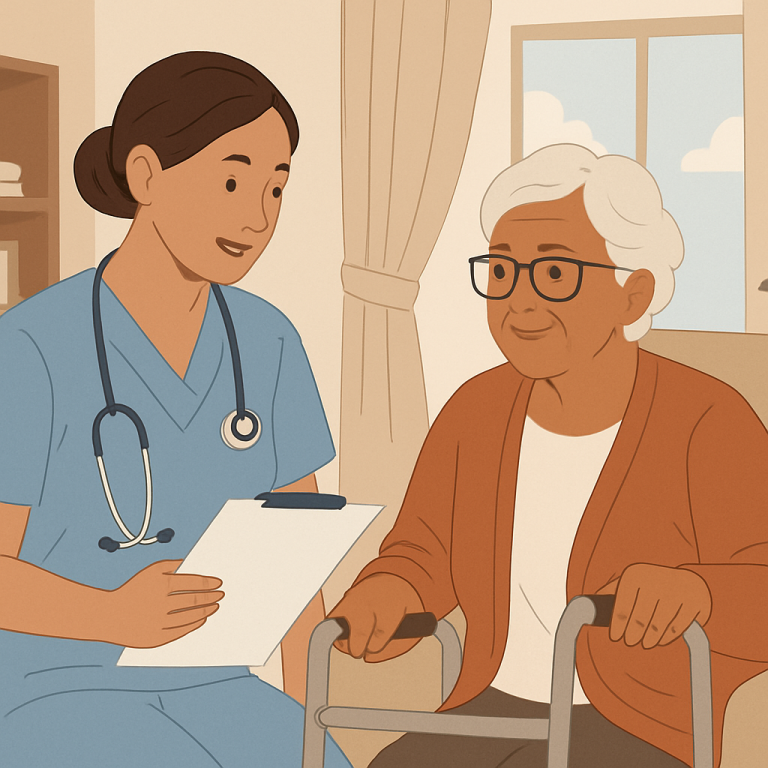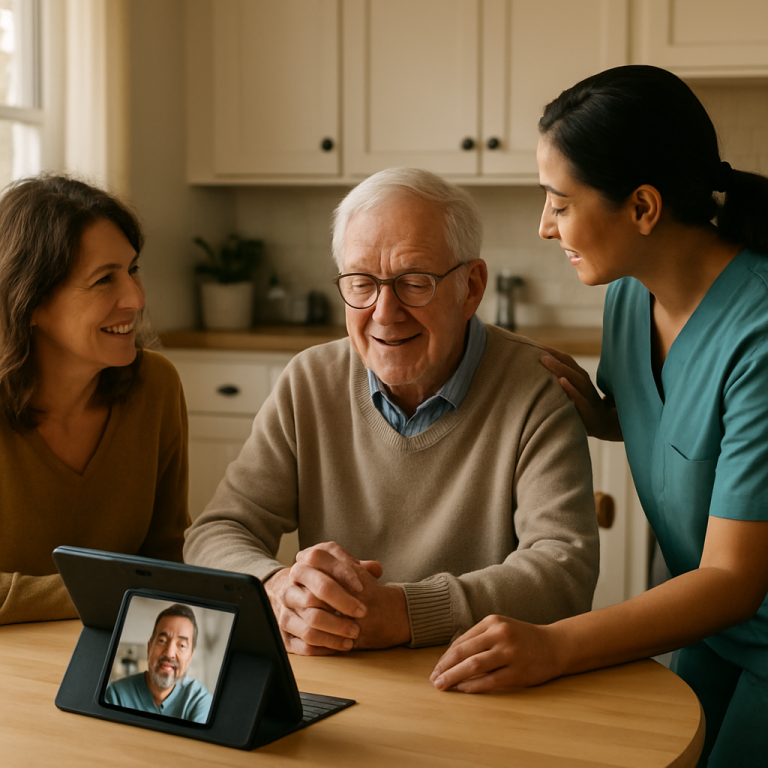

Home health nursing brings skilled clinical care into the places people actually live, offering a practical path for post-surgical recovery and long-term chronic care management. This article explains what skilled nursing at home looks like—concrete services such as wound and IV care, medication management, and rehab coordination—how assessments and care plans work, and the safety signals families must watch for. You will also get clear next steps to evaluate providers and start services with Cedar Home Health Care.
What home health nursing is and when it is used
Direct definition: Home health nursing is skilled clinical care delivered in the home by licensed nurses to manage medical problems that require professional monitoring, procedures, or clinical decision making. This is not the same as routine personal support; nurses perform assessments, clinical procedures, medication reconciliation, and communicate adjustments back to physicians.
Who provides care and how scopes differ
Team composition: Registered Nurses (RN) and Registered Practical Nurses (RPN) provide clinical tasks such as IV therapy, wound assessment, and insulin titration. Personal Support Workers (PSW) and trained caregivers cover non clinical supports like ADL assistance and companionship. Clear role boundaries matter because handing clinical tasks to unlicensed staff increases risk and shifts liability.
- Common uses: post surgical recovery with skilled wound and pain management
- Chronic illness management: home based monitoring and medication titration for congestive heart failure, COPD, and diabetes
- Advanced treatments: IV antibiotic administration and peripheral line care when ordered by a physician
- Palliative and symptom control: comfort focused nursing and coordination with hospice teams
Concrete example: After a hip replacement a patient received daily RN visits for the first 72 hours for wound checks, medication reconciliation, and opioid risk monitoring. The RN coordinated a home physiotherapy referral and then tapered visits to three times per week as mobility improved. This avoided a larger institutional stay and kept follow up tightly linked to the surgeon via structured notes.
Practical trade off: Skilled nursing at home reduces unnecessary hospital time but depends on the home environment and available caregiver support. If a home lacks basic safety adaptations, or if the family cannot assist with simple tasks, clinical visits alone will not replace a short inpatient stay. Families should evaluate physical barriers, caregiver availability, and the complexity of clinical needs before choosing home care.
Common misunderstanding: Many assume home health nursing is interchangeable with private duty or companion care. In practice, nursing requires physician orders and clinical oversight and is best when integrated with primary care or hospital discharge teams. When that integration is missing, outcomes degrade even with frequent visits.
Concrete skilled nursing services explained with clinical examples
Practical point: Skilled home health nursing is a set of precise clinical tasks delivered under protocol and physician direction, not general supervision. Families should expect nurses to follow documented procedures, record objective measures, and escalate when data cross defined thresholds.
Service snapshots with clinical examples
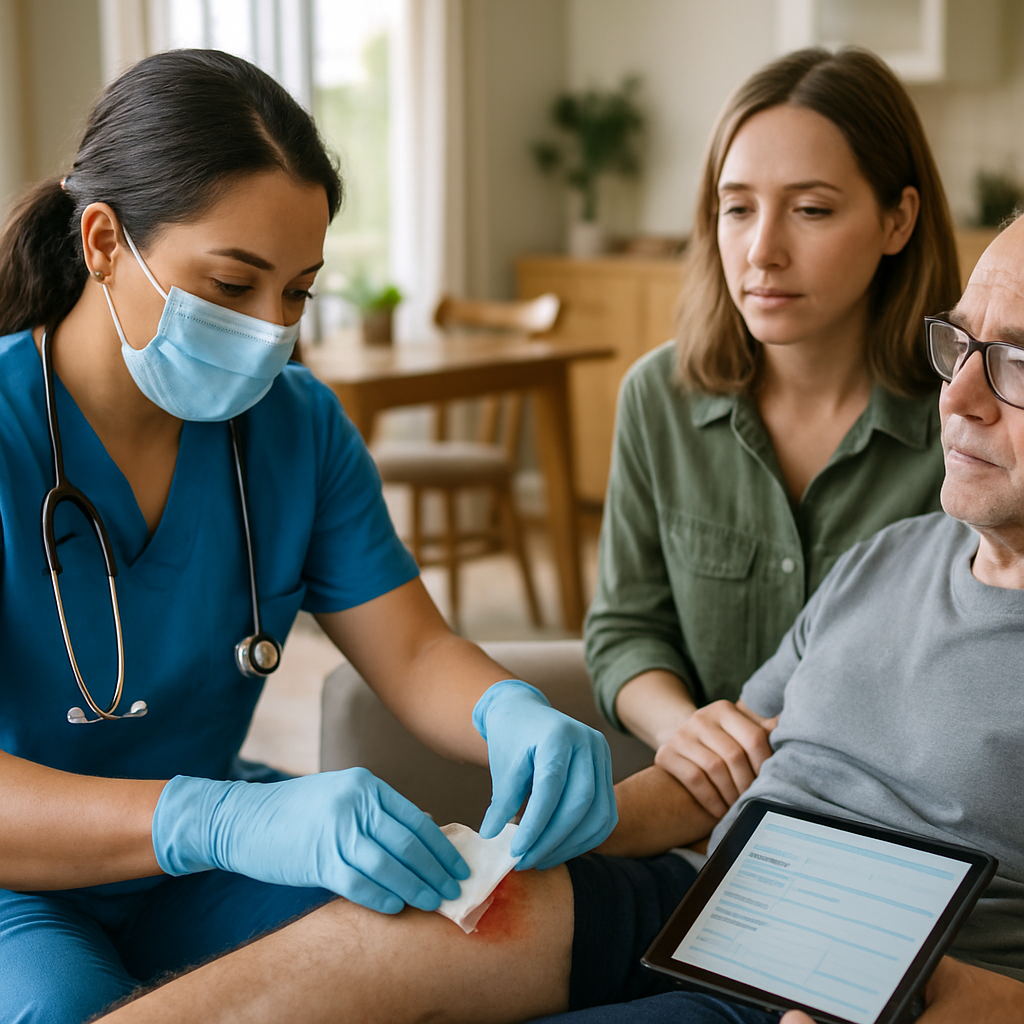
Wound care at home: Nurses perform staged wound assessments, select dressings based on exudate and tissue type, and perform device-based therapies such as negative pressure wound therapy when appropriate. Limitation: negative pressure devices require a clean power source, caregiver understanding of alarm handling, and reliable wound-photo documentation to track healing. Concrete example: a post-surgical patient with a dehisced incision received RN visits three times a week for dressing changes, serial measurements, photography for the surgeon, and weekly outcome notes sent through Cedar to the surgical team.
Medication management and injectable therapies: Expect medication reconciliation, timed administration, subcutaneous or intramuscular injections, and insulin titration protocols linked to glucose logs. Trade-off: home titration reduces clinic visits but depends on rapid feedback loops with prescribers; without that, dose changes can lag. For guidance on post-operative medication support see post surgery care.
Intravenous therapy and line maintenance: Trained nurses can start and manage peripheral lines or care for PICC lines, administer IV antibiotics per order, and monitor for phlebitis or line infection. Consideration: infusion at home is feasible but requires clean workspace, safe disposal of sharps, and contingency plans for pump failure or allergic reaction. Concrete example: an orthopaedic infection treated with once-daily IV antibiotics was managed at home; the RN performed daily line checks, documented infusion tolerance, and coordinated lab draws with the primary team.
Chronic disease monitoring and titration: Nurses do objective surveillance for heart failure (daily weights, edema, BP), COPD (O2 saturation and symptom scoring), and diabetes (glucose trends). Judgment: these interventions change outcomes only when measurement ties to an actionable plan and timely prescriber communication; the nurse is the bridge, not a replacement for the treating physician. See CIHI resources on home care for system-level context: CIHI Home Care.
Rehab and coordination role: Skilled nursing identifies mobility or swallowing risks, initiates referrals to physiotherapy/occupational therapy/speech, and reinforces therapy goals during visits. Real-world benefit: when nurses coordinate visits and report objective progress, therapy sessions target realistic ADL gains instead of repeating basic safety checks.
Next consideration: If you are planning home health nursing, ask prospective providers for specific protocol examples and recent case scenarios similar to your situation so you can judge operational readiness before services begin.
How Cedar Home Health Care delivers skilled nursing at home
Direct delivery model: Cedar organizes skilled home health nursing around clinical pathways rather than ad hoc visits. Registered Nurses (RN) and Registered Practical Nurses (RPN) carry clinical responsibility for assessments, procedures, and medication decisions; Personal Support Workers (PSW) provide complementary nonclinical supports. The difference shows up in how care is planned, documented, and escalated—Cedar uses standing protocols, electronic charting, and scheduled physician handovers to keep clinical risk visible.
Care pathway and operational controls
Intake to steady state: After referral Cedar assigns a primary nurse, completes a focused clinical intake in the home, and builds an actionable care plan with explicit thresholds for escalation. Initial visits prioritize objective data collection (vital signs, wound measurements, medication reconciliation) so subsequent visits follow a predictable checklist tied to the plan. Families get a named contact and the nurse files structured notes that Cedar can send to the referring physician or hospital team.
- Operational pillars: Primary nurse assignment for continuity
- Decision thresholds: Written triggers for physician contact or emergency transfer
- Same-day response: On-call nursing for urgent changes between scheduled visits
- Integrated documentation: Secure electronic notes shared with clinicians and family with consent
Practical trade-off: Continuity of the same nurse improves safety and reduces errors, but exact-match staffing can slow very rapid starts. Cedar balances that by pairing a primary nurse with an on-call clinician so urgent post-discharge needs can be met while preserving handover consistency. Be aware that some advanced in-home treatments require suitable physical conditions (clean workspace, power for pumps, safe sharps disposal), and no provider can fully compensate for a home that lacks those basics.
Concrete example: A 68-year-old with osteomyelitis was discharged to Cedar for daily IV antibiotics and wound dressing changes. Cedar scheduled an RN for daily infusions, coordinated community lab draws, trained a PSW to assist with dressing changes between RN visits, and routed weekly progress notes to the infectious disease clinic. The combination of nursing oversight, scheduled labs, and clear escalation rules kept the patient at home through the full 4-week course.
Next step: To review specific service readiness or start an urgent post-discharge plan, see Cedar Home Health Care services and reach intake via the contact page. For system context on home care outcomes, consult CIHI Home Care.
Intake assessment care planning and what to expect during visits
What happens at intake: The intake is not a formality — it is the single moment when clinical risk, home context, and family capacity are translated into a practical care plan that will guide every visit. Expect a licensed nurse to verify physician orders, reconcile medications, inspect wounds or lines, evaluate mobility and cognition, and record home-safety issues before any routine visits begin.
The intake visit, step by step
- Referral & paperwork: Nurse confirms referral source (hospital, physician, or self-referral), collects consent, and requests the discharge summary or clinic notes.
- Clinical verification: The nurse checks written orders, reviews current medications and allergies, and documents any devices such as PICC lines, drains, or ostomies.
- Focused assessment: Objective measures are taken — vitals, pain score, wound measurements, mobility screen, oxygen saturation if relevant — and a quick cognitive/social screen is done to identify caregiver needs.
- Immediate interventions & teaching: Birthright tasks are handled immediately if needed (first dressing change, one-time injections, teaching a family member how to assist with ADLs), plus safety advice for the next 24–72 hours.
- Actionable care plan & communication: The nurse writes a short, time-bound plan with visit frequency, measurable goals, escalation thresholds, and who will receive progress notes (family, surgeon, GP).
Assessment focus areas: Nurses combine clinical checks with environmental pragmatism — wound/line integrity, medication accuracy, transfer safety, mobility aids, home clutter or stairs, refrigeration for meds, and caregiver availability. Limitation: a thorough assessment cannot magically fix an unsafe home; some equipment or minor home modifications are often required before higher-risk services can proceed safely.
Practical trade-off: Providers can start urgent visiting nurse services quickly, but rapid starts sometimes compress the initial assessment. If you anticipate complex nursing needs, ask for a longer first visit (60–90 minutes) rather than multiple brief visits that fragment teaching and handover.
Concrete example: A 74-year-old discharged after knee arthroplasty had an in-home intake within 24 hours. The RN completed medication reconciliation, performed the first wound dressing change, trained the spouse on dressing care and safe transfers, and scheduled physiotherapy. Because the nurse documented specific functional goals and sent the care note to the surgeon, subsequent visits focused on mobility progression rather than repeating basic checks.
Documentation and follow-up to expect: Visit notes should state objective findings, interventions performed, measurable goals, and explicit escalation triggers (for example, fever > 38 C, new drainage, or increasing shortness of breath). Ask the provider for the name of the primary nurse, how urgent concerns are handled after hours, and how notes are shared with your physician.
Clinical benefits safety outcomes and evidence summary
Quick claim: home health nursing changes outcomes by closing the gap between an early clinical signal and a timely intervention.** Nurses in the home surface problems that routine clinic visits miss and make targeted adjustments that prevent escalation.
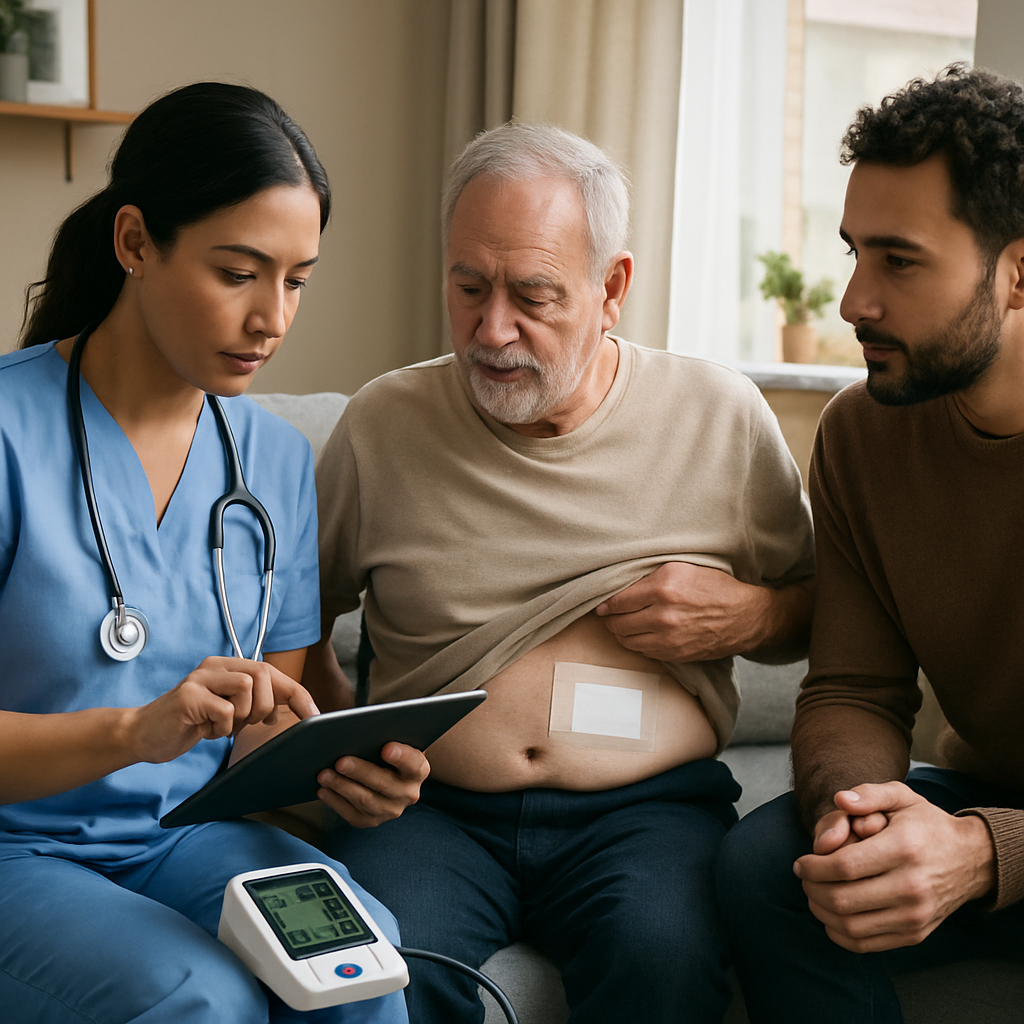
How benefit is delivered: skilled nurses do three things that matter most: precise measurement, structured interventions, and clear escalation.** Measurement means objective, repeatable checks such as vitals, wound measurements, glucose trends, or daily weights. Structured interventions are medication reconciliation, dressing selection, IV line care, and documented titration steps. Escalation is a written pathway so findings become rapid orders or ED transfer when necessary.
Practical limitation: the advantage depends on integration.** When nursing visits are isolated from the treating physician or hospital discharge plan, the same monitoring yields little benefit because recommendations fail to translate to timely orders. Continuity and rapid communication are the tradeoffs you must demand from a provider.
What the evidence and system guidance say
Evidence snapshot: system reviews and Canadian home care guidance link home-based skilled nursing to fewer avoidable readmissions, better symptom control in palliative contexts, and safer transitions after surgery.** See summarized context from CIHI Home Care and provincial guidance at Ontario Home Care.
| Outcome metric | How nurses influence it | Real-world signal to track |
|---|---|---|
| Avoidable hospital return | Early detection and action on deterioration | Frequent documentation of worsening vitals or new infection signs |
| Medication safety | Reconciliation, timed administration, injectable competence | Fewer missed doses and documented medication changes |
| Wound healing | Appropriate dressing choice, serial measurement, infection surveillance | Consistent reduction in wound dimensions and clear photos in notes |
| Functional recovery | Coordination with rehab, reinforcement of mobility plans | Progression on mobility milestones in visit notes |
Concrete example: an 82-year-old with congestive heart failure was enrolled for home nursing after discharge.** The nurse recorded daily weights and escalating oedema, adjusted diuretic timing with the physician, and arranged a same-day lab. The early adjustment avoided an ED visit and kept the patient at home while objective trends improved.
Real-world judgment: telehealth and remote monitoring help with frequent check-ins but do not replace hands-on tasks such as dressing changes or IV administration.** Overreliance on virtual visits without a clear plan for in-person procedures is a common operational error that reduces safety.
Important: before you commit, ask a prospective provider how they measure outcomes, how notes reach your physician, and what written escalation thresholds they use.
Next consideration: if you want to verify readiness, request two items from any provider: a recent case summary for a similar clinical scenario and a copy of their escalation protocol.** To start this conversation with Cedar, visit services or contact intake via the contact page.
How to choose a home health nursing provider and questions to ask
Start with clinical risk, not convenience. Selecting a home health nursing provider is a decision about who will detect and act on medical deterioration in a nonclinical setting. Prioritize agencies that demonstrate clinical governance, predictable escalation pathways, and a track record of coordinating with physicians and hospitals.
Three-part decision framework: Confirm clinical oversight, test operational capacity, and verify financial clarity. Each pillar answers a different risk: oversight prevents inappropriate delegation of nursing tasks, operations determine whether visits actually happen when required, and financial clarity avoids mid-care plan disruptions.
Practical trade-offs that matter
Choosing the cheapest option often costs more. Continuity of a named primary nurse reduces medication errors and missed cues, but continuity can slow urgent starts. Conversely, agencies that promise same-day starts may staff with rotating clinicians whose handovers are weaker. Decide which trade-off you can manage: rapid initiation or consistent clinician continuity.
Concrete example: A patient discharged after vascular surgery required daily wound checks and twice-daily enoxaparin injections. The chosen provider assigned a primary RN, scheduled the injections with an evening backup clinician, arranged same-week lab draws, and sent structured notes to the surgeon. Because escalation thresholds were written into the plan, a developing infection triggered a same-day clinic visit rather than an emergency admission.
Targeted questions to ask (use these verbatim)
- Credentials and oversight: Who is the clinical lead (RN) responsible for my case and how often do they review notes with the attending physician?
- Protocols and escalation: Do you have written escalation thresholds and a documented process to contact the on-call physician or arrange ED transfer?
- Clinical scope: Which procedures do your nurses do in the home (IV antibiotics, PICC care, ostomy care, insulin titration)? Ask for examples of similar recent cases.
- Operational reliability: What is your average response time for urgent calls, and how do you ensure staff continuity when the primary nurse is unavailable?
- Communication: How are visit notes shared with my family and my physician, and how soon after the visit are they delivered?
- Costs and funding: What services are covered by Passport or other programs, what requires private pay, and do you provide itemized estimates?
- Safety practices: What infection-control policies and sharps-disposal procedures do you use in clients homes?
What providers often get wrong: Agencies emphasize scheduling and hours but under-communicate clinical handover quality. Ask for a recent anonymized case summary for your scenario or a description of their last 24-hour escalation they handled — this reveals operational maturity more than glossy brochures.
Next consideration: Request a written care-start checklist and two references from recent similar clients before you sign. To review Cedar Home Health Care services or begin intake, see services and contact intake via the contact page. For system context on quality expectations, consult CIHI Home Care.
Practical guidance for families during recovery and long term care management
Start by organizing your home as a clinical workspace. Treat the first 72 hours after discharge as a high-attention window: designate a clear surface for supplies, a charging point for pumps or monitors, and a single visible schedule for medications and visits.
Priority checklist families can implement immediately
- Essential binder: current medication list, discharge summary or physician orders, allergies, and emergency contacts in one place; keep a digital photo copy backed up.
- Daily record: a simple log for vitals, pain scores, wound photos with dates, and who provided each intervention (nurse, PSW, family).
- Clear escalation plan: written thresholds your nurse will use (for example, fever > 38 C, new drainage, breathlessness) and the on-call number to call after hours.
- Home safety fixes: remove trip hazards on primary routes, secure loose rugs, provide a bedside light and stable seating for dressing changes.
- Medication station: bright, labeled container, refrigeration if required, and a locked sharps container for injections.
Practical trade-off: making the home safe often requires small investments or rentals. A hospital-grade bed, a bedside commode, or a rented negative pressure wound device can be cheaper than a readmission — but they require setup and basic caregiver training, which your nurse should provide and document.
Caregiver strategy that works in practice: schedule two supervised teaching sessions during week one with the assigned nurse: one hands-on demonstration and one observed return-demonstration by the family member. Families who skip the observed return-demonstration tend to call after-hours more and report higher anxiety; supervised practice reduces both.
Limitation to accept: home health nursing will not compensate for unreliable power, severe home crowding, or inadequate infection control. If the house cannot maintain sterile dressing changes or keep infusion pumps charged, discuss short-term equipment rental or an alternate care plan with your provider.
Concrete example: A 56-year-old with a post-operative infected leg wound and insulin-dependent diabetes was discharged home. The RN provided daily dressing changes for five days, trained the adult daughter to assist with glucose checks and subcutaneous insulin administration, and set written thresholds for surgeon notification. With photos sent each visit and a scheduled community physiotherapy referral, the patient avoided a two-week readmission and completed the antibiotic course at home.
Always ask for written escalation thresholds and a named primary nurse; written rules beat vague assurances in real emergencies.
If you are arranging home health nursing, prepare that binder, book two supervised teach-back sessions with the assigned nurse, and confirm how notes and escalation alerts will reach your physician. When those pieces are in place, in-home skilled nursing becomes a reliable extension of clinical care rather than an ad hoc convenience.