
In-Home Health Care for Seniors: Personalized Plans to Support Independence and Safety
When a loved one wants to stay at home, in home health care for seniors is what preserves independence without turning the household into a constant watch. This article explains how personalized plans are built – clinical assessments, nursing and PSW roles, nonclinical supports, safety technology, and measurable goals – and shows how Cedar Home Health Care implements those elements in real homes. You will also get practical checklists for choosing a provider, clear next steps on assessment and funding (including Passport where applicable), and three example care plans you can adapt.
Why personalized in home health care for seniors improves independence and safety
Direct result: personalized in home health care for seniors reduces preventable decline because it targets the actual risks in a home, not hypothetical ones. Studies from the Canadian Institute for Health Information show tailored home care tied to fewer readmissions and better functional recovery; the difference is how care is matched to clinical risk rather than how many hours are scheduled. See CIHI Home Care in Canada.
What personalization looks like in practice: a nurse-led clinical assessment identifies high-risk problems – uncontrolled pain, wound risk, polypharmacy, mobility deficits, or cognitive safety concerns – then assigns the right mix of RN or RPN visits, PSW personal care, companion hours, and technology. Trade-off: a proper assessment and tailored start-up add time and modest cost up front, but they prevent repeated emergency visits and longer, costlier interventions later.
Practical insight: prioritise interventions that change daily risk. For most seniors the highest-return elements are fall-prevention (home fixes and targeted mobility work), medication safety (pharmacist review, blister packs or a Medminder dispenser), and reliable supervision when cognition or frailty raises risk. Technology and companionship are supports, not substitutes for clinical oversight.
Concrete example: an 82-year-old returning from hip replacement received an initial RN assessment, daily PSW visits for ADL support and safe transfers, RN wound checks on days 2, 5, and 10, a Philips Lifeline pendant for when the patient is alone, and a Medminder set up for complex morning meds. Within four weeks transfers were independently managed with a walker, wound healing tracked without infection, and no readmission. That package cost more than a generic cleaning-and-companion plan but avoided a hospital visit that would have cost several times the initial investment.
Measurable goals families should expect
- Fall rate: documented reduction in falls or near-falls month over month after home modifications and balance training
- Medication adherence: missed-dose incidents measured before and after using blister packs or a Medminder dispenser
- Clinical healing: wound or incision assessments with target timelines and signs that trigger escalation
- Social metrics: frequency of supervised outings, companion visits, or reported loneliness scores when isolation is a risk
Judgment that matters: more hours do not automatically equal better outcomes. Skill mix and timing matter. A short RN visit to reconcile medications after discharge prevents errors far more effectively than extra unsupervised companion hours. Similarly, 24-hour senior home care is appropriate for high-risk, unstable conditions; for many seniors a well-coordinated mix of scheduled nursing checks, PSW support, and tech-assisted monitoring preserves independence at a lower overall burden.
How Cedar Home Health Care designs a personalized plan
Clear framework: Cedar organizes every client plan around a small set of repeatable steps so nothing important is missed and the family knows who is accountable. The starting point is not hours — it is a prioritized problem list that drives which clinical and nonclinical supports are assigned, who delivers them, and how success will be measured.
Five-part design framework used by Cedar
- Intake triage: quick RN or clinical screener to identify urgent risks and match initial staffing. This prevents unsafe delays while the full plan is built.
- Comprehensive assessment: an RN documents medical risks, medication review, wound or device needs, and liaises with the primary clinician when changes are likely.
- Functional and social mapping: PSW-led ADL assessment plus a review of social supports, caregiver capacity, and environmental barriers including fall hazards.
- Goal setting and resource match: specific, time-bound goals (for example regain independent transfers by week six) and the exact mix of RN, RPN, PSW, companion hours, and tech supports such as a Medminder dispenser or Philips Lifeline.
- Implementation with monitoring cadence: named coordinator schedules visits, defines who documents progress, sets reassessment points, and lists triggers for escalation to higher-level care.
Practical trade-off: investing clinician time up front increases short-term cost and scheduling complexity but reduces avoidable crises. In practice, the plans that work best are nimble — they start targeted, then scale up or step down on a scheduled reassessment rather than ad-hoc requests.
Operational judgment: continuity of carers is often more important than adding hours. Frequent changes in PSWs or nurses increase confusion about medication changes, introduce inconsistent transfer techniques, and raise agitation for people with cognitive impairment. Cedar therefore prioritizes a core team where possible and documents handover notes for every shift.
Concrete example: a 78-year-old with mid-stage dementia received an RN medication reconciliation, a Medminder dispenser programmed by Cedar, scheduled companion visits to reduce wandering, and targeted home locks to prevent unsafe exits. Cedar helped the family prepare a Passport funding packet and set 30-day review targets; the result was fewer unsupervised exits and a delay in needing long-term residential care.
What families should expect from Cedar: named care coordinator, clear short-term goals, a documented reassessment date, and coordination with outside clinicians. For service details see Cedar’s services page.
Core components to include in every in home health care plan
Essential premise: an effective in home health care for seniors plan is a deliberately assembled package of clinical, personal and environmental elements tied to measurable outcomes — not a menu of disconnected hours. Build the plan around the person’s top risks and the single clinician who will coordinate escalation.
What to include (practical components with purpose)
- Clinical nursing visits: scheduled RN or RPN checks for medication reconciliation, wound care, oxygen or IV management, and discharge follow-up. Purpose: prevent medication errors and catch early complications.
- Personal care and ADL support: PSW assistance for bathing, transfers, continence and mobility practice. Purpose: preserve independence and reduce caregiver injury.
- Rehabilitation and skilled therapies: in-home physiotherapy, occupational therapy, or speech therapy when recovery or function is a goal. Purpose: restore function and shorten reliance on paid supports.
- Nonclinical daily supports: companion hours, meal preparation, and light housekeeping to reduce isolation and preserve routines. Purpose: these lower clinical risk by improving adherence and nutrition but do not replace clinical oversight.
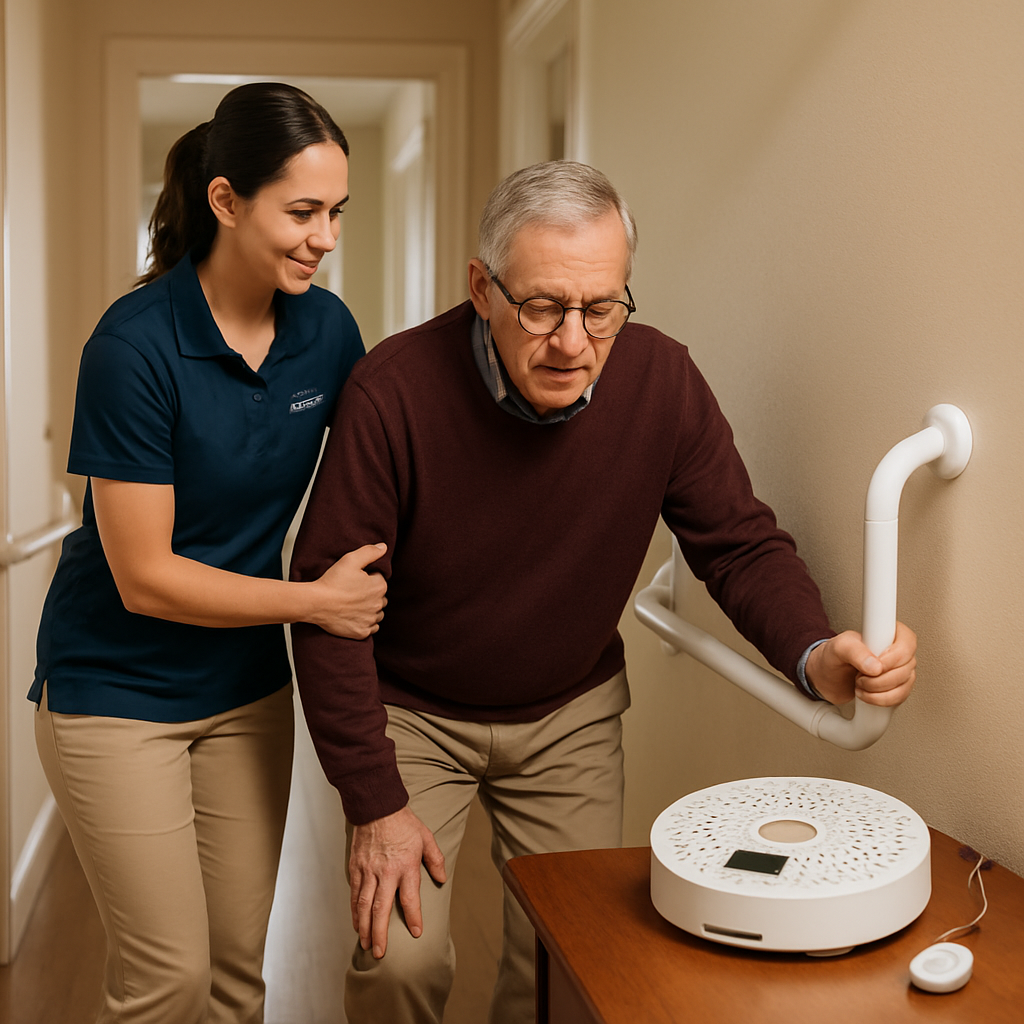
- Safety devices and home adaptations: grab bars, raised toilet seats, ramps,
Medminderor blister packs, and a medical alert likePhilips Lifeline. Purpose: reduce acute incidents and make the home safer between visits. - Care coordination and documentation: a named coordinator who runs reassessments, communicates with physicians, and maintains the care record. Purpose: prevents fragmentation and ensures changes trigger appropriate responses.
| Component | Who usually delivers it | Practical measure to track | Common trade-off |
|---|---|---|---|
| Nursing visits | RN / RPN | Number of medication discrepancies found at each visit | Higher hourly cost but large reduction in readmission risk |
| PSW personal care | Personal Support Worker | ADL independence score (e.g., transfers, dressing) | More hours improves comfort but not clinical problem solving |
| Rehab services | Physiotherapist / OT | Functional mobility milestones (stairs, walking 50 m) | Requires scheduling coordination; progress-dependent |
| Technology and devices | Vendor + caregiver setup | Missed-dose incidents or response times to alerts | Tech helps coverage gaps but often needs human oversight |
Concrete example: A 70-year-old post-stroke client received RN-led medication reconciliation and weekly in-home physiotherapy, daily PSW for safe transfers and hygiene, a Philips Lifeline pendant, and a Medminder programmed for complex dosing. Over eight weeks the physiotherapist documented progressive gait improvement, the RN closed two high-risk medication issues, and the family reported fewer urgent clinic calls — an outcome package that kept the client at home and reduced hospital follow-ups.
Practical insight and limitation: families often ask for more companion hours first because they want presence. That helps, but in practice the highest-return changes are clinical fixes done early — medication reconciliation, a short burst of skilled rehab, and a targeted home modification. If budget is limited, prioritize nursing assessment and one skilled therapy block before expanding nonclinical support.
Good plans name a coordinator, list three short-term goals with deadlines, and assign a measurable indicator for each goal.
Three example care plans with measurable outcomes
Practical starting point: three prototype care plans below show the staffing mix, devices, measurable targets, and reassessment cadence families should expect when commissioning in home health care for seniors. Use them as templates — adjust staff skill mix or intensity depending on clinical risk and budget.
Plan A — Post-surgery recovery (hip replacement)
Core package: RN visits on discharge day and within the first 72 hours, then twice-weekly RN checks for two weeks; daily PSW visits for ADL support and safe transfers for 14 days; physiotherapy visits three times weekly; Philips Lifeline pendant and a Medminder set up for complex meds. Measurable outcomes: independent transfers with a walker by week 6, incision with no signs of infection by day 14, zero unplanned readmissions within 30 days. Trade-off: concentrated clinical input up front increases cost briefly but substantially lowers readmission risk.
Real-world application: A client receives supervised transfers and daily wound checks for two weeks; the RN documents medication adjustments and escalation triggers on day 5; physiotherapy progress notes show gait improvements by week 3 and transfers independent by week 6. The documented targets make it clear when to step down PSW hours and stop nursing visits.
Plan B — Palliative comfort and symptom control (advanced heart failure)
Core package: RN symptom-management visits two to three times weekly, PSW companionship and personal care daily (short shifts focused on comfort), coordination with the primary palliative physician, medication titration support, and family education plus bereavement planning. Measurable outcomes: pain and dyspnea scores stabilized to patient goal (for example pain ≤3/10) within 7–14 days, no emergency department visits for uncontrolled symptoms over a rolling 60-day window, documented family-reported comfort measures at weekly check-ins. Consideration: continuous 24-hour care may be clinically appropriate, but it also changes the care focus from enabling independence to preventing crisis — choose when symptom burden requires that step.
Use case: For a client with frequent breathlessness, the RN sets oxygen and medication parameters and trains PSWs in comfort measures; the team documents fewer night-time symptom crises and the family reports improved ability to manage at home, delaying institutional palliative placement.
Plan C — Dementia safety and sustained independence
Core package: structured companion visits timed to high-risk periods (mornings and evenings), PSW support for ADLs as needed, environmental safety work (locks, visual cues, removal of trip hazards), Medminder or blister packs for medication supervision, and Passport funding assistance to expand hours if eligible. Measurable outcomes: reduction in unsupervised exits or wandering incidents month over month, medication adherence at 95% or higher, stable weight and fewer urgent clinic calls. Limitation: tech alone will not stop risky behaviour; consistent human supervision and a stable small team matter more than adding hours from rotating staff.
Example: A client with mid-stage Alzheimer’s is assigned three daily companion visits during known agitation windows plus evening PSW support; incidents of unsupervised exits fall from weekly to once monthly within six weeks, and caregiver burden scores improve on reassessment — allowing the family to postpone long-term placement.
Next consideration: pick one measurable goal to drive early decisions — the one that, if achieved, will reduce risk fastest. Use that to decide whether to prioritize nursing visits, rehab blocks, or additional supervision.
Practical safety interventions that preserve independence
Direct approach: pick interventions that remove the specific threat to daily independence rather than applying general precautions. A grab bar is useful only if transfers are the weak link; an automated pill dispenser helps only when missed or doubled doses are the problem. Prioritize by what failure looks like and how quickly it leads to loss of independence.
How to decide what to deploy first
- Identify the single highest-risk daily event: document the failure mode (for example falls during nighttime toilet trips).
- Estimate consequence and frequency: if one more event will cause hospital admission or placement, escalate fast.
- Choose the smallest effective intervention: prefer targeted fixes (motion lighting, bedside comms, short rehab block) before broad solutions (round-the-clock care).
- Pair tech with human oversight: assign a clinician or primary caregiver to review alerts and false alarms weekly.
Practical trade-off: technology reduces response times but introduces costs, maintenance, and privacy trade-offs. Devices like Philips Lifeline or MedMinder cut some risk, but rely on correct setup, power/internet reliability, and a named responder. When cognition is poor, human supervision remains the higher-yield intervention even if it costs more.
| Intervention | When to choose it | Quick downside to plan for | Typical setup time |
|---|---|---|---|
| Bedside or pendant medical alert | Unstable mobility with periods alone | False alarms and battery/internet maintenance | Same-day to 48 hours |
| Automated pill dispenser (MedMinder) | Complex multi-dose regimens or missed doses | Programming errors; needs clinician reconciliation | 1–3 business days |
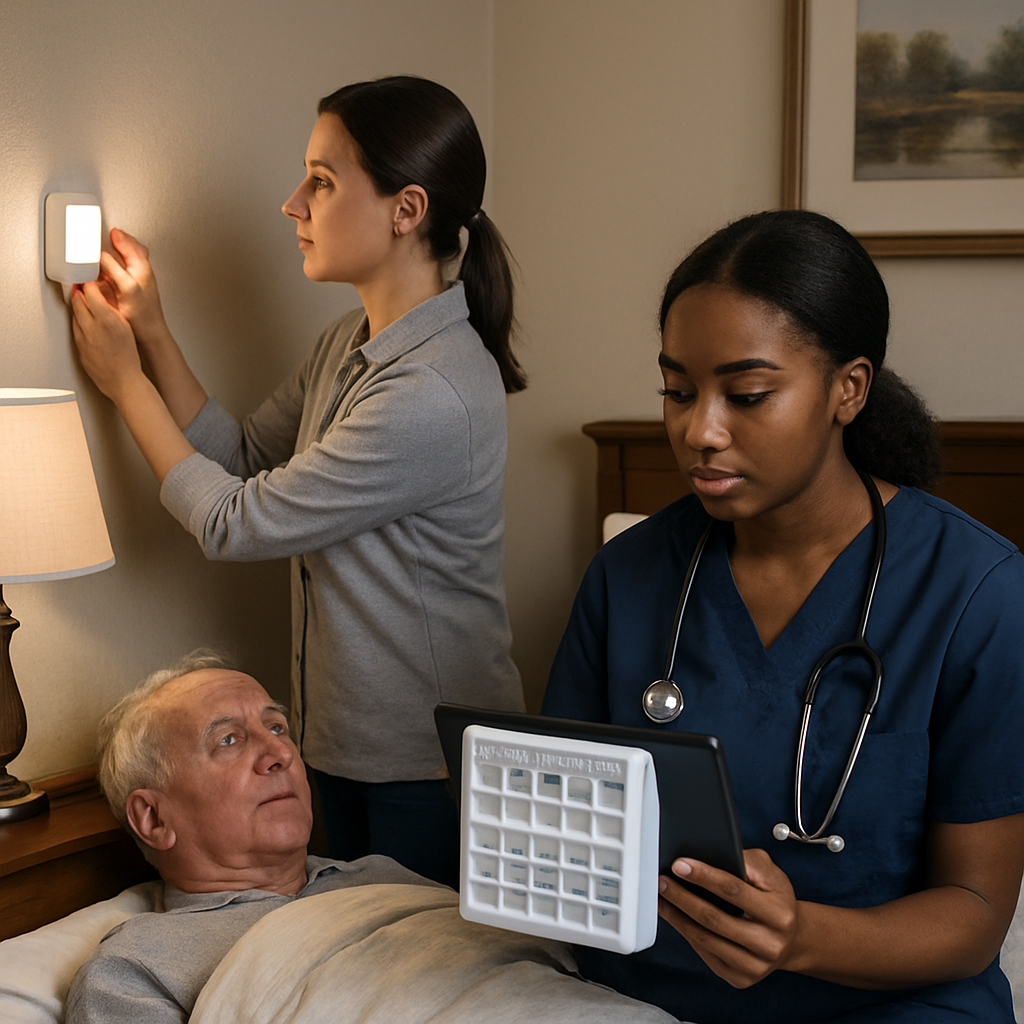
| Motion-sensor pathway lighting | Nighttime bathroom falls | Requires correct placement; can disturb sleep if over-sensitive | Same-day |
| Short intensive rehab block (physio/OT) | Recent functional decline expected to improve | Scheduling and availability; upfront cost | 1–2 weeks to start |
Concrete example: A client with frequent night-time falls had motion-activated lighting installed, a Philips Lifeline pendant programmed with family responder numbers, and a two-week physiotherapy block focused on sit-to-stand strength. Within three weeks the client stopped nocturnal falls and required only twice-weekly PSW check-ins at night rather than continuous overnight supervision.
Operational insight: continuity and simple protocols matter more than the latest gadget. Assign one clinician to own alert triage rules, false-alarm thresholds, and who receives escalations. Without that ownership, devices generate noise and erode trust — families stop responding, and the system fails.
Next consideration: after any new safety measure is in place, schedule a focused reassessment within 14–30 days on the single outcome it was meant to change. If there is no measurable improvement, change tact — doubling down on the same intervention rarely works.
How to choose an in home health care provider and what to ask
Start with accountability, not price. When you evaluate agencies for in home health care for seniors, the single most important factor is who will be clinically accountable if something goes wrong — and how fast they will respond. Low hourly rates hide coordination gaps; a slightly higher-cost provider with clear clinical oversight usually prevents expensive crises.
Core questions to ask during the first call
- Who signs the care plan and who will make clinical decisions? Ask for the professional designation (RN or RPN), how they communicate with family and the primary physician, and for an example of an escalation scenario.
- What is the skill mix for my plan? Request the ratio of nursing visits to PSW hours, and whether therapists (physio/OT) are available in-home.
- How do you manage continuity? Ask how many regular caregivers you will get each week and what percentage of visits are covered by the same team.
- Background checks and training: Confirm criminal record checks, immunizations, and in-service training for dementia, falls prevention, and infection control.
- Emergency response and after-hours coverage: Who answers nights/weekends, what response times are guaranteed, and how urgent clinical changes are escalated.
- Cost, billing, and transparency: Get a written estimate tied to a defined set of activities (for example RN wound check x3, PSW ADL assistance x14 days) and ask how overtime or unscheduled calls are billed.
- Funding support: Will the provider help with Passport or provincial Home and Community Care paperwork and provide the clinical documentation needed for appeals?
Practical trade-off to consider. Smaller agencies often deliver better continuity but may lack specialized clinical teams; larger organizations supply a wider range of services but rotate staff more. Choose based on the immediate risk: continuity matters most for dementia or cognitive fragility; breadth of services matters for complex medical or palliative needs.
Operational items to verify in writing
- Initial assessment timeline: exact days between referral and first RN assessment.
- Documentation delivered: what you will receive after the visit (assessment note, goal list, reassessment date).
- Shift handover process: how information is passed between workers and how medication changes are recorded.
- Quality data: ask for recent outcome examples (falls prevented, readmission avoided) or client references you can contact.
- Termination and complaint process: how to pause or change services and who investigates clinical concerns.
Concrete example: During one family interview, Cedar explained they would start with an RN medication reconciliation within 48 hours, set a 14-day physical-therapy block, and provide a 30-day reassessment note that listed three measurable goals. The family chose Cedar despite a higher hourly rate because the documented escalation plan and follow-up dates removed uncertainty.
Common misstep families make: focusing only on caregiver warmth or hourly cost. Both matter, but they are downstream issues. The essential questions are about clinical leadership, measurable goals, and how changes in condition are handled. If a provider cannot describe a concrete escalation route, they are unlikely to coordinate when the client deteriorates.
Next consideration: ask for a short pilot period (7–14 days) with clear goals and one defined outcome. Use that window to test continuity, documentation, and the provider’s real response time.
Funding, costs, and how Cedar helps families navigate options
Reality check: funding choices decide how fast you can get meaningful in home health care for seniors and which services are realistic. Private payment starts services fastest. Public programs often reduce out of pocket cost but require clinical documentation and processing time.
Typical payment paths and the core tradeoffs
Payment paths: families usually mix three sources – private pay, provincial Home and Community Care subsidies (including Passport funding in Ontario), and targeted supports such as Veterans Affairs. Each has a predictable tradeoff: speed versus subsidy versus documentation burden.
Practical tradeoff: if risk is immediate – recent surgery, unstable wound, or frequent falls – starting on private pay while applying for public funding is often the least risky route. That creates short-term cost but prevents the larger expense and disruption of a hospital readmission. The downside is extra administrative work and temporary duplicate billing arrangements.
How Cedar helps in practice: Cedar performs a rapid funding screen, prepares the clinical summary provincial programs require, and can bridge services on a private-pay basis while applications are processed. Cedar also compiles supporting materials for appeals and provides invoicing tailored to the Canada medical expense tax credit when families choose that route.
Operational limitation to plan for: public approvals are never guaranteed and levels of coverage vary by need and region. Passport funding may cover hours for supervision or personal care in some cases but will rarely fund everything a family wants. Expect a review, possible home visit by the assessor, and a timeline of several business days to a few weeks.
Concrete example: A 76-year-old with mid-stage dementia needed 20 extra companion hours weekly. Cedar completed a focused clinical summary and submitted a Passport packet on the family’s behalf. While the file was assessed, Cedar provided 10 private-pay companion hours per week and documented incidents and clinical notes; two weeks later Passport approved 12 funded hours and the family adjusted the plan, minimizing service interruption.
- Action step 1: gather recent discharge notes, a current medication list, and any specialist letters before calling a provider.
- Action step 2: request a written estimate that separates private-pay items from what the provider will submit to provincial programs.
- Action step 3: ask the provider to describe how they will bridge care while funding decisions are pending and what triggers an escalation to nursing or emergency care.
Bottom line: do not delay starting care if risk is present. Use private pay to bridge, insist on a written budget and reassessment date, and push the provider to prepare funding packets that shorten approvals.
Next steps: assessment, starting services, and measuring progress
Start with a dated clinical assessment, not a schedule. The single most important next step when arranging in home health care for seniors is a timely RN assessment that records risks, current function, and a short list of measurable goals. That document becomes the control point for funding applications, private-pay estimates, and escalation rules.
How to move from decision to action (practical sequence)
- Book an RN assessment within 48–72 hours: request a visit that produces a written problem list, current meds, and three target outcomes with deadlines.
- Assemble the paperwork: discharge summary, up-to-date medication list, primary care contact, and legal decision-maker names (POA). These shorten funding approvals and reduce start-up delays.
- Choose how to start services: if risk is immediate, accept short-term private-pay bridging while applying for provincial programs such as Passport; if risk is lower, wait for funded approval but insist on a guaranteed start date.
- Schedule a home safety audit: include environmental photos and a quick list of urgent fixes (lighting, grab bars, rugs) so vendors can quote and work within the first week.
- Set ownership and cadence: name the coordinator who will run the plan, set a first reassessment at 7–14 days for high-risk cases (30 days otherwise), and log who gets alert notifications.
- Document expectations in writing: get an itemized estimate showing clinic-driven items (RN visits, wound care) separated from nonclinical hours (companionship, cleaning).
Measuring progress requires tight, simple indicators. Track no more than three metrics tied to your goals: for example weight and symptom score for heart failure, % missed doses from a MedMinder report for medication safety, or number of unsupervised exits for dementia safety. Over-instrumenting creates paperwork without faster decisions.
A practical limitation to accept: tech gives data but not decisions. Devices like Philips Lifeline and MedMinder provide timestamps and alerts; someone still needs to review and act. Expect the provider to assign that review responsibility or the device will become noise.
Concrete example: An 85-year-old discharged after a CHF flare had an RN visit within 48 hours, daily private-pay RN checks for three days, a MedMinder for complex meds, and twice-weekly weight logs. On day 10 the weight rose 2 kg; the RN contacted the PCP, adjusted diuretics, and avoided an emergency admission.
Next consideration: lock the first reassessment into your calendar before services begin. That single scheduling step forces accountability and avoids slow, open-ended starts.