
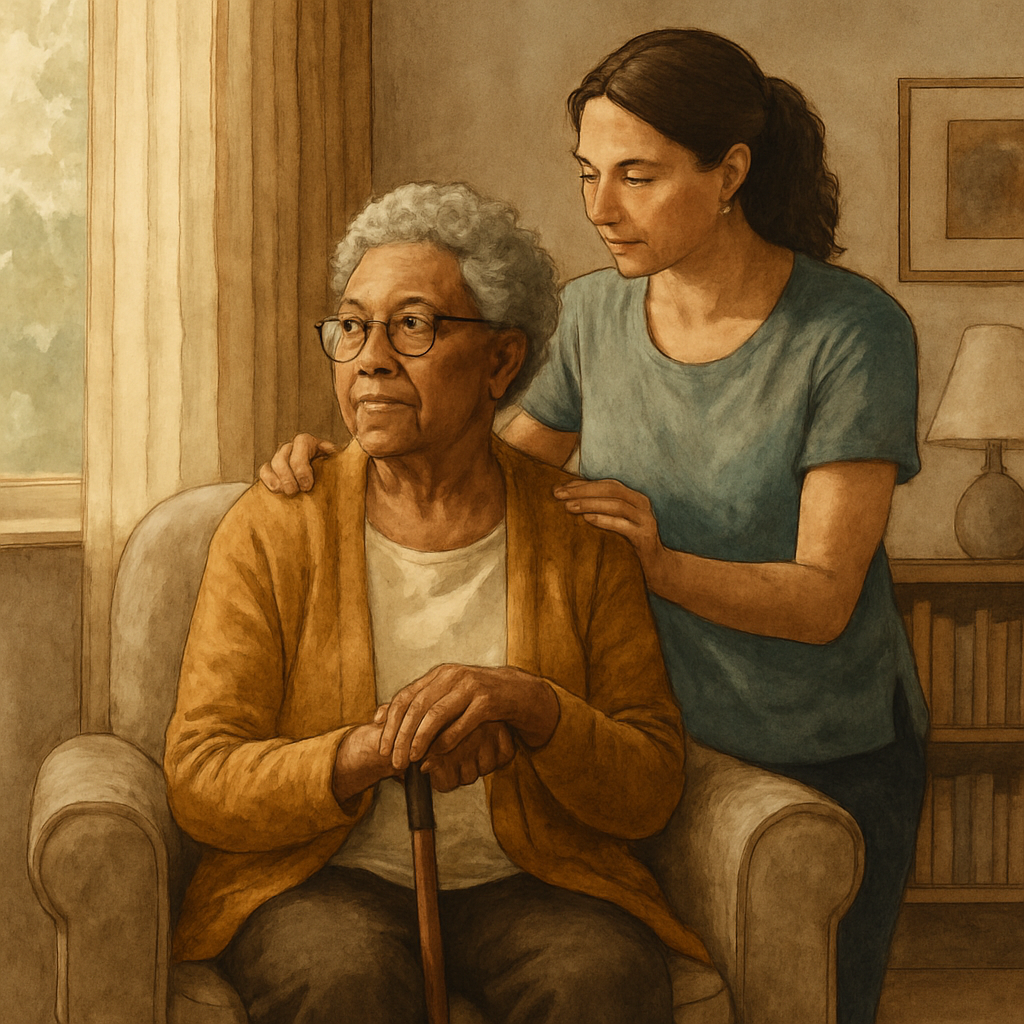
What It Really Means to Have a Live-In Caregiver: Roles, Boundaries, and Daily Routines Explained
A living in caregiver does more than keep someone company; they reshape daily routines, safety checks, and household responsibilities in ways families rarely expect. This article breaks down the typical roles and tasks, practical boundary and scheduling examples, and the Ontario-specific employment and funding points you must get right. You will find sample day plans, contract clauses, and the key questions to ask agencies or candidates so the arrangement is safe, sustainable, and respectful.
What living in caregiver means in practice in Ontario
Direct answer: a living in caregiver is primarily a continuous, in-home support person who combines personal care, household help, companionship and safety monitoring, but is not a substitute for skilled nursing. In Ontario that distinction matters because certain clinical tasks require RN or RPN assessment and delegation while employment and payroll obligations fall under provincial rules such as the Employment Standards Act.
- Typical responsibilities: assistance with ADLs such as bathing and dressing, mobility support and transfers, medication reminders, meal preparation and light housekeeping
- Monitoring and reporting: regular vitals checks, behaviour or symptom observation, escalation to an RN and documentation
- Companionship and errands: social engagement, appointment transport, basic shopping aligned with safety needs
- Limits of scope: no invasive procedures, complex medication administration or clinical assessments without RN/RPN oversight
Tasks that need clinical oversight
Key point: wound care beyond dressing checks, subcutaneous injections, catheter management, IV therapies and clinical medication adjustments require RN or RPN involvement. In practice families overestimate what a caregiver can safely do – PSWs and home caregivers provide observations and support, not independent clinical management. See Understanding the Importance of Nursing Education in Home Care for how agencies coordinate clinical oversight.
Practical trade-off: hiring an agency-employed living in caregiver reduces legal and back-up risk because the agency typically handles payroll, WSIB and relief coverage; private hiring can be cheaper upfront but transfers all employment, tax and compliance risk to the family.
Concrete example: Mr Singh returns home after hip replacement. A live-in personal support worker supports morning dressing, scheduled mobility sessions, meal prep and hourly safety checks overnight. An RN from the agency visits every 48 hours for wound inspection and to adjust the pain plan; the caregiver documents changes and notifies the RN if new redness or fever occurs. This split of duties keeps skilled tasks with the RN and daily living supports with the caregiver.

Next consideration: confirm scope of tasks in a written care agreement and whether the caregiver will be agency-employed or privately hired before the first shift.
Three sample daily routines with time blocks and task lists
Concrete point: Sample, time-blocked routines make conversations about workload, pay, and boundaries concrete. Families rarely realise how a live-in caregiver schedule translates into real hours until they see it broken into morning, afternoon, evening, and night tasks.
Routine A — Low-dependency older adult (companionship-first, independence encouraged)
- 07:00-08:30 Morning: Assist with toileting and dressing, medication reminders, light breakfast preparation, tidy kitchen
- 09:00-11:00 Mid-morning: Accompany for walk or community program, household tidy, mail and bill check, document activities in daily log
- 11:30-13:00 Midday: Prepare lunch, supervise medication, encourage light exercises or hobbies
- 14:00-16:00 Afternoon: Social activity or rest; caregiver completes laundry, vacuuming, fridge check, prepares snacks
- 17:00-19:00 Evening: Dinner prep, assist with evening routine, medication reminder, short companionship period
- 19:30-22:00 Night prep and private time: Caregiver documents notes, limits work to agreed tasks, ready for on-call if required
- Sleep-in arrangement: Caregiver has private bedroom; sleep-in compensated and defined in care agreement
Trade-off: This schedule preserves client independence and gives the caregiver predictable private time. It does not suit anyone needing frequent clinical checks or scheduled therapy sessions.
Routine B — Post-hip surgery recovery (task-driven, clinical checkpoints)
- 06:30-07:30 Morning checks: Pain score, wound inspection, medication administration per RN instructions, assist with transfers and dressing
- 08:00-09:00 Physiotherapy window: Supervised mobility practice with documented repetitions and gait aid checks
- 10:00-12:00 Wound and safety checks: Change dressing only if delegated by RN; monitor for swelling or fever and report
- 12:30-15:00 Rest, nutrition, and short ADL assistance: Toileting schedule, meal prep to meet dietary needs
- 15:30-17:00 Mobility practice and equipment maintenance: Re-siting cushions, ensuring pressure relief, liaise with physiotherapist or RN
- 18:00-20:00 Evening medications and pain charting: Prepare meds, document response, call RN if uncontrolled pain
- 21:00-07:00 Night watch / awake-on-call: Depending on clinical orders may require awake care or hourly checks
Concrete example: Mr Singh, 78, returns home after hip arthroplasty. The live-in caregiver follows an RN-written schedule for wound checks at 10:00 and 18:00, performs assisted transfers as trained, and calls the RN when pain scores exceed the agreed threshold. That mix of delegated PSW tasks plus RN oversight prevents unsafe improvisation at home.
Limitation: Time blocks here require clear clinical delegation. Families should not expect a living in caregiver to perform delegated nursing tasks without documented RN instructions and training.
Routine C — Palliative care (comfort, symptom monitoring, family support)
- 06:00-09:00 Comfort rounds: Assess pain, repositioning, mouth care, medication timing, brief family update
- 09:30-12:00 Emotional support and respite for family: Facilitate family visits, assist with light meals, document symptom trends
- 12:30-16:00 Symptom watch and non-pharmacologic comfort measures: Controlled lighting, temperature, favourite music, hand massage
- 16:30-20:00 Family presence and teaching: Coach family on safe transfers, PRN medication administration procedures with RN present
- 20:00-24:00 Night comfort rounds and on-call plan: Hourly checks reduce need for full awake night shift unless clinical orders require
- Overnight: Formal on-call or awake overnight arranged depending on symptom burden
Judgment: Palliative live-in care is less about checklist chores and more about continuous assessment and emotional labour. Caregivers need scheduled respite and explicit escalation pathways to RNs to avoid burnout and mistakes.
Next consideration: Choose the template that matches clinical need, convert time blocks into explicit pay and break rules, and schedule an RN reassessment within the first week to adjust duties and on-call expectations.
Setting boundaries and household rules that protect dignity and sustainability
Boundaries are the single biggest predictor of a sustainable living in caregiver arrangement. When rules are vague, resentment and safety gaps appear fast — not weeks later, but within days. Clear, written expectations protect the client, the caregiver, and the family.
Core household rules to set immediately
- Private space: designate a private bedroom for the caregiver and specify access rights to the client bedroom and bathroom.
- Working hours and quiet hours: define the normal shift block (for example 7:00–19:00) and separate household quiet hours (for example 22:00–07:00).
- Kitchen and food: clarify whether caregiver may use family food, prepare meals for themselves, or are expected to cook only for the client.
- Visitors and personal calls: set rules for visitors, overnight guests, and phone/video use during care hours.
- Pets and errands: list pet care tasks you expect and any limits on personal errands during paid hours.
- Safety and keys: specify who holds keys and how to respond to emergencies — include an escalation chain (caregiver → RN on call → family contact).
Practical insight: rules that sound reasonable on paper fail when they clash with household culture. Identify one family non-negotiable (privacy, smoking restrictions, or religious practices) and make that an explicit clause rather than hoping everyone will remember it.
Sleep-in vs awake-on-call: turn expectations into hours and pay
Define the night duty precisely. Families often call an arrangement sleep-in but expect quick responses all night. Convert that expectation into measurable terms: sleep-in with 30-minute maximum response time or awake-on-call from 22:00–07:00 with specified active periods. That avoids disputes over compensation and fatigue risk.
- Trade-off: cheaper sleep-in arrangements save money but increase safety risk and caregiver fatigue; awake-on-call is safer but costlier and less sustainable long term.
- Documentation: include hours, compensation, and on-call premium in the care agreement and refer to Employment Standards rules where applicable — see Employment Standards Act guide.
- Backup: require an agency or family backup plan for shifts longer than 72 hours to prevent burnout and gaps in care.
Concrete example: A family hired a living in caregiver with an overnight sleep-in clause. They assumed the caregiver would check the client hourly; the caregiver assumed a single night check and seven hours uninterrupted sleep. The mismatch produced missed meds and an angry family. Rewriting the clause to require checks every three hours and a defined on-call supplement resolved it within 48 hours.
Communication and documentation norms matter more than good intentions. Require a brief daily log (meds, mobility, incidents), a weekly verbal check-in with the family, and immediate incident reporting to the supervising RN. This creates accountability without policing every action.
Next consideration: draft the one-page agreement this week, schedule a 72-hour review with the caregiver and supervising RN, and confirm backup coverage for any gaps. That single step prevents most relationship and safety failures.
Employment, compensation, and legal considerations in Ontario
Key point: hiring a living in caregiver creates a formal employment relationship in most cases — treat it like hiring any other employee or you will inherit payroll, workplace safety, and statutory liability you did not plan for.
Ontario law focuses on the reality of the arrangement, not the label. Calling someone an independent contractor or paying cash does not change obligations under the Employment Standards Act or the Workers Safety and Insurance Board if the worker meets employee tests. That is a practical trap families run into when trying to save money.
Practical legal points families must address
- Employment status: If the caregiver follows a schedule, uses your equipment, and is supervised, they are likely an employee — with minimum wage, overtime, vacation pay, and record-keeping obligations under the ESA. See Employment Standards guide.
- Sleep-in and on-call time: How you define sleep-in versus working time matters for pay and overtime calculations; put it in the written agreement and track actual awake time.
- Room and board: Providing accommodation affects pay calculations and tax reporting. Do not guess a fair deduction — get payroll or accounting advice.
- WSIB and liability: Agencies usually carry WSIB and commercial insurance. Private employers may need to register and insure; if a caregiver is injured on the job, liability and benefit costs fall to the employer.
Trade-off: using an agency raises hourly cost but transfers payroll compliance, WSIB coverage, backup staffing, and often clinical oversight. Hiring privately lowers cash costs but increases administrative work and legal risk — plan for that extra unseen cost.
Employment models compared
| Model | Administrative burden & legal risk | Backup & clinical oversight |
|---|---|---|
| Agency-employed | Low for family — agency manages payroll, taxes, records, WSIB | Agency provides replacements, RN/RPN oversight and escalation |
| Family hires on payroll | High — employer must run payroll, remittances, WSIB, time tracking | Family must arrange backups and nurse oversight separately |
| Informal/private cash arrangement | Very high legal risk — potential ESA, tax, and WSIB exposure | Little or no formal backup or clinical governance |
Concrete example: A family privately hired a personal support worker to live in after a hospital discharge and agreed to cash and a private room. When the worker slipped while transferring the client, the family discovered they had no WSIB coverage and were at risk of a claim. After that incident they moved to an agency model where payroll, injury coverage, and RN oversight were handled externally.
Red flag: offering reduced pay for room and board without written agreement and payroll records can create an ESA violation and unexpected tax liability.
Judgment you need: most families are better off using an agency for live-in care unless they have payroll experience and are prepared to document hours, manage WSIB, and supply backups. The false economy of private, informal hires shows up fast when there is an injury, a pay dispute, or a clinical complication.
Training, clinical oversight, and safety protocols
Key point: a living in caregiver will only be as safe and reliable as the training they receive and the clinical oversight behind them. Agencies that treat live-in care as a lone role without regular RN/RPN supervision are taking an unacceptable risk—for the client and for the family.
Clinical oversight: who does what and why it matters
Role clarity matters. Personal support workers and home caregivers handle personal care, safe transfers, monitoring, and daily documentation. Registered Nurses (RNs) or Registered Practical Nurses (RPNs) are responsible for clinical assessments, delegation, medication administration protocols, wound care orders, and escalation decisions. Delegation is not informal: it should be documented, time-limited, and revisited after competency checks.
| Task | Living in caregiver / PSW | RN / RPN | Family |
|---|---|---|---|
| Personal hygiene and meal prep | Primary responsibility | Train and audit | Monitor preferences |
| Medication reminders (non-invasive) | Can provide under supervision | Set protocol, sign-off, and assess errors | Report concerns |
| Wound care or injections | Observe and report | Perform or delegate with documented competency | Ensure access to supplies |
| Clinical reassessment | Report changes | Initial visit, first-week follow-up, then monthly or on change | Participate in care-plan updates |
Practical trade-off: more frequent RN oversight raises cost but reduces avoidable hospital readmissions and unsafe task creep. Families often try to minimize visits; that saves money short-term and shifts clinical risk onto the caregiver, who may not be authorized or experienced to manage it.
Training, competencies, and real-world checks
- Essential competencies: safe transfers and use of equipment, infection control, dementia care basics, oxygen and suction familiarization, and basic palliative comfort measures.
- Verification: agencies should require in-person practical competency checks (not just certificates) and document refreshers after incidents or every 6–12 months.
- Documentation: daily electronic notes, medication administration records, and incident reports that feed into RN review are non-negotiable for any 24-hour arrangement.
Concrete example: After a hip replacement, Cedar schedules an RN assessment within 24–48 hours, a second RN visit during the first week, and trains the live-in PSW to perform wound observation and scheduled mobilization. The RN documents delegation for the PSW to perform non-sterile dressing checks and sets explicit escalation thresholds for fever, drainage changes, or increased pain.
Safety protocols, equipment, and escalation
Safety first: require a written emergency plan that covers after-hours RN contact, nearest ER route, medication lists, and phone numbers. Equip the home with appropriate aids—ceiling or stand-assist lifts when needed, oxygen signage and training, and a tested personal alarm or fall-detection protocol.
Do not assume a certificate equals competence. Practical supervision, documented delegation, and an RN-led care plan are what keep a living in caregiver arrangement safe.

Next consideration: confirm reassessment frequency in writing: first-week RN review, monthly for stability, and immediate reassessment on any clinical change. That single clause prevents most unsafe task creep and clarifies costs and responsibilities up front.
Hiring, trial periods, and day-to-day management
Start with the dual reality: hiring a living in caregiver is both a recruitment decision and a household change. Treat the first contact like a job interview but manage the first days like a short-term placement: clear tasks, measurable goals, and a backup plan if the match fails.
Interview focus and red flags
- Ask scenario-based questions: Describe a night the client becomes short of breath — what do you do? (Look for a stepwise answer that includes calling family, escalating to RN, and documenting.)
- Confirm practical experience: How many sleep-in shifts, transfers with mechanical lifts, and dementia care shifts have they done? Ask for recent references you can call.
- Verify documentation habits: Request to see a sample daily note or explain how they record observations and escalate concerns.
- Red flags: Evasive answers on medication handling, refusal to accept a 2-week paid trial, minimal documentation process, or insistence on unsupervised access to private family areas.
Practical trade-off: a candidate who excels at companionship may not be safe for a medically complex overnight — you will trade emotional fit for clinical reliability depending on the case. If clinical risk is present, prioritize agency candidates with RN oversight.
Designing a 2-week trial with measurable checkpoints
Two-week paid trial works best. Week 1 is supervised onboarding; week 2 tests routine independence. Set three checkpoints: day 3 (safety and fit), day 7 (documentation and tasks), day 14 (final decision).
- Define 4–6 measurable goals up front (for example: complete morning ADLs within 90 minutes, accurately record medication times in the
daily-log.txtor a logbook, perform safe transfers using the Hoyer lift without prompting). - Use simple scoring at each checkpoint: Pass / Needs Coaching / Unacceptable.
- Agree on paid notice if trial ends early and who covers replacement shifts — agencies usually manage this; private hires must follow Employment Standards, see Your Guide: Employment Standards Act.
Concrete example: Mrs. Singh returned home after hip repair. The trial focused on timed transfers, wound observation notes, and coordinating physio appointments. At day 7 the family flagged inconsistent wound notes; the agency provided a trained PSW with RN oversight for night checks and retrained the original caregiver, which resolved the issue within a week.
Day-to-day management that actually works: insist on a one-page handover each shift (meds given, mobility status, incidents, and tasks for next shift), a weekly family huddle (15 minutes), and a documented escalation path to an RN. Paper or a simple app will do — consistency matters more than technology.
Final judgment: hire slowly, review quickly. A structured, paid trial with specific, observable goals separates good fits from placements that look stable on paper but fail under night duty or documentation pressure. If you need help designing a trial or sourcing RN oversight, see Cedar Home Health Care’s guidance on what to expect from home aides: What to Expect from Home Aide Services: Tasks, Training, and How They Improve Daily Living.
Real-life mini case studies
Practical point: real families make live-in caregiver arrangements to solve specific, narrow problems. The arrangement succeeds when the care tasks are predictable and the household can accept a paid worker living on site; it fails when needs are volatile overnight or require frequent skilled nursing interventions.
Case 1 — Post-arthroplasty recovery: predictable, time-limited support
Scenario: an older adult discharged after hip replacement needed 24/7 assistance for two weeks, then daytime help for four more weeks.Living in caregiver provided morning ADL support, scheduled medication reminders, wound checks, meal prep, and timed mobility practice with checklists documented for the supervising RN.
Outcome and trade-off: using a live-in support worker kept the client at home and accelerated rehab adherence, but the family accepted a clearly defined end date and daily clinical oversight from an RN to handle dressing changes and opioid monitoring. In practice, short-term live-in arrangements work best when clinical tasks are delegated by an RN and the scope is time-limited.
Case 2 — Advanced COPD palliative support: symptom-focused, family-centred care
Scenario: a client with advanced COPD wanted comfort at home. A trained live-in caregiver handled oxygen checks, positioning, mouth care, light meal prep, and overnight monitoring for distress, with an RN available by phone and scheduled visits for medication adjustments and symptom assessment.
Real-world application: the caregiver learned a simple breathlessness protocol and when to escalate to the RN or 911. This combination preserved dignity and allowed family to participate without having to provide 24-hour awake care themselves.
Case 3 — Severe dementia with nightly agitation: when live-in is not the right fit
Scenario: a person with advanced dementia had unpredictable nocturnal wandering and aggression. A single live-in caregiver was frequently woken and could not safely manage escalations alone.
Judgment: this is a common mismatch. Residential caregiver models are not a substitute for clinical 24-hour awake nursing or shift-based teams when behaviour risk is high. The right alternative was shift-based awake care and a behavioural specialist assessment.
Important – Pick live-in care when needs are stable and predictable. If nights are repeatedly unsafe or require frequent clinical interventions, plan shift-based 24-hour coverage instead.
Next consideration: ask your agency about RN-led delegation and a written contingency plan before starting any trial. For Ontario employment and funding context see Employment Standards Act guide and Passport funding program, and review practical task outlines at What to Expect from Home Aide Services.
When living in caregiving may not be the best solution and viable alternatives
Clear limit: a living in caregiver is not a safe or sustainable option when the clients needs exceed what one non-clinical person can reasonably manage without regular skilled nursing interventions, or when behaviours create unpredictable safety risks. Continuity of care is valuable, but it is not a substitute for appropriate clinical staffing levels, environmental safety, or a workable household dynamic.
Quick checklist to decide if live-in care is unsuitable
- High frequency clinical tasks: needs that require RN or RPN attention more than a few times per day, such as complex wound care, IV therapy, or frequent medication titration
- High behavioural risk: recurrent nighttime wandering, aggressive behaviour, or severe sundowning that requires two-person interventions or constant awake observation
- Unsafe environment: home layout that prevents safe transfers even with equipment, or lack of a private caregiver space making 24-hour work impossible
- Family or legal constraints: persistent conflicts over rules, privacy violations, or guardianship issues that impair supervision and reporting
- Funding or backup gaps: inability to fund shift-based coverage or lack of agency backup for illness and holidays
Concrete example: Mr Singh is an 82 year old with advanced dementia who repeatedly gets out of bed at night and has suffered two falls in one month. He requires frequent PRN medication and two person transfers for safe toileting. In practice a single live-in caregiver became exhausted and incidents increased. Transitioning to a shift based 24 hour team with RN oversight reduced falls and allowed family to visit without managing night supervision.
Alternatives and tradeoffs: Shift-based 24 hour care replaces continuity with layered coverage; it costs more but gives awake staff for high-risk nights and predictable handoffs. Assisted living reduces household burden and offers supervised communal routines but limits intensive clinical options. Respite stays and short-term convalescent placements buy evaluation time and relieve burnout. Long-term care accepts loss of home privacy but provides consistent skilled nursing for complex medical need. Each option shifts the tradeoff triangle of cost, privacy and clinical safety.
Practical next step: get an RN assessment, document the frequency and timing of risky events, and pilot an alternative for two weeks before making a permanent change. Agencies can arrange short term shift coverage or respite placements and help you compare estimated costs and clinical outcomes — see Government of Ontario Home and Community Care Services for Seniors and our guide to home health services benefits.
If skilled nursing tasks or unsafe behaviours occur regularly during the night, a live-in caregiver is not the right long-term solution.
Takeaway: do not let attachment to the idea of living in care override objective safety and clinical needs. The sensible next move is an RN led reassessment and a short pilot of an alternative arrangement to see if outcomes improve.