
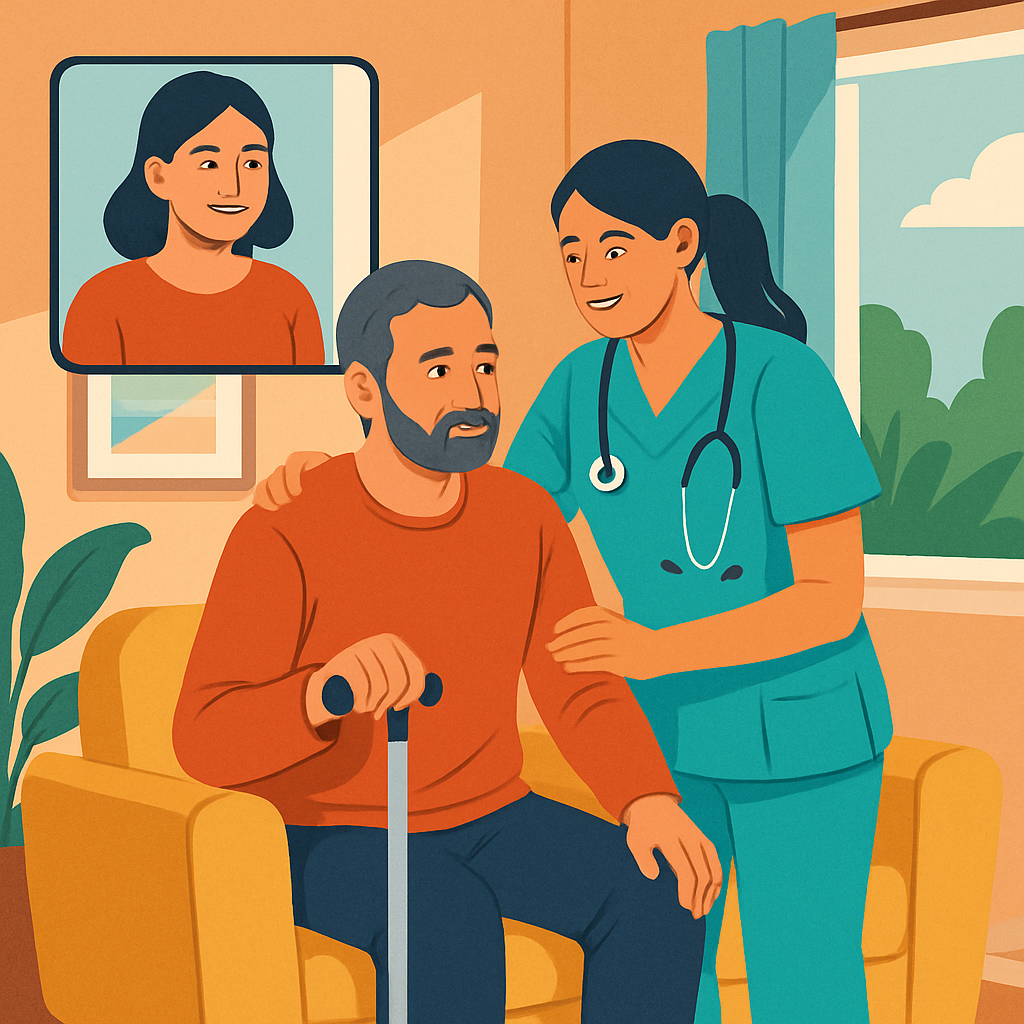
Health at Home: Programs and Services That Support Recovery and Wellness
When a hospital discharge or a chronic flare-up means more care is needed, health at home options let people recover and live safely in familiar surroundings. This post maps the clinical and nonclinical services available in Ontario — from home health care, in-home nursing and physiotherapy to telehealth services and remote patient monitoring — explains funding and eligibility including Passport funding, and shows how those services work together to support recovery and long-term wellness. You will also get a practical checklist for choosing a provider, a sample four-week post-surgery plan, and concrete next steps to set up a measurable care plan at home.
The role of health at home in recovery and long term wellness
Health at home changes what recovery looks like. When clinical care, rehabilitation, and household supports are coordinated around a realistic plan, patients leave hospital sooner and keep complications lower than when care is fragmented between multiple unconnected services. See evidence summaries from the Canadian Institute for Health Information and the World Health Organization for outcomes linked to home-based programs.
Coordination is the hard part, not the hands-on work. Nurses, PSWs, therapists, and telehealth platforms are widely available in Ontario, but the common failure is missed handoffs: delayed wound care, duplicated visits, or conflicting instructions from different clinicians. A single accountable care coordinator who owns the schedule, medication reconciliation, and communication with the primary care team makes the difference between safe recovery and avoidable readmission. Cedar Home Health Care provides that coordinating function alongside clinical services at Cedar services.
Concrete example: A 72 year-old discharged after hip replacement received an RN visit within 24 hours for medication reconciliation and wound check, PSW visits twice daily for ADL support the first week, and physiotherapy three times per week. Remote patient monitoring tracked daily step counts and pulse, triggering a nurse review when mobility plateaued; the coordinated plan shortened intensive supports after two weeks and shifted to maintenance visits. This is the typical pathway that reduces complications in practice.
Who benefits most and what to watch for
- High impact: Recent surgery patients who need early nursing and rehab to prevent readmission
- Sustained benefit: Older adults with chronic conditions who require medication management and ADL support to stay independent
- Critical need: People receiving palliative care who prefer symptom control at home while keeping caregivers coached and supported
- Watch for: People with unstable social supports or complex polypharmacy; they need higher-intensity coordination or short term respite options
Tradeoff to accept: Technology such as telehealth services and remote patient monitoring improves vigilance, but it cannot replace hands-on clinical tasks like wound dressing changes or manual transfers. In practice, programs that over-rely on remote tools without routine in-person assessments create false reassurance and noisy workflows. The practical rule is to pair digital tools with scheduled clinical touch points and clear escalation criteria.
Key point: measurable goals and an accountable coordinator matter more for outcomes than having every possible service available.

Next consideration: Before you sign a service agreement, require a short written care plan with measurable milestones, the name of the coordinator, and a schedule for the first two weeks. If a provider cannot produce that, expect coordination failures and plan for backup supports.
Core home based services and how they support recovery
Core idea: Home-based recovery is a set of discrete services assembled to manage risk, restore function, and keep a household safe. Each service has a specific purpose — nursing to manage clinical risk, rehabilitation to restore mobility and independence, personal support to cover daily needs, and nonclinical supports to remove environmental barriers — and the value comes from how those pieces are sequenced and measured.
Primary services and the direct benefit they provide
- Skilled nursing (RN/RPN): clinical assessment, medication reconciliation, wound and IV care, and escalation planning. Early nursing contact after discharge reduces medication errors and clarifies follow-up with the surgeon or family physician.
- Rehabilitation therapies (physio/OT/speech): restore function, train compensatory strategies, and recommend home modifications. Frequency matters—three short physio visits a week will progress mobility faster than one long visit.
- Personal Support Workers (PSWs) / home health aides: assistance with bathing, transfers, toileting, and meal support so the patient can follow rehab safely. PSWs are essential for carrying out daily plans but cannot perform clinical tasks reserved for nurses.
- Telehealth and remote patient monitoring (RPM): keep clinicians informed between visits through virtual check-ins and vitals tracking. These tools improve surveillance but must be tied to an in-person response protocol when abnormalities appear.
- Home medical equipment and mobility aids: timely delivery and training for walkers, hospital beds, oxygen, and wound supplies prevent delays in care and reduce falls risk.
- Nonclinical supports (homemaking, companionship): address nutrition, isolation, and a safe environment so clinical gains are sustainable.
Practical insight: Prioritize services that remove immediate clinical risk first (nursing, equipment, medication review), then layer in rehabilitation and PSW supports. Families that focus on comfort services without securing early clinical oversight expose the patient to avoidable complications.
Limitation and trade-off: Publicly funded nursing and therapy slots can be limited or scheduled at low frequency; privately purchased visits buy intensity but increase out-of-pocket costs. In practice this means some families use a mixed model: public nursing for stabilization plus private physio or extra PSW hours while recovery is active.
Concrete example: A 55 year-old with decompensated heart failure returning home received a same-day RN visit for IV diuretic coaching and a weight-monitoring RPM device. A PSW provided twice-daily support for ADLs while physiotherapy addressed safe transfers; the RPM alerted the nurse to early fluid retention, prompting a medication adjustment and avoiding an ED visit. For help assembling these services, see Cedar Home Health Care’s service options at Cedar services.
What people get wrong: Many assume telehealth replaces face-to-face care. It does not. Remote tools extend reach and help prioritize responses, but they create false comfort if the system lacks a reliable in-person follow-up path. Expect any RPM deployment to have explicit thresholds and a named clinician who will respond.
Next consideration: When you plan services, ask for specific visit cadence and escalation steps in writing, and verify who will coordinate communication with the primary care physician and any specialists. If coordination is unclear, expect gaps that slow recovery.
Cedar Home Health Care service spotlight and real world examples
Direct advantage: Cedar focuses on operational responsibility rather than scattering tasks across vendors. That means a named coordinator, a short written care plan with measurable milestones, and active follow up so visits are sequenced instead of duplicated. This is what prevents simple issues like missed wound checks or conflicting medication instructions from becoming readmissions.
Service packages that reflect real needs: Cedar packages clinical and nonclinical supports into pragmatic bundles rather than selling single visit blocks. Common bundles include a rapid post surgery response package with nursing + physio + PSW; a continuity palliative package that emphasizes symptom visits, caregiver coaching, and escalation protocols; and a Passport-managed family care package that pairs PSW hours with administrative support for funding paperwork.
Operational tradeoffs and what to expect
Practical tradeoff: Higher visit intensity buys safer recovery but raises out of pocket cost when public slots are limited. In practice, Cedar recommends a hybrid model: secure provincially funded nursing where eligible, then top up with private physio or extra PSW hours during the active recovery window. That reduces readmission risk while keeping costs manageable.
Limitations families should plan for: After-hours clinical coverage rarely matches daytime capacity. Cedar builds an escalation ladder that includes telehealth triage plus links to community after-hours nursing when needed, but continuous overnight nursing requires a different engagement and higher cost. Know which hours are covered and get escalation steps in writing.
Real-world examples
Concrete example — post surgery knee replacement: A client received a same-day assessment, an RN visit for medication and wound management, PSW support for ADLs twice daily for the first week, and physiotherapy three times weekly. Cedar used a step-down schedule: intensive support for two weeks, reassessment at day 14 with objective mobility milestones, then transition to weekly maintenance checks. The named coordinator handled equipment delivery and communicated progress to the surgeon and family.
Concrete example — home palliative support: For a person preferring end-of-life care at home, Cedar provided scheduled symptom visits, caregiver education on medication administration and breakthrough pain, and a clear after-hours escalation plan that combined telemedicine check-ins with an on-call clinician. The real benefit came from coaching family caregivers so they could safely manage common crises without immediate hospitalization.
Next consideration: Before you commit, insist on a baseline functional measure and scheduled reassessments so you can see progress or call for increased intensity if recovery stalls.
Understanding funding and eligibility including Passport funding
Funding is a set of separate silos, not one single pot. Public home care (through your regional Home and Community Care Support Services), Passport funding, private insurance, Veterans Affairs, and direct pay each cover different services and have different rules. The practical skill for families is mapping a specific need to the correct funding source rather than assuming one program will pay for everything.
Which programs typically pay for what
Quick orientation: provincially funded home nursing and therapy are intended for clinical tasks and are routed by a Care Coordinator via Home and Community Care Support Services. Passport funding is meant to support adults with developmental disabilities for community participation, respite and caregiver supports — it is not a substitute for clinical nursing care. Private insurance and Veterans Affairs may cover specific services; check benefit language before assuming coverage.
- Public (HCCSS): clinical nursing, some therapy and assessments — usually allocated after an assessment.
- Passport: community supports, respite, and nonclinical personal care for eligible adults with developmental disabilities — requires application and eligibility confirmation.
- Private/Insurer/Veterans: may cover physiotherapy, additional PSW hours, equipment or short-term rehabilitation — coverage varies widely.
- Out-of-pocket top-ups: the fastest way to increase visit intensity when public slots are limited but it raises immediate cost.
Trade-off to accept: speed versus cost. Publicly funded services reduce out-of-pocket expense but often come with lower visit frequency and slower start times. Buying private top-ups gives faster, more intensive care but increases financial burden and requires families to manage coordination and billing across payers.
Concrete example: A 45 year-old adult with a developmental disability needs extra daytime support and short respite for their aging caregiver after a surgery. Passport funds were used to contract PSW hours and respite blocks, while the regional HCCSS arranged RN visits for wound checks. Cedar helped the family compile the medical documentation, create a short service plan that matched Passport rules, and invoice separately for HCCSS nursing visits so there was no double billing.
- Practical steps to determine eligibility and access funding:
- Gather proof of identity and proof of residency, recent discharge summary or physician letter, current medication list, and any existing developmental services plan.
- Contact your regional Care Coordinator for public home care and consult Passport funding pages to confirm Passport eligibility before applying.
- If you have private benefits, request a written pre-approval for the services you plan to use — ask for exact covered items and limits.
A judgment that matters in practice: families often overestimate what Passport or private insurance will cover. Do not assume eligibility or coverage; get confirmations in writing. When a provider cannot explain which payer will cover which visit or produce sample invoices, treat that as a red flag — unclear billing equals operational risk.
Planning a safe transition home after hospital: a step by step timeline
Start with a timeline, not a promise. A safe discharge is built from concrete, scheduled checkpoints: a named coordinator, an initial clinical assessment, equipment in place, and a plan for escalating problems. Treat those checkpoints as mandatory handoffs — if any are missing, push for them before the patient leaves the hospital.
Practical timeline: Day 0 to Week 4
- Day 0 to 2 — Critical stabilization: arrange an initial clinical assessment (RN or RPN) as soon as possible, confirm medication list with
med reconciliationdocumented, and schedule equipment delivery (walker, raised toilet seat, wound supplies). Set up any RPM device or telehealth account and confirm who will review alerts. - Day 3 to 7 — Build daily supports: begin regular PSW/home health aide visits for ADLs and hygiene, start physiotherapy or occupational therapy sessions tailored to safe transfers, and run a caregiver training session on dressing changes, safe transfers, and medication times.
- Week 2 — Reassess and adjust intensity: formal reassessment by the coordinator and clinician to compare progress to milestones, update visit frequency, and confirm insurance or funding allocations. If goals are met, move to reduced intensity; if not, increase visits or add private top-ups.
- Weeks 3 to 4 — Transition toward maintenance: focus on independence targets (stairs, toileting, self-medication), taper PSW intensity, schedule a final 4-week care-plan review and a written handoff to primary care with outcome notes and outstanding equipment needs.
Trade-off to plan for: faster starts usually cost more. Publicly arranged visits can be slower to schedule; privately purchased top-ups buy immediacy and intensity but require families to manage separate invoices and coordination. In practice, a hybrid model that secures public clinical oversight and pays privately for extra rehab hours is often the most efficient way to close the risk gap early in recovery.
Concrete example: A 76 year-old returning from hip surgery received a bedside discharge summary copied to the coordinator, an RN assessment arranged for the evening of discharge, physiotherapy scheduled every other day starting day 2, and PSW visits mornings and evenings for week 1. A wearable step counter fed daily totals to the care team; when steps fell below the agreed threshold on day 9, the RN increased home visits and the physio modified the plan, avoiding a clinic return.
- Escalation signs to act on immediately: spreading redness or pus at a wound, persistent fever over 38 C, new or worsening shortness of breath, sudden drop in mobility or confusion, repeated missed medications or dosing errors
- Operational risks to verify before discharge: who will deliver and fit mobility aids, who signs off on wound supplies, and the exact hours covered by after-hours phone support
Before leaving hospital, get a one-page timeline with the coordinator name, scheduled first visit times, and explicit escalation steps for the first two weeks.

How to evaluate and choose a home care provider
Start by deciding what outcome matters most. For health at home you should hire the provider who will reliably reduce clinical risk and produce observable progress, not the one with the lowest hourly rate. That means prioritizing clinical oversight, predictable operations, and clear accountability over polished marketing or promises of 24 7 coverage that are vague on who responds.
Three-lens evaluation framework
Use three practical lenses to compare providers: clinical capability, operational reliability, and fit with your family situation. Assess each lens with short evidence you can verify in an intake call.
- Clinical capability: Ask which clinicians do the hands-on work (RN, RPN, PSW, physiotherapist), whether clinicians have experience with your condition, and how clinical decisions are documented and escalated.
- Operational reliability: Confirm scheduling windows, how urgent requests are handled, written visit times, and whether the agency uses electronic records so family members can see notes and progress.
- Care coordination and funding navigation: Verify who will manage multiple payers (public, Passport, private insurance) and whether the provider will prepare the documentation needed for approvals.
- Technology and continuity: Find out how telehealth or remote patient monitoring are integrated into workflows, and whether alerts route to a clinician who can do an in-person follow-up.
- Cultural fit and coaching: Check whether caregivers receive family-facing training on tasks you need performed, and whether the agency respects the client routine and dignity.
Practical trade-off to expect. Smaller local agencies are often more flexible and better at preserving routines, but they may lack subspecialty clinicians or rapid access to equipment. Large agencies can deliver clinical depth and after-hours backup but sometimes treat your case as one of many. Choose based on which limitation matters more for the short recovery window.
Concrete example: An adult child arranging post-operative care for a parent compared two providers. One offered quick private physio and frequent PSW visits but could not explain how nursing visits would be billed through public programs; the other provided an upfront roadmap, handled Passport paperwork, and scheduled the first RN assessment within the first day or two while coordinating physio and PSW cadence. The family selected the latter because measurable steps and billing clarity reduced operational risk during early recovery. See Cedar Home Health Care service options at Cedar services for a model of combined clinical and administrative support.
Red flag: a provider that will not produce an example care note, cannot name the clinician responsible for urgent follow-up, or gives vague answers about who pays for which visit.
A judgment that matters in practice. Successful home-based recovery depends more on consistent execution than on having every possible service. Insist on an operational promise you can hold them to: a short roadmap, an identified point person, and written escalation steps. If the first intake is chaotic, the service delivery will be too.
Next consideration: book two intake assessments and compare the providers side by side—bring the discharge summary, medication list, and the contact for your regional coordinator at Home and Community Care Support Services so you can verify funding pathways during the call.
Measuring progress and ensuring quality in a home care plan
Start with a narrow set of reliable measures. Too many metrics create noise; too few leave blind spots. Pick 3 to 6 indicators that directly tie to the risks you are trying to reduce or the function you want restored — for example pain control, wound healing, safe transfers, medication adherence, and unplanned ED visits.
Practical measurement framework
Use a mix of objective signals and simple functional tests so the team sees both clinical stability and real life ability. Objective signals should be measurable automatically or by short clinician checks; functional tests should be repeatable by a PSW or family caregiver with clear instructions.
| Metric | How to measure | Example threshold / frequency |
|---|---|---|
| Pain and symptom control | Numeric pain score recorded by RN or patient diary | Score <= 3 at rest; recorded daily for first 7 days |
| Wound progress | Photograph + wound dimension note in electronic record | Decrease in size or no new drainage at 72 hour checks |
| Mobility and ADLs | Timed sit-to-stand or 10-m walk and PSW ADL checklist |
Improvement in sit-to-stand count by 20% over 2 weeks |
| Vitals relevant to condition | RPM or manual readings (BP, pulse, SpO2) with automated alerts | Alert if SpO2 < 92% or heart rate change > 20% from baseline |
| Service reliability | Visit completion logs and missed-visit follow-up time | All scheduled nursing visits completed; missed visits called within 2 hours |
Concrete example: A 68 year-old with COPD returning home used a pulse oximeter and a short symptom checklist each morning. The RPM platform sent an automated alert when SpO2 dropped below the agreed threshold; the on-call RN completed a virtual assessment within one hour and arranged an urgent home visit, avoiding an ED presentation. The team documented the intervention and adjusted the action threshold for the following 48 hours.
Trade-offs and operational decisions that matter
Collecting data costs time and attention. Trade-off: tighter thresholds increase sensitivity but also false positives and clinician workload. In practice, set conservative alert windows during the active recovery window, then widen them as the client stabilizes. Assign a named clinician to review alerts so data does not become unattended noise.
- Practical safeguard: Ask for a sample progress note and the reporting dashboard view before you commit so you know what you will actually receive.
- Privacy & consent: Confirm who can access the data and how long records are kept.
- Cost trade-off: Higher-frequency RPM and daily RN reviews reduce risk but raise cost; decide which months need intensity and which can go to maintenance.
Important: require written escalation thresholds and the name of the clinician who will act on alerts — without that, monitoring is just data, not safety.
Next consideration: insist on at least one formal reassessment during the active recovery phase with objective measures recorded so you can make a data-informed decision to step-down or intensify services.
Practical next steps for families ready to act
Start by naming a single point person. Assign one family member to own calls, scheduling, and documentation so nothing falls through the cracks — across payers, clinicians, and equipment suppliers. This reduces confusion faster than increasing visit hours.
Immediate actions to lock the first 72 hours
- Collect three documents: discharge summary, current medication list, and the surgeon or primary care contact. Having these ready shortens intake calls and speeds approvals.
- Book a provider intake now: contact Cedar Home Health Care or your chosen agency and request the earliest possible RN visit; mention any funding sources (Passport, private insurance, Veterans Affairs) during the call.
- Confirm home access and keys: provide gate codes, pet instructions, and a visible place for ID to avoid missed visits; ask for a written visit window and confirmation text or email.
- Schedule equipment delivery: prioritize a mobility aid and a raised toilet seat or bed adjustments; insist on a delivery date before discharge if possible.
- Set up a simple communication plan: one phone number for urgent changes, one family email for written notes, and a daily check-in time for the first week.
Practical trade-off to accept: moving quickly often means accepting provisional bookings that require later paperwork. If a provider agrees to an urgent visit but asks for missing documents, get their commitment in writing and the name of the clinician who will proceed once files arrive. Do not rely on verbal promises alone.
Concrete example: An adult daughter arranged same-day RN coverage through Cedar by emailing the discharge summary and a photo of the medication list at 10:00 a.m.; Cedar confirmed a 6:00 p.m. RN visit and arranged an oxygen concentrator delivery for the next morning. The written confirmation and equipment receipt avoided a delayed ED return when breathing worsened overnight.
A judgment worth acting on: prioritize clarity over speed only when the risk is low. If the client shows any clinical instability, accelerate arrangements and accept higher short-term cost for immediate in-person nursing rather than relying on virtual triage alone.
If funding is unclear, get confirmations in writing from each payer. Verbal assurances lead to unexpected bills and service gaps.
Next consideration: call your chosen provider within 24 hours and demand a written first-visit plan with a named clinician and a fallback contact. If you cannot get that, escalate to your regional coordinator at Home and Community Care Support Services.