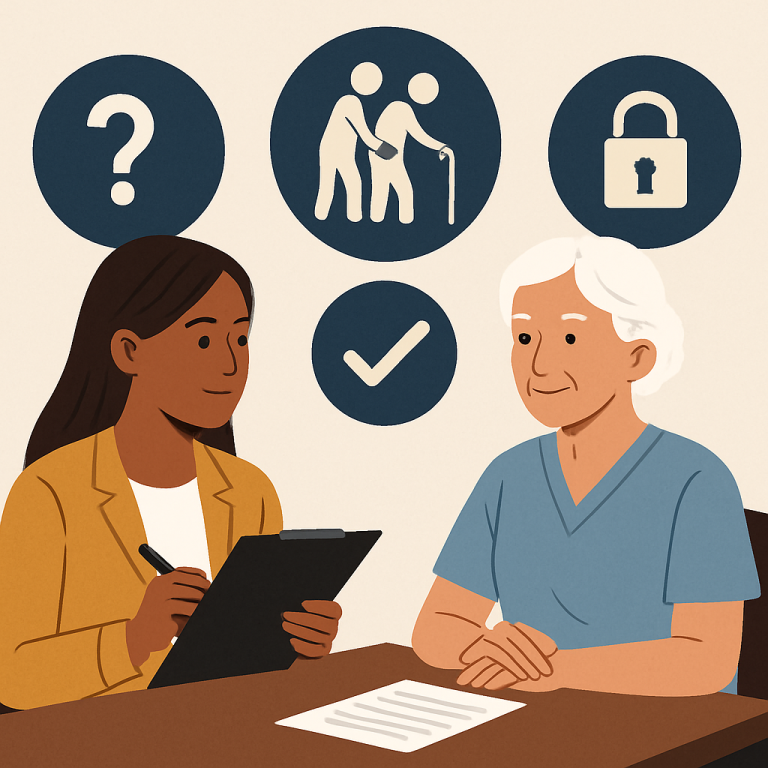

Private Duty Nursing at Home: Personalized Nursing Care for Complex Needs
Private duty nursing brings skilled, one-to-one clinical care into the home for people with complex medical needs who need more than routine home healthcare or a personal support worker. This post explains how private duty nursing differs from standard in-home nursing services, which clinical tasks nurses perform (IVs, ventilator and tracheostomy care, complex wound and ostomy management), funding and cost options including Passport, and what safety, staffing, and quality checks to demand. You will also get a practical checklist and clear next steps to arrange personalized nursing care with Cedar Home Health Care.
What private duty nursing means for clients with complex needs
Direct clinical responsibility. Private duty nursing places a registered nurse or licensed practical nurse at the center of daily clinical decision making in the home, not just as a task performer. That matters for clients whose safety depends on real time assessments, medication titration, IV or enteral therapies, ventilator or tracheostomy management, or complex wound care.
Scope that differs from routine home healthcare. Unlike scheduled home health aide visits or personal care nursing, private duty nursing is built around one to one skilled nursing tasks and clinical judgment — often delivered as continuous coverage, overnight nursing, or coordinated rotating shifts when 24/7 support is required.
When private duty nursing is appropriate
- Clinical complexity: ventilator dependence, high acuity IV infusions, or frequent medication titration.
- Risk reduction: patients recently discharged after major surgery or with fragile wounds at high risk for readmission.
- Symptom control: active palliative home care where advanced symptom management and rapid adjustments are needed.
- Caregiver limits: family caregivers who are willing but lack the training or capacity to manage technical devices safely.
Concrete example: A client discharged after a prolonged ICU stay returns home on a home ventilator and continuous enteral feed. Private duty nursing coordinates initial equipment setup with the durable medical equipment supplier, establishes ventilator settings with the respiratory therapist, and provides caregiver training over several days while monitoring for complications. That combination of hands on care, teaching, and clinical oversight is exactly what separates private nursing from basic in-home support.
A practical tradeoff to expect. Continuous nursing reduces clinical risk but increases cost and requires stronger systems for staff continuity. Live-in models lower handover frequency but can strain nurse well being; rotating shift models preserve staff health but demand tight handover protocols and reliable backup staffing. Families need to weigh continuity against affordability and ask providers for written contingency plans.
What works in practice. The providers who deliver reliable private duty nursing pair documented competency checks for advanced skills with frequent clinical reassessments and active coordination with the primary physician. If the agency cannot show specific competencies for ventilator care, IV therapy, or palliative symptom control, plan for a trial period and insist on daily handover notes.
Operational detail families often miss. Private duty nursing is not all clinical; it includes equipment troubleshooting, supply logistics, and documentation needed for funding like the Passport program. Confirm who will order supplies, who liaises with case managers, and whether the agency helps with funding paperwork or insurance claims.
Key point: match the nurse skillset to the clinical task, insist on competency evidence, and get a written backup plan before care starts.

Services Cedar Home Health Care provides under private duty nursing
Direct clinical packages, not a la carte tasks. Cedar structures private duty nursing around clinical packages that match risk and complexity rather than selling hourly tasks. That matters because coordinated packages reduce missed handovers and clarify who is accountable for monitoring, escalation, and documentation.
How Cedar groups in-home nursing services
- Acute clinical management: skilled Registered Nurse services for IV/infusion therapy, antibiotic administration, IV site monitoring, and clinical titration when prescribed by the physician.
- Respiratory and device support: ventilator and tracheostomy management, oxygen therapy set up, and coordination with respiratory therapists and durable medical equipment vendors.
- Complex wound and ostomy care: staged dressing changes, negative pressure wound therapy oversight, and ostomy troubleshooting with wound-healing progress notes.
- Enteral and urinary access care: gastrostomy/jejunostomy feeding routines, tube replacement escalation, catheter care, and prevention-focused protocols.
- Palliative and symptom management: focused symptom control, titration of comfort medications, and short-term stabilization in collaboration with community palliative teams.
- Care management and family training: written care plans, caregiver competency sessions, medication reconciliation, and liaison with specialists, insurers, or funding programs like the Ontario Passport program.
Practical tradeoff to consider. Agencies that combine clinical nursing with nonclinical supports such as home health aide or housekeeping can simplify logistics, but that bundling often blurs clinical accountability. Ask specifically who documents clinical decisions and who is responsible if a complication arises.
Concrete example: A person discharged after abdominal surgery needed daily IV antibiotics and wound vac management. Cedar provided a Registered Nurse for daily clinical assessments and an assigned caregiver for mobility and hygiene. The RN managed antibiotic dosing adjustments with the surgeon, documented wound measurements, and taught the family how to change a dressing safely, reducing unnecessary clinic returns.
Operational detail families miss. Service options vary: short-term skilled episodes, scheduled daily nursing windows, overnight clinical coverage, and full 24/7 support using rotating shifts. Each has different cost structures and handover risks — demand the provider supply shift-change notes and a named clinical lead for your case.
If you need specialized pediatric home healthcare, ventilator care, or high-acuity wound management, verify the agency has documented competencies for that exact task rather than a general skills list.
Assessment, individualized care planning, and clinical oversight
Assessment drives the staffing model, not the invoice line. A thorough clinical intake identifies whether a client needs intermittent skilled visits, overnight nursing, or full 24/7 private duty nursing and defines the competency mix (RN versus RPN), equipment needs, and escalation rules the team must follow.
Core outputs an assessment must produce
What you should expect from the first visit: a documented care plan with measurable goals, a clear schedule of nursing tasks and who is responsible for each, a risk register (falls, skin breakdown, infection, medication errors), and an identified clinical lead who signs off on escalation pathways with phone numbers and expected response times.
| Assessment element | Why it matters / What it must include |
|---|---|
| Medication and titration plan | Specifies which meds need nursing intervention, dosing triggers (for example, weight-based diuretics), monitoring frequency, and prescriber contact details |
| Device and supply inventory | Lists models, consumables, vendor contacts, and who replenishes supplies to prevent missed care |
| Caregiver capability and limits | Records family skills that can be delegated, required training milestones, and planned competency checks |
| Escalation and emergency protocol | Defines when to call the prescriber, when to call 911, and the substitute nurse process during off-hours |
Practical tradeoff to accept: a faster, superficial assessment gets you quicker coverage but increases handover risk and hidden costs later (extra visits, urgent equipment orders, or readmission). Investing time up front to map failure points reduces those downstream surprises — but it does delay first-shift start by 24 to 48 hours in many cases.
Judgment that matters: name a clinical lead. In practice the single biggest failure I see is distributed responsibility. If no nurse owns the case, small problems become crises. Insist on a named RN who reviews incidents and signs monthly reassessments.
Concrete example: A person discharged with decompensated heart failure required home IV diuretics with daily weight-based adjustments. The assessment documented baseline weights, target diuresis, permitted electrolyte thresholds, a nursing schedule for morning weights and IV administration, and explicit physician signoff for the titration algorithm. Because the agency assigned an RN lead and daily handover notes, two readmissions were avoided when early weight gain triggered a timely dose change and outpatient lab follow-up.
Insist on scheduled reassessments (48–72 hours after start, then weekly for two weeks, then monthly) and written signoff for any change to the care plan.
Safety, qualifications, and quality assurance
Licensure is necessary but not sufficient. For private duty nursing the real safety comes from documented competencies, supervised onboarding, live handover protocols, and clinical oversight that links every complex task back to a named clinical lead.
A practical tradeoff to accept: rigorous competency verification and regular clinical audits slow hiring and increase hourly rates, but they prevent the kinds of medication, device, and escalation errors that produce expensive readmissions. Agencies that sell low hourly rates but cannot show how they validate advanced skills are taking a funding risk on your behalf.
What to expect from a credible QA and competency program
Core elements that matter: structured skills checklists for ventilator, IV, and wound care; supervised shifts with signed off competency; routine infection control drills; mandatory CPR and immunization records; and an accessible incident reporting loop with documented root cause reviews. Frequency matters: advanced-skill signoffs should be repeated at set intervals (for example, quarterly for high-acuity tasks).
- Documents you should request: copy of the nurse’s current RN/RPN registration, recent competency checklist for the specific task (ventilator, infusion pumps, wound vac), orientation and supervised-shift records, summary of clinical audits in the last 12 months, staffing turnover rate for the assigned team, and name and contact of the clinical lead who signs off on care plans. See Cedar service descriptions at services.
Common misunderstanding: families often focus only on initial credentials and references. In practice the weak link is handover and supervision. High turnover is concerning, but a predictable substitute system with rigorous handover notes and a strong clinical lead is what actually prevents lapses.
Concrete example: A client using a patient-controlled analgesia pump and therapeutic anticoagulation required overnight nursing. Cedar implemented a two-person medication check for every pump reload, daily competency signoffs for night staff, and a mandatory simulated escalation drill. Within weeks medication variance events fell to zero and the surgeon reported fewer emergent clinic calls—a direct result of enforcing procedure and supervision, not just hiring RNs.
In the real world small agencies can provide excellent private nursing if they demonstrate tight clinical governance—written protocols, regular chart audits, and low thresholds for retraining. Conversely, large agencies without active clinical oversight often default to checkbox training that fails under stress.
Next consideration: before you commit, get the documents above in writing, schedule the supervised first shifts, and confirm who the clinical lead will call after hours. Those simple checks separate safe private duty nursing from risky staffing shortcuts.
Funding options, cost considerations, and Passport program navigation
Direct reality: funding for private duty nursing rarely covers everything families assume it will. Public programs can help, but most 24/7 or high-acuity private duty nursing requires a mix of Passport or other benefits plus private pay or insurance top-up.
Which funding streams actually contribute (and where they fall short)
Key pathways: private pay, employer long-term care insurance, Veterans Affairs, workers compensation, limited provincial home care, and Ontario Passport. Passport is a targeted fund for adults with developmental disabilities and can pay for supports that increase community independence — but it was not designed as a blanket payer for continuous clinical nursing.
Practical tradeoff: Passport and similar programs accept clinical evidence but usually set caps and service definitions. Expect approvals to cover discrete hours or specific respite and skills training rather than open-ended 24/7 nursing. That means families often combine Passport-supported hours with privately contracted shifts to cover clinical risk windows (overnight or complex procedures).
Cost drivers and what to demand in writing
- Get an itemized quote: hourly nurse rate, shift minimums, overtime rules, weekend/holiday premiums, travel time, and supply charges.
- Clarify inclusions: who pays for dressings, catheter supplies, pump disposables, and emergency replacements.
- Understand staffing model: live-in versus rotating 12/8 hour shifts and how substitutes are billed.
- Cancellation and notice fees: minimum notice to avoid pay for scheduled shifts, and trial-period pricing if you want a 72 hour test run.
Judgment call: cheaper hourly rates are a false economy when they come with frequent staff turnover or no clear backup. Pay attention to how the agency documents handovers and whether the quote includes a named clinical lead — those reduce costly errors and readmissions.
Passport navigation: what Cedar will do (and what you still must provide)
What Cedar provides: clinical summaries, a service plan mapped to Passport objectives, itemized invoices tailored to funding reviewers, and assistance in family-managed care set up. Cedar will also participate in funding meetings and supply competency documentation for nurses when requested.
- Priority documents to prepare for Passport or funding reviews: physician or specialist letter of medical necessity, recent hospital records or discharge note, current medication schedule, equipment/vendor contacts, and a concise care-plan snapshot showing goals tied to community participation or respite.
- How to present costs to funders: submit the Cedar itemized quote with hours tied to specific goals (for example, daytime training + overnight clinical monitoring), not a generic hourly block.
Concrete example: A family used Passport funds to cover daytime nursing training and short respite shifts for an adult with developmental disability while privately financing overnight nursing for complex wound vac care. Cedar supplied a physician letter, a two-week skills-training schedule, and an itemized invoice showing which hours aligned to Passport objectives — the result was partial Passport approval and a stable hybrid funding plan that avoided care gaps.
Important: do not assume Passport approvals will be retroactive. Submit clinical evidence before services start when possible, and get provisional private coverage to avoid gaps while funding decisions are pending.

Next consideration: if you will rely on mixed funding, build a simple monthly cash plan that lists approved hours, expected out-of-pocket top-up, and triggers for reassessment (for example after 30 days or after a hospital visit). This is the practical control families need to avoid surprise bills and care interruptions.
Choosing a private duty nursing provider: actionable checklist
Think of the hire as contracting an on site clinical team, not booking an hourly aide. The right provider must deliver documented competencies, predictable handovers, and clear financial terms before the first shift. Start with these concrete checks and insist they produce written evidence.
- Verify license and scope: request the RN or RPN registration number and a recent competency checklist for each advanced task you need, such as ventilator management, IV infusions, or wound vac care.
- Name the clinical lead: get the name, phone, and email of the RN who will review the case and authorize clinical changes; include their escalation availability in the contract.
- Demand supervised first shifts: require the first 24 to 72 hours to include supervised handovers and signed competency signoffs for night or complex shifts.
- Get a clear handover template: request a sample shift-change note and agree a minimum handover duration and content (vitals, wound measures, medications, pending tasks).
- Itemize costs and supplies: insist on an itemized quote showing hourly rates, minimum shift lengths, travel, overtime, and exactly which supplies are included or billed separately.
- Backup and substitution rules: define substitute nurse notice windows, minimum qualifications for substitutes, and a guaranteed maximum response time for last minute gaps.
- References that match your need: ask for two current client references with the same clinical profile (for example pediatric ventilator care or palliative symptom control).
- Reporting and KPIs: require a simple reporting cadence: daily handover notes, weekly clinical summary for the first month, and monthly outcome metrics the agency will track.
- Contract trial and exit terms: negotiate a 72 hour trial with written acceptance criteria and clear short notice termination terms if care is unsafe or mismatched.
- Funding and billing support: confirm whether the agency will prepare physician summaries, itemized invoices for Passport or insurers, and participate in funding meetings.
Sample phone and email scripts
Phone opener: Hello, my name is [Name]. I am arranging private duty nursing for [client initial or role]. Can you confirm your RN registration number, the name of the clinical lead who would manage this case, and whether you can provide supervised first shifts and a 72 hour trial with written acceptance criteria?
Email template: Hello, I am requesting a quote for private duty nursing for [condition]. Please send: (1) itemized fees and supply policy, (2) RN registration and competency records for required tasks, (3) sample shift handover note, (4) backup staffing protocol, and (5) references with similar clinical needs. I would like a 72 hour trial option. Thank you.
Practical tradeoff to consider: cheaper hourly rates often mean thinner supervision and higher turnover. If budget pushes toward lower cost options, require stronger contractual protections up front: shorter trial periods, more frequent clinical reviews, and an explicit substitute nurse qualification list. Those contractual demands reduce the hidden costs that show up as urgent clinic visits or readmissions.
Concrete example: A family needed overnight nursing for a parent on complex anticoagulation and a wound vac. They negotiated a 72 hour trial with mandatory supervised nights, daily wound measurements recorded in a shared chart, and a named RN lead. After the trial the family extended services because documentation and handovers were consistent and the substitute nurse protocol worked when the primary nurse was sick.
Key action: get documentation before care starts: registration numbers, competency records for each advanced task, an itemized quote, a named clinical lead, and a 72 hour trial with acceptance criteria.
Transition planning and long term care continuity
Start with ownership. The single most common failure in hospital-to-home transitions is diffuse responsibility between the hospital, equipment vendors, family, and the agency—resulting in missed deliveries, incomplete medication reconciliation, and nursing shifts that start blind. Assigning a single operational owner at the agency and a named clinical lead at the outset fixes more handover problems than any checklist alone.
Practical 30-day timeline to close the transition gap
- Immediate pre-discharge (48–72 hours before home): confirm device models and delivery windows with suppliers, secure a short-term private nursing hold if funding is pending, and send the discharge summary to the assigned RN lead.
- Day 0–2 after arrival home: first nursing visit in person to validate settings, complete medication reconciliation, run a supervised equipment checklist, and record baseline measures in the shared chart.
- Week 1: daily or alternate-day clinical touchpoints (in-person or video) to validate wound progress / device function; scheduled family training sessions documented with competency signoffs.
- Week 2: formal reassessment by the clinical lead to adjust staffing mix (RN versus RPN), update escalation contacts, and confirm supply reorder points.
- Weeks 3–4: convert short-term coverage into the longer staffing pattern you need (rotating primary nurses, live-in, or mixed model) and schedule a 30-day outcomes review with the physician and case manager.
Tradeoff to weigh. Rapid deployment of nursing within hours protects against immediate gaps but raises the risk of missed equipment or incomplete documentation. Slower, team-based starts reduce those operational errors but can leave the patient unsupported during a fragile window. In practice the safer path is a hybrid: provisional private coverage for the first 72 hours with a documented plan to transition to funded hours once approvals arrive.
Continuity strategies that actually work. Build a two-primary-nurse model: assign two nurses who split primary responsibilities and cross-shadow for three shifts each during onboarding. Use short, mandatory telehealth check-ins between in-person visits so the clinical lead can catch drift early. Require every substitution shift to include a written, templated handover plus a brief verbal check-in with the clinical lead.
Limitation of technology. Telehealth is useful for monitoring and rapid questions, but it does not replace hands-on assessment for devices, wound integrity, or subtle fluid shifts. Do not rely solely on remote checks in the first two weeks for high-acuity needs.
Concrete example: A post-surgical patient with a complex wound vac and ambulatory oxygen left hospital with same-day discharge. Cedar arranged a provisional private nurse hold, coordinated the vendor for next-day pump delivery, scheduled the RN to set up the device and train the spouse, and used daily brief telehealth checks during nights. Having the RN lead and two primary nurses prevented a supply lapse and avoided an ED visit for pump troubleshooting.
Key point: require a named operational owner and a clinical lead, secure provisional coverage while funding is confirmed, and demand documented handovers for every substitution.
Next steps to arrange private duty nursing with Cedar Home Health Care
Start by locking ownership of the case. When you call Cedar to arrange private duty nursing, the key outcome of the first contact should be an assigned RN case manager and a provisional start window, not just a quote. That single administrative move prevents the common failure where responsibility is diffuse between the hospital, equipment vendors, and the agency.
Three practical steps to get started
- Schedule a clinical intake within 48 hours. Ask Cedar for an in-home or video assessment that includes device checks, medication reconciliation, and a staffing recommendation (RN versus RPN mix). Request the assessment appointment be recorded with a named RN case manager.
- Secure provisional coverage while funding is processed. If you are applying for Passport or insurance authorization, arrange short-term private duty nursing so there is no care gap. Confirm the hours Cedar will hold and the trial change terms in writing.
- Get a written starter care plan and contingency agreement. Before the first shift, insist on a 72 hour plan that lists immediate nursing tasks, who orders supplies, escalation contacts, and the substitution protocol if the primary nurse is unavailable.
Practical tradeoff: rushing a start can close an immediate risk but increase operational errors later, like missing device compatibility or wrong supplies. In practice the safest route is a short provisional hold with a thorough assessment within the first 24 to 72 hours, followed by a formal staffing plan tied to documented competencies.
Concrete example: A family returning an elderly parent home after GI surgery arranged a Cedar intake the same day the discharge summary was available. Cedar assigned an RN case manager, provided a two-night provisional coverage while sourcing a wound vac and training the spouse, and submitted the clinical summary to support a Passport and insurer review. The provisional coverage prevented an ED visit when a dressing issue developed overnight.
Key action: confirm a named RN case manager and provisional hours in writing before discharge; do not rely on verbal promises during a busy hospital discharge.