
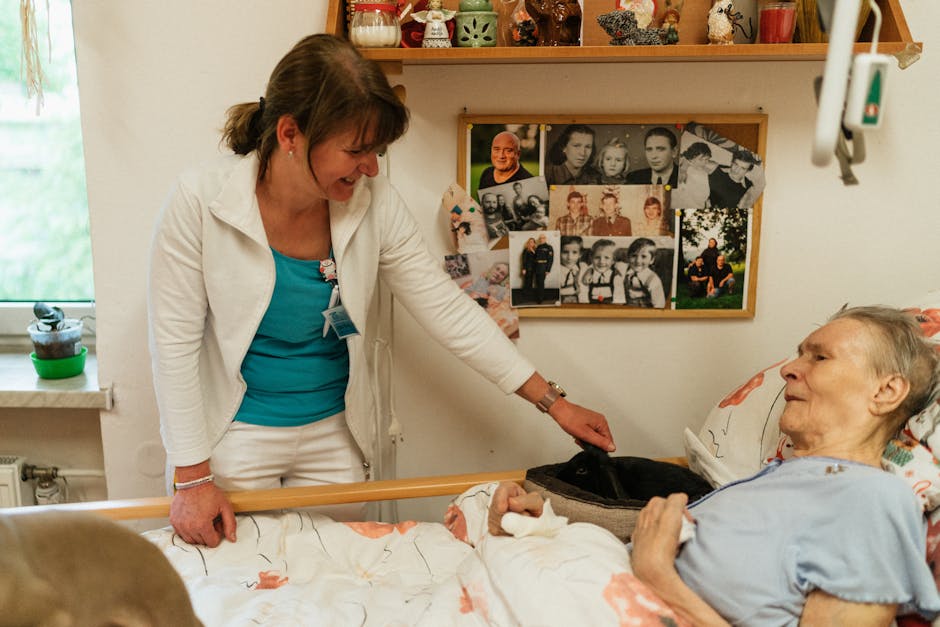
Home Care Nursing Services: What They Cover and How to Arrange Skilled Care
Arranging skilled care at home becomes urgent and confusing when a discharge, complex wound or shifting symptoms land on a family caregiver. This practical guide explains what home care nursing services cover in everyday terms, how to tell when skilled nursing is needed, and the clear steps to arrange, fund and manage in-home nursing care. Expect checklists, sample post-surgery and palliative care plans, and direct questions to use when comparing providers so you can act quickly and keep care safe.
1. Core skilled home care nursing services and who provides them
Core point: skilled nursing at home handles clinical tasks that cannot safely be delegated to nonclinical caregivers — think invasive devices, medication titration, aseptic wound care and symptom control for serious illness.
What skilled home care nursing services actually include
- Wound and device care: complex dressing changes, negative pressure wound therapy monitoring, central line/PICC care, ostomy and tracheostomy management
- Parenteral therapies: IV antibiotic administration, infusion monitoring and catheter care
- Medication management: reconciliation after discharge, injections, opioid or benzodiazepine titration under nursing orders
- Post-surgical monitoring: drain care, suture/staple checks, vital-sign trend monitoring and escalation
- Chronic disease monitoring: heart failure weight checks, COPD symptom review, blood glucose titration for insulin-dependent diabetes
- Palliative and end-of-life support: symptom control, subcutaneous medication administration and family coaching
- Specialized populations: pediatric nursing visits, mobility and transfer training for neurologic or disability support
Who provides these services: Registered Nurses (RNs) carry primary clinical responsibility — assessments, clinical judgment and invasive procedures. Registered Practical Nurses (RPNs) perform many skilled tasks under the same scope where regional regulation allows. Personal Support Workers (PSWs) and trained caregivers provide nonclinical supports: ADLs, bathing, mobility assistance and basic monitoring. Therapists (physiotherapy, occupational therapy, speech) deliver rehabilitation services in-home and coordinate with nursing when device management or clinical surveillance is required.
Important trade-off: Relying on RNs for every visit is the safest clinical option but significantly raises cost. In practice, an effective model layers skill: an RN performs the initial stabilization and complex tasks, then RPNs or supervised PSWs handle routine follow-up and ADL support to balance safety and affordability.
Concrete example: after a knee replacement a typical approach is an RN visit daily for the first 48 to 72 hours for drain and wound assessment and medication review, with PSW visits twice daily for dressing protection, bathing and mobility assistance. For home IV antibiotics, an RN will establish access, give initial doses, train the caregiver on signs of complications and coordinate with the pharmacy for supplies.
Practical judgment: many families assume a PSW can manage complex wound care because they are experienced with hands-on care. That misunderstanding causes missed infections and delayed escalation. Always confirm which tasks the provider assigns to an RN versus a PSW and get that distinction in the written care plan.
Check this before you hire: ask for RN/RPN licence numbers, samples of clinical care plans, and whether the agency carries clinical on-call coverage outside business hours.
2. Clinical indicators that someone needs skilled nursing at home
Direct indicator: when a person’s care relies on clinical decision-making, invasive-device management, or medication adjustments that carry measurable risk, they need skilled nursing at home rather than only personal support. Arrange skilled visits before problems compound — not after the first avoidable ED trip.
High-value clinical indicators to watch for
- Active parenteral therapy: ongoing IV antibiotics, subcutaneous infusion or home infusion devices that require sterile technique and dose monitoring.
- New or escalating respiratory support: new home oxygen, increased work of breathing, or frequent desaturations on spot checks.
- Complex or changing wounds: wound drainage that worsens, dressings needing aseptic changes, exposed hardware or repeated dressing failures.
- Rapid medication changes: opioid or insulin titration, anticoagulation starts/stops, or any discharge with multiple medication adjustments.
- Safety and cognition decline: new confusion, agitation causing risk of removal of lines or falls, or loss of ability to follow medication instructions.
- Functional decline with clinical cause: sudden increase in falls, weight gain with dyspnea (possible heart failure), or new urinary retention requiring catheter care.
Practical trade-off: arranging frequent short nurse check-ins can catch problems early but raises handover complexity and documentation burden. In practice, schedule a longer, skilled RN visit for initial stabilization and family teach-back, then layer shorter follow-ups by RPNs or PSWs under a documented supervision plan to control cost while preserving safety.
Concrete example: an older adult discharged with congestive heart failure, new home oxygen and a changed diuretic regimen should have an RN visit on day 1 to review weights, adjust diuretics per standing orders, and train the caregiver to record daily weights. If weight increases by more than 2 kg in 48 hours or breathlessness worsens, escalate immediately to the nursing on-call line and the primary clinician.
Common misunderstanding: families assume that steady-looking vitals mean stability. Trends matter more than a single reading — repeated low oxygen saturations, progressive tachycardia or incremental confusion are early signals of deterioration and justify skilled nursing review even when the person seems okay in the moment.
If discharge introduces any invasive device, multiple new medications, or a clear change in cognition or mobility, treat that as a red flag and prioritize at least one RN visit within 24 to 72 hours.
Next consideration: match the provider to the clinical indicator — ask prospective agencies for the specific clinician who will cover medication titration, device checks or wound care, and confirm how on-call escalation works. For provincial referral options see Home and Community Care Support Services Ontario or prepare those documents before contacting a private provider such as Cedar Home Health Care.
3. Step by step process to arrange skilled nursing care
Start with an immediate, practical action: gather the discharge summary, current medication list and photos of any wounds or devices before you call anyone. These three items let a clinician triage need, estimate visit frequency and avoid wasted visits.
Five operational steps to get skilled nursing in place
- Step 1 — Clinical triage: give the provider the discharge summary and a short list of current problems (devices, new meds, mobility). Ask for a nursing assessment visit and the earliest available date — for higher-risk cases expect action inside two days.
- Step 2 — Verify funding and scope: confirm whether provincial home care, Passport, Veterans Affairs, or private pay will be used and which clinical tasks each payer covers. Get a written cost estimate that separates RN, RPN and PSW hours.
- Step 3 — Confirm clinician credentials and model: request the licence numbers for clinicians who will attend, ask how continuity is managed, and confirm after-hours clinical coverage and escalation procedures.
- Step 4 — Build the written care plan and consent: insist on a short, actionable plan that lists specific tasks (wound dressing frequency, IV schedule, meds to be administered), who is responsible, and an escalation pathway for red flags.
- Step 5 — Start, review and adapt: schedule a 48–72 hour clinical review after care begins to check stability, review trends and reduce or increase visits as clinically warranted.
Trade-off to consider: private providers move faster and often provide consistent caregivers, but cost is higher and family often absorbs administrative duties. Public programs reduce out-of-pocket cost but can be slower and rotate staff more frequently. Choose based on clinical urgency and your capacity to manage logistics.
Concrete Example: Mrs. Patel is discharged after abdominal surgery with a drain and new anticoagulant. Her family sends the discharge note and wound photos to a private agency; an RN attends within 24 hours to stabilize the drain, reconcile anticoagulants with the surgeon’s orders, and teach the spouse. The agency documents a 7-day plan with daily RN checks for three days, then hands off to RPN visits for wound dressing and PSW support for ADLs.
What to hand over at intake (get these ready)
Prepare these items in advance and share them as files or photos: a current medication list with times and doses, the discharge summary or physician orders, a list of medical devices and settings, pharmacy contact and insurance details, and a short list of preferred caregiver considerations (language, gender, mobility assistance experience).
- Must-have documents: medication list, discharge summary, allergy list
- Operational contacts: pharmacy, surgeon/GP, family emergency contact
- Practical aids: time-stamped wound photos, mobility aids inventory, home access instructions
If clinical status or device management is involved, plan for a focused clinical review in the first 72 hours and have a clear escalation contact so problems are managed before they become emergencies.
Next consideration: once care is running, track trends not snapshots — daily notes on pain, wound appearance and meds will tell you whether the plan is working and when to change it.
4. Navigating funding and payment options including Passport assistance
Reality check: funding for home care nursing services usually comes from a patchwork of programs and out of pocket payments, not a single neat source. That means families must coordinate authorizations, document clinical need, and decide which services they will private pay for while public funding covers other pieces.
Common funding problems and pragmatic fixes
- Slow approvals: public programs take time. Fix: request a short-term private-pay package for the first 72 hours and keep receipts to seek reimbursement if funding is approved.
- Misaligned coverage: some programs fund PSW hours but not RN visits. Fix: split the plan – use Passport or provincial dollars for personal care and private pay or insurer billing for skilled nursing visits.
- Documentation gaps: missing discharge summaries or physician orders stall applications. Fix: get electronic copies before discharge and email them to the agency and to Home and Community Care Support Services to speed triage.
- Expectation mismatch: agencies may offer Passport assistance but cannot guarantee approvals. Fix: insist on a written statement of what the agency will bill and who is responsible if funds are denied.
| Payer | Typical coverage for home nursing | Practical limitation to know |
|---|---|---|
| Home and Community Care Support Services (provincial) | In-home nursing for eligible referrals, care coordination, community therapies | Referral and assessment required; variable speed and staffing continuity |
| Ontario Passport program | Supports community services for eligible developmental services clients, often funds PSW and respite | Allocation is individual and may not cover skilled RN hours; needs application and plan approvals |
| Veterans Affairs | Can fund specific in-home clinical services and equipment for eligible veterans | Eligibility rules are strict and approval can take time |
| Private pay / long term care insurance | Covers RN visits, bundled post-surgery packages and immediate start of services | Higher out of pocket cost; confirm whether insurer requires preauthorization |
Concrete example: a family used Passport funding to cover 20 hours per week of PSW support for a young adult with developmental needs, then arranged private-pay RN visits for wound care twice weekly. The agency submitted the RN visit notes and invoices to the family, who successfully applied a portion for reimbursement under Passport while covering skilled nursing privately.
Judgment you should apply: do not assume program names mean full clinical coverage. In practice, Passport and provincial programs are strongest at funding personal support and community participation; skilled nursing is often the gap. Expect to combine funding streams and get written estimates that separate RN, RPN and PSW costs so you can make an informed tradeoff between speed, continuity and cost.
Ask for a written payment plan before the first visit: list services, who will bill which payer, and the fallback if funding is denied.
5. What to expect during home nursing visits and sample care plans
Straight answer: a home nursing visit is not just a quick check-in — it is a focused clinical assessment, a hands-on procedure where needed, and a teaching moment for the family, all of which must be recorded and turned into clear next steps.
What happens during a skilled nursing visit
Typical components: systematic vital-sign and symptom review, targeted wound or device care using aseptic technique when required, medication administration or reconciliation, and caregiver teachback so someone at home can spot problems and follow orders safely.
Coordination tasks nurses perform: updating the written care plan, ordering or confirming medical supplies, phoning the prescriber when doses or orders need adjusting, and making referrals to allied therapists. Documentation quality is the single biggest predictor of safe handovers between shifts.
Practical limitation: short, high-frequency visits reduce per-visit cost but create more handovers and higher risk of missed trends. If the clinical picture is changing, insist on longer initial visits that include teachback and a written action plan rather than assuming multiple short check-ins will catch deterioration.
Real-world considerations that matter in the home
Home environment matters: some procedures require a clean, well-lit workspace and space for supplies. If the home cannot provide that, plan for an RN visit that includes time to set up a safe field or arrange a clinic-level visit. Expect supply delays when pharmacies must deliver specialized dressings or infusion pumps — factor that into scheduling.
Expect boundaries: nurses do clinical work; PSWs provide personal care and companionship. Do not expect nurses to handle routine housekeeping or errands unless that arrangement is written into a private package. Mixing roles without clear documentation leads to missed tasks and liability problems.
Sample care plans — practical templates to adapt
| Day / Window | Visit type | Clinician | Focus / Deliverable |
|---|---|---|---|
| Day 0–1 (stabilize) | Extended visit (60–90 min) | Registered Nurse | Complete clinical assessment, initial wound/ device procedure, medication reconciliation, family teachback, written action list and photo of wound |
| Day 2–4 | Follow-up (30–45 min) | RPN or RN (based on complexity) | Dressing changes, vitals trend review, reinforcement of teachback, supply restock |
| Day 5–7 | Short visits + RN review | PSW daily; RN review mid-week | ADL support, mobility assistance, RN verifies wound progress and decides on discharge from skilled visits |
Concrete Example: After a laparoscopic bowel resection the plan used an extended RN visit on arrival to confirm drain management and anticoagulant timing, followed by two RPN visits for dressing care and daily PSW support for meals and mobility. The RN returned on day 5 to assess wound healing, review analgesia needs and close the skilled nursing episode when safe.
Sample palliative plan (practical frame): schedule regular RN visits focused on symptom control and medication titration, daily PSW visits for personal care and companionship, and a written 24-hour escalation protocol with clear phone numbers and a local urgent-care fallback. Ensure the nurse documents breakthrough medication instructions in writing and performs teachback with the primary family caregiver.
Key point: insist on three written deliverables after the first two visits — a brief progress note with vital trends, a photograph or diagram if a wound is involved, and a short bullet list of what the family should do and when to call.
Judgment I apply in practice: the most common failure I see is complacency with documentation. Families feel reassured by a friendly caregiver, but without written trends and a clear escalation plan, emergencies are predictable. Demand notes that you can read and act on.
Next consideration: before the first visit, prepare a space for care and a short list of what the nurse must do, then confirm the written deliverables you expect after that visit so the care plan becomes actionable rather than conversational.
6. Measuring quality and safety when evaluating a provider
Straight assessment first: quality in home care nursing services is built from measurable processes, not marketing. Insist on evidence you can verify — licence numbers are a start, but you should see operational metrics that show the provider actually delivers safe, consistent clinical care.
A three-layer framework to judge any agency
Layer 1 — structural checks: confirm clinician licences and professional liability coverage, review infection control protocols, and ask how hiring and training are documented. Structure tells you whether the agency could be safe under ideal conditions; it does not prove they consistently are.
Layer 2 — process measures: look for measurable workflows: time to first RN visit after referral, percentage of visits with the assigned primary nurse present, medication reconciliation completion rate, and how incidents are logged and closed. These are the daily mechanics that prevent mistakes and missed trends.
Layer 3 — outcomes and experience: review recent clinical outcomes (readmissions, infection events), family satisfaction summaries, and examples of handover notes. Outcomes tell you whether structure and process actually protect the person at home.
Practical trade-off: providers with very low staff turnover and high continuity usually offer safer handovers, but they can be slower to scale when demand spikes. Conversely, fast-start private agencies can place staff quickly but may rotate caregivers frequently; that increases handovers and the risk that small deterioration is missed.
- Concrete metrics to request: time to first RN visit (hours), average staff tenure (months), percent of clinical visits documented within 24 hours, incident closure time (days)
- Documentation to ask for: a redacted incident report example, a recent care plan template, and a sample RN progress note with trend data
- On-call performance: median response time for urgent clinical calls and the escalation pathway to the supervising clinician
Concrete Example: a family compared two agencies after discharge. Agency A promised same-day starts but could not provide median staff tenure or incident logs; Agency B required 48 hours to begin but produced three months of visit notes showing consistent RN follow-up and rapid on-call responses. For their high-acuity needs the family chose Agency B because consistent clinical oversight matters more than a faster start.
Demand measurable evidence, not reassurances: licence numbers, a sample care plan, and one redacted incident report will tell you far more than a long brochure.
Next consideration: once care starts, convert those metrics into simple checks for the first week — confirm the promised RN visit happened, that a progress note exists, and that the on-call response time met the provider’s stated target. If any target fails, escalate to the agency supervisor immediately and consider a backup provider.
If you want provincial benchmarks or referral options, see Home and Community Care Support Services Ontario and for examples of how agencies package documentation, review Cedar Home Health Care services.
7. Hospital to home transition best practices to reduce readmissions
Clear point: most preventable readmissions follow predictable breakdowns: missing supplies, unclear medication changes, and a family that was never shown how to manage a device. Address those three failure modes first and the rest gets easier.
Practical transition actions that matter
- Single transition coordinator: name one clinician (nurse or case manager) responsible for the handover, scheduling, and escalation so responsibility does not shift between departments at the first sign of trouble.
- Standardized electronic handover: require a short template with eight fields (problem list, current meds with recent changes, devices in place, wound/drain status with photo, required supplies, expected visit cadence, primary prescriber contact, escalation instructions) and attach the discharge note.
- Pre-stage supplies and pharmacy delivery: confirm the pharmacy will deliver dressings, pumps, and medications to the home before the first visit; delayed supplies are a frequent cause of ED trips.
- Competency sign-off by teachback: the nurse must observe the family perform key tasks (wound dressing, drain emptying, med administration) and sign a one-page competency checklist; verbal reassurance without demonstration is insufficient.
- Remote monitoring with triage rules: use simple devices where helpful (weight scale, pulse oximeter, blood glucose) but pair them with nursing triage protocols to avoid alarm fatigue and unnecessary transports.
- Scheduled multidisciplinary touchpoint: set a virtual huddle between the primary surgeon/physician, home nurse, pharmacist and family within the first week to reconcile problems and reduce conflicting instructions.
- Standing orders and bridge prescriptions: secure clear standing nursing orders for predictable adjustments (e.g., analgesia ladder, diuretic titration parameters) and a short bridge prescription so delays in clinician response do not force ED visits.
- Contingency transport plan: confirm how urgent assessment will happen (urgent clinic slot, paramedic treat-and-refer, or ED) so families know the least-disruptive next step.
Trade-off to weigh: investing in a rapid, well-resourced transition (coordination, same-day supplies, remote monitoring) reduces readmissions but raises upfront cost. If budget is limited, protect the transition points that most commonly fail: supplies, medication reconciliation, and caregiver competency.
Limitation to be realistic about: remote monitoring and frequent short visits can create false positives and caregiver anxiety if there is no clear nursing triage. Do not deploy monitoring without a staffed response pathway — otherwise you increase workload without improving outcomes.
Concrete Example: a post-operative patient discharged with an abdominal drain and new anticoagulation had dressings and supplies delivered the same day, an RN perform teachback at home, and a virtual surgeon check on day three after the nurse flagged mild redness. Early oral antibiotics and tighter dressing technique avoided an ED visit and a wound complication.
Judgment I apply in practice: a named coordinator is worth more than two extra nursing visits. Fragmentation is the real driver of readmissions — consistent ownership of the plan prevents conflicting orders, missed refills, and caregiver confusion. If an agency will not provide or document a coordinator, expect more problems.
Next consideration: ask the discharge planner to identify who will be accountable for each handover field and set a date for the first multidisciplinary review.
8. How Cedar Home Health Care supports clients: intake, care coordination and real examples
Direct point: Cedar treats the intake moment as a clinical triage, not an administrative form-filling exercise. That initial approach changes outcomes — it identifies which tasks require an RN the same day, which can safely be layered to an RPN or PSW, and what paperwork will matter for funding.
Intake workflow the way it actually works
Phone screening: Cedar begins with a focused clinical checklist over the call — current problems, devices in place, recent medication changes and immediate safety risks — so the triage decision is clinical, not scheduling-driven. This avoids unnecessary short visits that create handover risk.
Records and verification: The intake coordinator requests electronic copies of the discharge note, medication list and any recent wound or device photos. They also collect payer details — Passport applicant number or insurer information — and prepare a single clinician-facing packet to speed assessment and funding requests.
In-home RN assessment: For any clinical dependency (IVs, drains, titration needs) Cedar schedules an RN first visit. The RN documents the baseline, creates a concise, fundable care plan and completes competency teachback with the family. That RN-first rule reduces preventable readmissions in practice.
Care coordination and continuity: Cedar assigns a small core team and uses structured handovers: a one-page clinical snapshot, photographed wound baseline and a named on-call clinician. When 24-hour coverage is needed they discuss live-in versus shift rotations and explain the tradeoff: continuous eyes on the client cost more but reduce miscommunication; rotating shifts lower cost but require tighter documentation.
Practical limitation: No agency can accelerate a third-party fund approval. Cedar packages clinical notes and a cost split so Passport or insurer reviewers see a clean rationale, but approvals still depend on program rules and timing outside the agency’s control. Plan for a short private-pay bridge when timing matters.
Concrete Example: Mrs. Chen returned from hospital after a hip replacement with a wound and a new anticoagulant. Cedar received her discharge PDF and two wound photos by email, sent an RN for the first home visit within 24 hours to stabilise dressing and reconcile meds, then set a 7-day plan: daily RN checks for three days, RPN dressing changes on alternate days and PSW support for ADLs. The RN packaged the visit notes and invoice so the family could submit a portion to Passport and the insurer.
Bring these to intake: insurer or Passport numbers, the discharge summary, a current medication list and a couple of time-stamped wound or device photos.
Final consideration: insist that the agency deliver one short, clear document after intake — the action plan with the who/when for clinical tasks, the billed vs funded split, and the named escalation contact. If that deliverable is missing, expect confusion within 72 hours.
Frequently Asked Questions
Direct answers, not platitudes: below are the practical questions families and discharge planners ask most often about home care nursing services, with clear next steps and realistic limits.
Common operational and clinical questions
Who signs off on clinical tasks at home? Registered Nurses are responsible for assessments, complex procedures and clinical decisions. Practical rule: get the name and licence number of the clinician who will perform the first assessment and include that in the intake email so there is no ambiguity about clinical responsibility.
How fast will a provider start visits and what if funding is delayed? Private providers usually start faster. Public programs require assessment and can take days. If timing is urgent, secure a short private-pay bridge for 48 to 72 hours and keep receipts for reimbursement or insurer claims.
Will a nurse do errands or housekeeping? Nurses deliver clinical care. Nonclinical tasks such as light housekeeping must be explicitly contracted as part of a private package. Expect separate billing lines for clinical versus nonclinical supports to protect scope and liability.
What documentation should the agency provide after the first visits? Demand three items emailed within 24 hours: a brief progress note with trends, a short action list with escalation steps, and a schedule of upcoming visits with clinician initials. If you do not get those, escalate to the agency supervisor immediately.
Tradeoff to consider: bundled post-operative or nightly live-in options are simpler to manage but can obscure which clinician is accountable for specific clinical tasks. Insist that any bundle lists who does wound care, who manages medication titration, and who is the named clinical supervisor.
Concrete example: Mr Alvarez, age 9, returned from hospital with a PICC line and home infusion antibiotics. A pediatric RN attended the first visit, established sterile dressing technique, trained the parents using teachback, and confirmed pharmacy delivery of infusion supplies. The agency then scheduled alternate-day RN visits and daily PSW support for feeding and hygiene, with the RN on-call for infusion concerns.
Judgment from practice: families frequently choose a provider based on warmth and price and then discover gaps when clinical problems arise. Prioritize demonstrable clinical processes – sample notes, on-call response times and who signs off on medication changes – over brochures and general assurances.
Next concrete steps you can take now:
- Prepare: assemble the discharge note, current medication list, insurer or Passport numbers, and two time-stamped wound or device photos.
- Request: email prospective agencies and ask for licence numbers, a sample 24-hour progress note, and median on-call response time.
- Confirm: secure a written short-term private-pay agreement if public funding is not yet approved so care can start without delay.
If you want provincial referral options or help prepping documents, see Home and Community Care Support Services Ontario and Cedar Home Health Care funding assistance by contacting Cedar Home Health Care.