
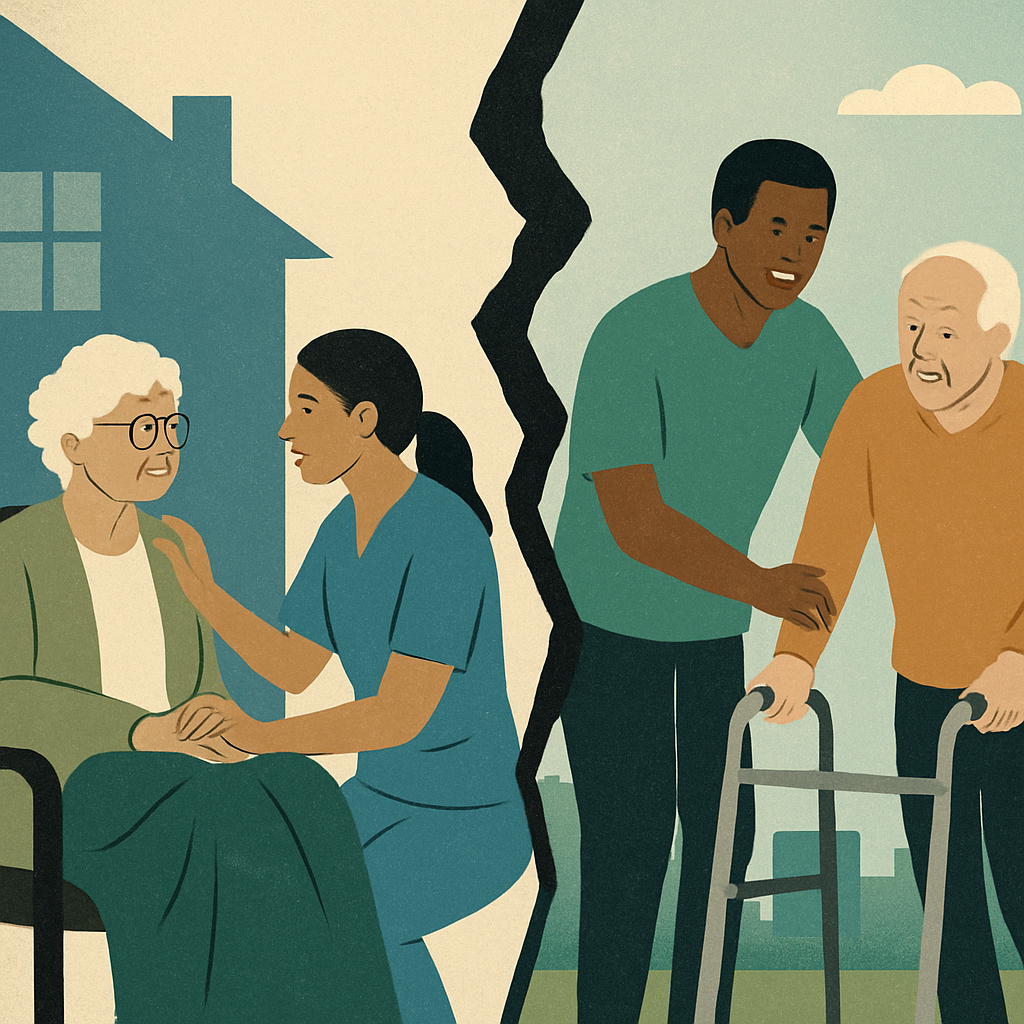
The Hidden Gaps in Toronto Home Health Care — and How Community-Based Providers Are Filling Them
Toronto is under growing pressure to keep people safely at home, yet families and discharge planners repeatedly run into holes when care needs spike or hospital stays end. This article examines the hidden gaps in home health Toronto — from fragile hospital-to-home transitions and uneven palliative access to missing nonmedical supports and staffing continuity issues — and shows how community-based providers are closing those gaps with practical, operational approaches. You will get concrete examples, a usable checklist for discharge and provider selection, and the specific questions to ask when arranging in-home care.
Toronto home health landscape and who provides services
Straight fact: the Toronto home health market is an overlapping web of publicly funded case management, private community agencies and hospital/primary-care teams — and that overlap is where most friction and opportunity live. Public referrals via Home and Community Care Support Services (HCCSS) set clinical priorities, but many day-to-day needs are fulfilled by private or community providers working in parallel.
Who does what — the practical division of labour
The formal players: HCCSS handles eligibility assessments and publicly funded nursing and PSW hours; hospitals and discharge planners trigger referrals; primary care and community health centres provide medical follow-up and some allied health. Community-based agencies supply the bulk of in-home delivery — everything from PSWs and companion care to private nursing services and rehab at home.
- Public gatekeeper: HCCSS / Healthcare at Home Toronto Central — prioritizes high-acuity needs and funds approved visits.
- Large private/community agencies: Examples include Cedar Home Health Care (Cedar Home Health Care), Bayshore HealthCare, ParaMed and Saint Elizabeth — they operate both private-pay and HCCSS-contracted programs.
- Niche providers: Home Instead and smaller local teams focus on companionship, dementia supports and live-in caregivers.
- Clinical partners: Family physicians, hospital-based transitional care teams and hospice services supply clinical oversight and specialist palliative links (see Ontario Home Care).
Funding mix matters. Home health Toronto looks different depending on who pays. HCCSS funding is targeted and means-tested; Passport and other program envelopes cover specific populations; private pay fills timing and service gaps. The trade-off is predictable: lower out-of-pocket cost through HCCSS equals less flexible timing and narrower service scope; private pay buys speed, continuity and broader non-medical supports.
Practical consideration: continuity of clinical oversight is uneven. Not all agencies guarantee RN or RPN supervision of PSWs, and record-sharing between HCCSS and private providers is minimal unless the family forces coordination. Ask providers explicitly how they document care and share updates with the HCCSS case manager and primary physician.
Concrete example: A 78-year-old discharged after hip replacement may receive an HCCSS referral but no immediate home nursing. A community provider such as Cedar Home Health Care can be engaged privately to provide an RN visit within 24 hours for wound assessment and medication reconciliation, followed by scheduled PSW shifts while the HCCSS allocation is processed — preventing missed doses and keeping the patient mobile during the funding lag.
Judgment you need: not every family must pay privately, but expect to top up when timing or non-medical needs matter. The best outcomes come from agencies that do three things well: rapid-start clinical response, documented escalation pathways with HCCSS/hospitals, and consistent caregiver assignment. Those operational practices cut readmissions in ways that marketing claims do not.

Gap 1: Hospital-to-home transitions and post-surgery support failures
Discharge often transfers responsibility, not care. Hospitals discharge patients faster than they did a decade ago; that improves throughput but shifts clinical risk into homes that may not be prepared for timely follow-up.
The practical failure looks like this: no confirmed RN visit, medication reconciliation left to the family, supplies missing for wound care, and PSW visits scheduled days later. That gap increases readmission risk and drives emergency visits that could have been prevented with an early clinical check. Public Home and Community Care Support Services (HCCSS) triage by priority and region; ask about timelines at Healthcare at Home Toronto Central.
What goes wrong and why it matters
Missed early clinical intervention. Post-surgical problems — bleeding, wound dehiscence, uncontrolled pain, or medication errors — present in the first 48 to 72 hours. If an RN is not on-site within that window, simple complications escalate.
Operational fragmentation. HCCSS, the discharging team and private providers often operate with different notes and phone trees. Rapid-start private care can close the gap, but without shared documentation the same problems reappear when HCCSS services arrive.
Workforce trade-off. You can get speed or continuity, rarely both. Private community providers in Toronto frequently offer fast-start RN visits; maintaining the same PSW across shifts is harder because of staffing shortages and casual scheduling models.
Concrete Example: A 72-year-old discharged after hip replacement had no RN scheduled. The family noticed increasing wound drainage on day two and drove to the ER. A community provider arranged an RN visit within 24 hours, provided daily wound care, and deployed a PSW for mobility assistance while coordinating with the surgeon — avoiding a second admission. See practical post-surgery roles in When to Hire a Home Nurse.
- Quick indicator — scheduled clinical contact: Was an RN or RPN visit scheduled within 24 to 72 hours of discharge? If not, escalate.
- Medication reconciliation confirmed: Are medications and dosages written down and reconciled with hospital prescriptions?
- Wound supplies and instructions: Are dressings, a written wound-care plan and a documented escalation contact provided?
- Single point of contact: Is there a named coordinator (HCCSS case manager or private care lead) with phone hours and an after-hours escalation path?
Practical trade-off families must choose. Paying privately buys speed and often a bundled RN + PSW start, but it costs money and can duplicate services later billed to public programs. Relying on HCCSS reduces out-of-pocket cost but can mean slower starts and variable after-hours coverage.
What works in practice. The most reliable model I see in Toronto is a short private rapid-start package: an RN visit within 24 hours, clear wound and medication documentation handed to the family and HCCSS, then a planned warm handover when public services begin. Insist on written handover notes — verbal assurances alone fail in real-world shifts and weekends.
Next consideration: If the hospital cannot guarantee timely clinical follow-up, ask the discharge planner to document that limitation and arrange a private community provider to bridge the 48 to 72-hour gap while you pursue publicly funded services through Ontario Home Care or HCCSS.
Gap 2: Uneven access to timely palliative home care
Uneven availability is the core problem. In Toronto some neighbourhoods and referral streams get rapid palliative support; others face waitlists, limited after-hours clinical cover and transfers to hospital because symptom control could not be arranged at home. This is not a paperwork issue only — it is a practical capacity and coordination failure that raises distress for families and increases emergency visits.
Specific barriers you will see in practice. Public referrals through Home and Community Care Support Services are subject to triage and regional capacity, so medically complex needs requiring frequent RN titration or immediate opioid adjustments often wait. After-hours nursing coverage is inconsistent across providers, and many public packages focus on personal care tasks rather than clinical symptom management. Families therefore face the tradeoff of waiting for funded supports or paying privately for rapid clinical care.
How community providers fill the gap
- Rapid clinical start-up: private community teams commonly arrange an RN visit within 24 to 48 hours for assessment and standing-order medication titration, reducing the risk of a crisis.
- 24/7 escalation and on-call nursing: some agencies partner with palliative physicians or hospice services to provide clinical advice overnight so families are not forced into the ED for symptom control. See Hospice Palliative Care Ontario for community standards.
- Family education and caregiver coaching: targeted training on syringe pumps, PRN meds and anticipatory guidance so family caregivers can manage symptoms between visits.
- Blended coordination with HCCSS: effective agencies document shared care notes and contact HCCSS to fast-track funded packages when appropriate, avoiding duplicate assessments.
Concrete example: A person with advanced lung cancer was discharged with escalating breathlessness and night-time agitation. A community provider arranged an RN visit the same day, initiated PRN medications under an agreed protocol and set up overnight on-call coverage; the family avoided a return to the emergency department and the primary palliative team retained oversight. That practical sequence — same-day RN, standing orders, on-call backup — is what differentiates responsive community care from slower standard pathways.
Practical tradeoff to weigh. Paid rapid-start home nursing buys time and clinical stability but costs more than waiting for publicly funded HCCSS services. For many families the right choice is a short-term private bridge while HCCSS mobilizes a funded package. Expect providers to be transparent about hourly rates, RN involvement and potential overlap with HCCSS funding.
Questions to ask when you need palliative care at home
- When can you start? ask for the earliest RN visit in hours and whether same-day assessment is possible.
- Who provides clinical oversight? confirm RN or RPN supervision and how the agency escalates to a palliative physician.
- What after-hours arrangements exist? get explicit response times and who will authorize medication changes overnight.
- What training and supports for family? request a copy of the caregiver coaching plan and practical demos for PRN meds or equipment.
- How will you coordinate with HCCSS and the primary palliative team? insist on shared documentation and a named contact.
Important: Timeliness matters more than brand. A local agency that can send an experienced home nursing team within 24 to 48 hours will prevent most crisis-driven hospital returns even if the arrangement is short term.
Takeaway: decide quickly whether speed or cost is the priority, secure written RN-led escalation, and use a short private bridge when necessary to avoid preventable ED visits.
Gap 3: Non-medical needs and social isolation are under-addressed
Non-medical supports are not optional extras — they are safety and recovery levers that the system routinely under-resources. Public home health models in Toronto prioritize clinical tasks like wound care and medication administration, leaving companionship, homemaking and community navigation as limited add-ons or private-pay items.
What gets missed and why it matters
Practical consequence: Limited companionship and light housekeeping lead to missed medications, poor nutrition, reduced mobility and faster functional decline, which increase hospital use.** These are predictable, preventable pathways that clinical-only plans do not close.
- Medication adherence gap: Short clinical visits do not catch missed doses that happen between visits.
- Nutrition and shopping gap: No grocery or meal support increases malnutrition risk even when a clinical plan is otherwise adequate.
- Falls and environment gap: Clutter, unpaid minor repairs and inadequate cleaning raise fall risk but are not covered by standard clinical visits.
- Social isolation and mental health: Loneliness worsens cognition, increases anxiety and reduces engagement with rehabilitation.
Tradeoff to face: Community providers can deliver companionship and homemaking quickly, but that speed usually comes as private pay or through limited Passport or municipal programs.** Families must weigh immediate safety and mental health benefits against out of pocket cost and decide whether to fund a blended package while waiting for HCCSS changes.
Concrete example: In cases Cedar Home Health Care manages, an 82 year old client discharged after a minor stroke had scheduled HCCSS PSW visits for bathing and feeding but no companion time. Over two weeks the client skipped meals, missed a dose of anticoagulant and became withdrawn. Cedar arranged companion visits three times a week plus a weekly homemaking shift and coordinated with the client family and the attending RN. The result was restored meal routine, reliable medication checks and a clear plan that reduced caregiver escalation calls.
How community providers integrate non-medical supports pragmatically
What works in practice is integration, not ad hoc delivery. Effective community-based packages pair companionship and homemaking with scheduled clinical check points, documented handovers to nurses and measurable goals for mobility and mood. Providers that simply add hours without coordination create duplication and gaps.
- Practical schedule examples: daily 15 minute check-ins for medication prompts; two 90 minute companionship shifts per week plus one 2 hour homemaking visit; weekly grocery pickup and medication packaging at each RN visit.
- Questions to ask providers: Do companion and homemaking notes feed into the clinical care plan? Who does handover to the RN? Can the agency help with Passport or private funding paperwork? See an overview of home aide roles at What to Expect from Home Aide Services.
- Limitation to monitor: Increasing non-medical hours reduces risk but will not replace skilled nursing when a clinical issue emerges. Ensure escalation paths are explicit.

Next consideration: At discharge, insist that social supports are listed as explicit care tasks with frequency and handover instructions; if the hospital or HCCSS do not commit, arrange short term community-funded companion or homemaking visits and make their notes part of the clinical record.
Gap 4: Workforce shortages, continuity and skill mix that disrupt care
Plain fact: in Toronto the staffing problem is not only how many caregivers exist but who shows up, how skilled they are for the task, and whether the schedule keeps them with the same client. When shifts are filled from a casual pool and RN oversight is intermittent, clinical signals are missed, medication schedules slip and family caregivers carry the coordination burden.
How the gap plays out day to day
Concrete example: A client discharged after a stroke required dysphagia monitoring and progressive mobility support. Multiple different PSWs rotated through short shifts without a documented handover, and the first sign of aspiration went unreported until a paramedic call. A community agency using a small team model stepped in, assigned a primary PSW with a trained backup, and had an RN visit twice weekly to review swallowing status and update the plan.
- High turnover: Frequent staff changes destroy informal memory about a client and increase errors during tasks like wound care and insulin administration.
- Casual scheduling: Apps that fill gaps fast reduce continuity because shifts are treated as fillable work rather than part of a care relationship.
- Weak skill mix: Relying solely on PSWs for clinically complex clients without scheduled RN or RPN oversight creates unsafe care gaps.
- Poor handovers: Electronic checklists without in-person or verbal handover miss subtle changes in behaviour, skin integrity and appetite.
Trade-off to accept: insistence on consistent caregivers costs more and limits the pool of available hours. Agencies that guarantee primary assignment typically charge higher rates or require longer block scheduling. That is a deliberate trade-off: you pay for continuity and reduced readmission risk, or you accept lower short-term cost with higher coordination risk.
What works in practice: community providers who actually reduce risk combine a primary-caregiver model with scheduled clinical oversight, competency-based training for PSWs, and documented warm handovers at every transition. These are operational practices, not marketing lines. See a practical description of provider roles and oversight at What a Home Health Care Provider Does.
- Ask about caregiver assignment: will you have a primary PSW and a named backup, and how is substitution handled?
- RN oversight frequency: how many scheduled RN or RPN visits per week, and can they change the care plan without waiting for HCCSS approval?
- Skill certification: do PSWs have training in wound care, dysphagia, lifts and transfers, dementia and palliative care; can the agency show competency records?
- Turnover metrics and orientation: what is the typical turnover rate and how long is the orientation/shadowing period before a caregiver goes solo?
- Escalation window: how long until an RN responds to a clinical concern after a PSW flags it?
If the client has complex clinical needs, prioritise guaranteed clinical oversight and a primary caregiver over cheapest-hour bidding platforms.
Practical next step: when arranging home health Toronto, ask a prospective agency for a sample care note and their handover checklist, and confirm in writing how they assign a primary PSW, how frequently an RN reviews the case, and how backups are trained. If public funding limits options, escalate to your HCCSS caseworker with these specific gaps and request a case conference or private rapid-start funding.
How community-based providers fill gaps in Toronto and practical models that work
Direct gap-closing is operational, not theoretical. In Toronto the difference between a safe discharge and a readmission often comes down to whether a community provider can start clinical care within 24 to 72 hours, coordinate with primary care and manage the social needs that HCCSS pathways do not reliably cover. Community providers are the practical bridge — they accept short-notice referrals, deliver combined clinical and non-medical supports, and run escalation processes that most public pathways lack.
Practical models that consistently work in Toronto
- Rapid-response post-discharge teams: small multidisciplinary squads (RN + PSW) that can start within 24 hours for privately arranged care and within 72 hours when coordinated with HCCSS. These teams focus on medication reconciliation, wound care and family training to prevent early complications.
- Integrated palliative pathway: scheduled RN symptom-checks, family education sessions, and an after-hours clinical line tied into hospice partners so patients have a single point of accountability for symptom escalation. See Hospice Palliative Care Ontario for pathway standards Hospice Palliative Care Ontario.
- Blended funding navigators: staff who manage HCCSS referrals, Passport applications and private-pay arrangements so funding gaps do not delay service start dates.
- Team-based continuity model: small, named caregiver teams with regular RN oversight and documented handovers to reduce turnover-induced errors and preserve relational continuity for dementia and complex chronic care.
- Medical-plus-social bundles: combined clinical visits with scheduled companionship, light housekeeping and transportation to reduce isolation and prevent avoidable ED use.
Trade-off to know: private rapid-start services plug timing and scope gaps but come with out-of-pocket cost and require families to verify documentation and insurance/Passport compatibility. Conversely, relying only on HCCSS minimizes direct cost but often means slower starts, limited non-medical hours and fragmented after-hours coverage.
Concrete Example: Cedar Home Health Care runs a post-surgery rapid-start workflow where a Registered Nurse attends within 24 hours to complete wound assessment, reconcile medications and train the family on dressing changes. That single early RN visit reduces confusion for PSWs who follow the daily care plan and cuts the usual phone-back-and-forth that causes delays and readmissions. See Cedar for details on when to hire a home nurse When to Hire a Home Nurse.
What actually works in practice: consistent short-team assignments plus documented escalation beats idealized staffing ratios. Put another way: a small, well-supervised team that knows one client is more effective than rotating staff with higher nominal hours but no continuity. Many families misunderstand that more hours equal better care; continuity and clinical oversight matter more for complex cases.
- Provider best-practice checklist: documented escalation pathway, shared electronic care notes accessible to HCCSS/hospital, named caregiver assignment, scheduled RN reviews, family training session on day 1, Passport and funding navigation support.
- Operational metric to demand: time-to-first-RN-visit (aim 24–72 hours), percentage of shifts covered by primary caregiver, and documented handover completion rate.
If you need immediate options, ask any prospective provider about their rapid-start workflow, their RN escalation line and whether they will actively manage HCCSS or Passport paperwork. Those three operational capabilities separate useful community providers from well-meaning but ineffective ones.