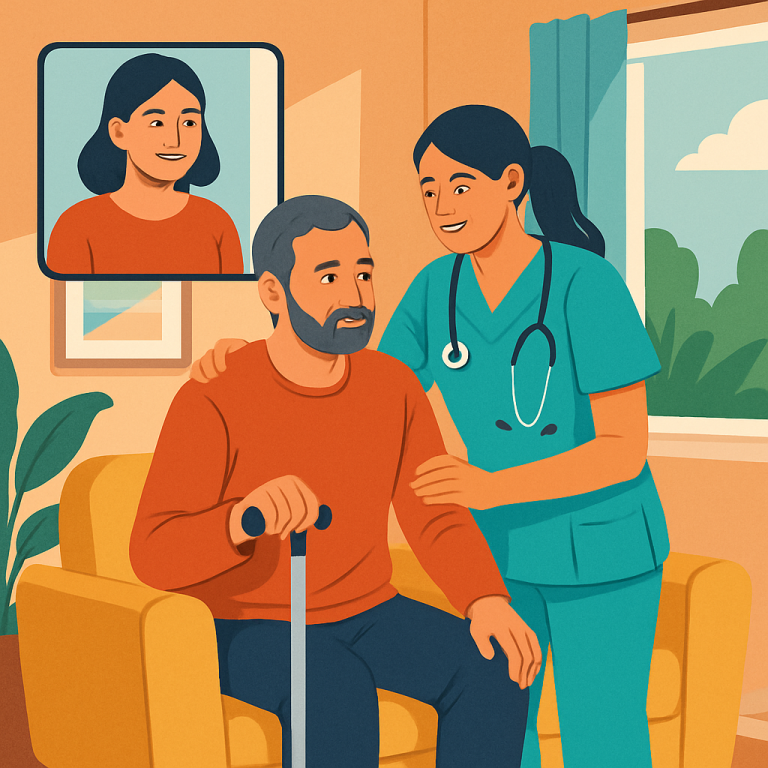

Health Care at Home: How Home-Based Medical Services Improve Outcomes
Health care at home delivers skilled nursing, therapy and personal supports that reduce hospital use, improve symptom control, and keep people safer and more comfortable in familiar surroundings. Drawing on Canadian evidence and Ontario-specific referral and funding pathways, this article shows which medical services can be delivered safely at home, how outcomes compare with facility care, and what families and clinicians should expect. You will get practical steps to plan or commission home-based care, a staffing and technology playbook for safe delivery, and checklists to help choose and monitor high-quality providers.
Evidence that home-based medical services improve clinical outcomes in Canada
Direct evidence: Canadian data and program evaluations consistently link well designed home-based medical services to measurable improvements in clinical outcomes, especially when care includes skilled nursing, clear clinical pathways, and multidisciplinary involvement.
What the Canadian data and program evaluations show
National trend and data sources: CIHI reports rising home care use and links stronger community supports to shorter hospital stays and fewer readmissions for selected conditions; Statistics Canada documents a growing preference for receiving care at home among seniors. See CIHI for home care data and trends: CIHI Home Care.
Measured outcomes: Evaluations of hospital at home and home palliative programs in Canada and comparable systems typically report reduced emergency department visits and lower 30-day readmission rates, improved symptom control in palliative cohorts, and higher patient and family satisfaction. In practice, many programs that combine RN oversight, scheduled home visits, and telehealth report reductions in readmissions and ED use often in the mid teens to mid twenties percent range, depending on case mix and program fidelity.
Trade off and limitation: The improvement is not automatic. Benefits depend on patient selection, staffing intensity, and reliable escalation pathways. High-acuity patients without rapid access to diagnostics or prompt escalation will not see the same gains, and poorly coordinated services can shift burden to unpaid caregivers.
Concrete example: A 78 year old patient discharged after heart failure decompensation receives daily RN visits for weight checks and medication titration, a PSW for ADL support, and twice weekly telehealth follow ups with their primary care provider. Over 30 days this package permits early detection of fluid accumulation, outpatient diuretic adjustment, and avoidance of one otherwise likely readmission.
What matters in practice: Programs that deliver measurable gains share three features – explicit clinical protocols for common conditions, integrated communication with hospital and primary care, and capacity for same day clinical escalation. Adding remote patient monitoring and structured caregiver support amplifies effects but requires investment and clear roles.

Next consideration: When planning or commissioning services, match the evidence to the target population and build the staffing and communication processes that produced the gains in evaluations; the next section maps services to specific clinical use cases.
Clinical services deliverable at home and their typical outcomes
Direct point: A wide range of clinical services that used to require inpatient stays can be delivered safely at home when a multidisciplinary plan, appropriate equipment, and clear escalation paths are in place. These services produce measurable reductions in length of stay, emergency visits, and complication rates for selected patients — but only when delivery matches clinical complexity.
Common clinical services and expected outcomes
- Skilled nursing (wound care, IV antibiotics, ostomy): earlier discharge, lower wound complication rates, faster dressing changes and teaching to family caregivers.
- Chronic disease management at home (heart failure, COPD, diabetes): fewer 30-day readmissions and ED visits when combined with medication titration and scheduled monitoring.
- In-home therapy services (physio, occupational therapy, speech): improved functional recovery and reduced need for institutional rehab stays.
- Palliative care at home: better symptom control, fewer inpatient days at end of life, higher family satisfaction when multidisciplinary teams coordinate advanced care planning.
- Post-operative care at home: wound checks, pain management, and mobility support that lower postoperative ED visits and speed return to baseline function.
- Remote patient monitoring and telehealth services at home: early detection of deterioration (weight, SpO2, BP), enabling rapid outpatient intervention and preventing some admissions.
- Home health aides and senior home care (ADL support, medication prompting): reduced functional decline and caregiver burden when paired with clinical visits.
- Private duty nursing/domiciliary care for high-acuity patients: continuity of skilled nursing for complex IV therapies or tracheostomy care that otherwise require institutional support.
Practical limitation: Not every patient is a good fit. Home delivery relies on a suitable physical environment, reliable caregiver support or paid attendants, and timely access to supplies and labs. In rural Ontario, travel times and staffing shortages can blunt the expected outcome gains unless the program budgets for mobile capacity or telehealth backup.
Concrete example: A 78-year-old with decompensated heart failure discharged after stabilization receives daily RN visits for diuretic titration, home weight monitoring with remote transmission, and a virtual cardiology check at day 3. The combination of medication adjustment and RPM stabilizes volume status and avoids a likely readmission, while the family receives explicit escalation instructions.
Judgment that matters: Home-based care works best when clinical tasks are bundled, not delivered in isolation. Splitting responsibilities across disconnected providers erodes outcomes. Choose providers who document care in shared plans, use photo-based wound follow-up, and have predefined escalation protocols linked to emergency services or the primary care team.
Cedar Home Health Care model in practice: services, team, and client pathways
What the model does: Cedar Home Health Care combines skilled nursing and personal supports so clinically complex care can happen safely in the home. The core team mix is Registered Nurses (RN), Registered Practical Nurses (RPN), Personal Support Workers (PSW), and trained caregivers who deliver wound care, medication management, post-surgical nursing, palliative visits, companionship, and light housekeeping. See what a home health agency typically provides in more detail at What a Home Health Agency Does.
Intake and referral pathways
Referral sources and first steps: Clients arrive through hospital discharge planners, primary care referrals, Home and Community Care Support Services Ontario assessments, or private requests. Intake begins with a clinical assessment, medication reconciliation, and a home safety check to identify equipment needs. For Ontario-specific navigation, Cedar supports clients through public referral routes and Passport funding applications; more on accessing care is here: Home and Community Care Support Services Ontario and Understanding Home Health.
- Typical intake steps: RN assessment, baseline vitals and wound photos, falls and environment risk screen.
- Care plan creation: schedule of RN/RPN/PSW visits, telehealth check-ins, equipment and pharmacy coordination.
- Escalation protocol: clear criteria for when to notify primary care, return to hospital, or increase visit frequency.
Practical trade-off: High-frequency skilled visits reduce readmission risk but raise cost and staffing complexity. Public funding can limit visit frequency or introduce wait times; private pay shortens start time and increases flexibility. In practice, the right answer balances clinical risk, caregiver capacity, and how quickly care must start.
Concrete use case
Concrete example: An Ontario 75-year-old discharged after hip replacement receives daily RN wound checks and medication review for the first 7 days, RPN visits every second day for injections and clinical monitoring, and twice-daily PSW support for transfers and personal care. Telehealth check-ins occur on alternate days so the RN can triage drainage changes; equipment delivery (raised toilet, walker) is coordinated during intake and Passport funding assistance is initiated if the family is eligible.
Operational judgment: Remote monitoring and telehealth are useful for vitals and early symptom detection but cannot replace hands-on tasks such as wound dressing changes, IV therapy, or safe transfer assistance. Teams that under-resource in-person nursing visits and rely heavily on virtual checks increase risk of missed deterioration.
Communication workflow that works: Shared care plans and a single escalation phone line reduce fragmentation. Cedar aims to send visit notes to the primary clinician and discharge planner within 24 hours so medication changes and wound status are tracked. If you are a discharge planner, insist on a documented escalation pathway and a named RN contact before discharge.
Next consideration: Decide the funding pathway and immediate staffing intensity based on clinical risk and caregiver capacity before finalizing the care plan.
Operational design for safe, effective home-based medical care
Start from the failure points, not the ideal schedule. Most operational problems in health care at home come from unclear escalation pathways, brittle staffing rosters, and assumptions that a fixed once-daily visit will catch deterioration. Design operations around predictable risks (medication errors, falls, wound issues) and the rare-but-critical events you must respond to within hours.
Care pathways, intake, and documentation
Standardize intake to prevent variation. Use a documented intake checklist that includes medication reconciliation, cognitive screen, mobility and falls risk, caregiver capacity, home hazards, and advance care wishes. Link that checklist to a one-page care plan that is visible to everyone on the team and to the primary clinician—use Home and Community Care Support Services Ontario referral details when coordinating public funding.
Practical trade-off: a longer intake catches more risk but delays service start. Triage: perform a rapid safety screen to allow immediate essential visits, then complete the full assessment within 48–72 hours.
Staffing, visit protocols, and escalation
| Use case | Typical staffing mix | Initial visit frequency | Escalation trigger |
|---|---|---|---|
| Heart failure with recent diuretic change | RN lead + RPN support + PSW for ADLs | RN visit 2–3× week, daily weight checks by patient/PSW, telehealth 1–2× week | Weight gain >2 kg in 48 hrs or urine output fall |
| Wound care (post-op or chronic) | RPN or RN wound specialist + PSW for dressing prep | RN/RPN every 48–72 hrs until stable; PSW daily as needed | Increased pain, spreading erythema, fever |
| Palliative symptom control | RN + PSW + access to palliative MD | RN visits daily or PRN; 24/7 phone support | Uncontrolled pain or respiratory distress |
Judgment call: prefer an RN-led plan for unstable medical problems. RPNs and PSWs extend capacity, but the RN must own clinical escalation and medication adjustments.
- Telehealth integration: use scheduled virtual check-ins for medication titration and early signs review; never replace first post-discharge assessment with a video call unless safety screen is passed.
- Supply logistics: maintain a meds and wound supply list on intake and a rapid resupply pathway with your pharmacy to avoid care interruptions.
- Training and simulation: run monthly clinical scenario drills (IV complication, sepsis flag, uncontrolled pain) so staff recognize thresholds and practice the escalation script.
Concrete example: A 68-year-old with CHF is discharged with a new diuretic. The home program deploys an RN for a same-day visit to reconcile meds and confirm home scale use, schedules daily weight submissions via phone or telehealth, and sets an escalation rule: a 48-hour weight gain of 2 kg triggers an RN assessment within 4 hours and a physician call within 8 hours. This prevented one readmission in our local pilot where early diuretic adjustment reversed fluid gain.
Operational rule of thumb: every clinically complex client needs a documented escalation plan, a 24–72 hour full assessment window, and an identified clinician accountable for rapid response.

Next consideration: once these operational foundations are in place, measure adherence and response times—not just outcomes. If your team cannot consistently meet the documented escalation SLA, the clinical model is unsafe and must be reconfigured before expanding caseloads.
Measuring outcomes: KPIs and quality indicators to track
Start with a small, high-value set of KPIs. Too many indicators dilute focus and create reporting burden for clinicians and caregivers. For most Ontario home-based programs prioritize measures that signal safety, clinical effectiveness, and system use: 30-day hospital readmissions, emergency department visits per 1,000 client days, response time to urgent requests, wound-healing rate, and caregiver strain.
Practical tradeoff: administrative ease versus clinical relevance.** Administrative data easily gives you readmissions and ED visits but misses symptom control, medication errors, and caregiver burden. Collecting patient-reported outcomes requires effort but changes care faster than waiting for readmission signals.
Which KPIs to track and why
| KPI | Definition / Numerator-Denominator | Source and Frequency | Practical target |
|---|---|---|---|
| 30-day hospital readmission rate | Number of clients readmitted within 30 days / discharges to home | Hospital discharge data; monthly | Reduce baseline by 10-20% in 6 months for selected cohorts |
| ED visits per 1,000 client days | ED visits from program clients / total client days x 1000 | Program incident reports + hospital feeds; monthly | Benchmark against provincial CIHI averages |
| Wound healing rate | Proportion of wounds closed or improved within X weeks | Point-of-care clinical documentation; weekly | 75% improvement within expected timeframe by wound type |
| Medication reconciliation completion | Med rec completed within 48 hours of intake / total intakes | Intake checklist; per admission | 100% completion for clinical cases |
| Caregiver Strain Index | Percent of caregivers with high strain scores | Validated survey at intake and monthly | Decrease high-strain prevalence by targeted interventions |
Concrete Example: A 75-year-old discharged after hip replacement is enrolled in a post-operative home-based program. Track adherence to planned RN visits, wound-healing progress at day 7 and 14, medication reconciliation done within 24 hours, and any ED visits within 30 days. Weekly run-chart review of these KPIs allowed the team to catch two wound infections early and avoid admission.
- Operational metrics to monitor weekly: visit completion rate, urgent call response time, supply availability
- Clinical metrics to review monthly: readmissions, wound outcomes, medication errors
- Strategic metrics quarterly: patient reported outcome trends, caregiver strain trajectory, cost per client day
Measurement pitfalls to avoid. Small caseloads make percentage swings look dramatic – use rolling averages or per 1,000 client days. Dont over-index on readmissions as the only success metric – fast response times and problem resolution at home are where home-based care actually prevents escalation.
Final judgment: Good measurement is operational, not academic. Track a few reliable signals you can act on within 48 hours. If a KPI points to a problem, have a defined escalation path to clinicians and Home and Community Care Support Services Ontario so issues are fixed, not just recorded. For practical guidance on roles in the home team see What a Home Health Care Provider Does.
Funding, referral, and access pathways in Ontario
Direct fact: In Ontario most publicly funded skilled home care is arranged through Home and Community Care Support Services Ontario (HCCSS) and requires a formal referral and eligibility assessment; private-pay services operate alongside public programs to fill timing or scope gaps. Knowing which route fits a patient — public, private, or blended — is the single most important access decision you will make.
How public referrals work and what they cover
Process: A hospital discharge planner, physician, nurse practitioner, or the patient/family can request a referral to HCCSS; the service conducts an intake, verifies OHIP eligibility, completes a standardized assessment, and assigns services based on clinical need and local capacity. Public funding typically covers clinically necessary nursing, personal support, and therapy services within program rules — not flexible scheduling or boutique add-ons.
Limitation to plan for: Regional variation and wait times are real. HCCSS programs follow provincial rules but local capacity dictates when in-home nursing or frequent visits are available. If you need same-day or evening coverage, plan for a private provider or a short-term commercial arrangement while the public process completes.
Private-pay, Passport funding, and blended approaches
Trade-off: Private-pay home medical care buys speed, scheduling flexibility, and broader service options (for example, extended companionship or private-duty nursing), but costs add up quickly. Passport funding exists for eligible developmental-services clients and can be part of a funding mix; it is not a substitute for standard senior home care funding.
- What public covers: clinically necessary RN/RPN nursing, PSW personal support, some therapies when assessed by HCCSS.
- What private covers: rapid-start skilled nursing, private duty nursing for complex needs, extended hours, housekeeping and companionship beyond publicly funded scope.
- Coordination point: always register the public referral even if you hire private support — it prevents duplication and preserves eligibility for long-term funded services.
Concrete example: A 78-year-old discharged after a heart failure admission needs daily diuretic titration and medication reconciliation. The discharge planner submits a HCCSS referral for ongoing monitoring, but the family hires a private nurse for the first 7 days to manage rapid adjustments and avoid readmission. Once HCCSS completes assessment, the private nurse hands over care to the funded team with shared documentation.
Practical insight: Ask your hospital case manager to include a concise clinical referral note, a 24–48 hour risk summary, and an up-to-date medication list with any devices or wounds documented. That short packet speeds assessment and raises the chance of immediate skilled visits being approved.
Next consideration: If you need a quick primer on when to bring a private nurse into this mix, see Cedar Home Health Care’s guide on When to Hire a Home Nurse: Signs, Responsibilities, and How to Prepare. For official referral steps and eligibility details, start with Home and Community Care Support Services Ontario.
Checklist for clinicians, discharge planners, and caregivers to implement home-based care safely
Start with a clear, time-bound plan. Every successful transition to health care at home begins with a discharge packet that sets responsibility, timelines, and escalation steps — not a vague referral. Include a reconciled medication list, wound photos or descriptions, mobility and transfer limits, oxygen or equipment settings, a named primary clinician, and a best-contact phone for 24/7 escalation.
For clinicians and discharge planners
- Suitability checklist: document clinical stability criteria (vitals trends, pain controlled on oral meds, IV requirements clarified) and social supports available at home.
- Required documentation at discharge: medication reconciliation, latest labs or imaging summary, wound care orders with dressing frequency, goals of care note, and an explicit follow-up plan.
- First-contact timing: arrange an RN assessment within 24 hours of discharge and a nursing or PSW visit within 48 hours for higher-risk patients — this reduces early readmissions.
- Escalation pathway: name the on-call clinician, specify thresholds for ED transfer (e.g., new hypotension, progressive hypoxia), and ensure the caregiver has a laminated action card.
- Telehealth plan: set up at least one scheduled virtual check within 48–72 hours and confirm the patient or caregiver can use the platform.
For family caregivers
- Home safety quick-check: clear pathways, remove rugs, confirm transfer aids and grab-bars, and position frequently used items within reach.
- Medication routine: keep a printed medication chart, use blister packs if available, and confirm who will administer controlled medications and sharps disposal.
- When to call: memorize three clear triggers for immediate escalation and practise a mock call so the caregiver knows who answers and what info to give.
- Caregiver support plan: schedule at least one block of planned respite in the first two weeks and ask the provider for a caregiver education session on wound care or devices.
Practical trade-off to accept: higher-visit intensity early reduces complications but increases cost and caregiver disruption; plan front-loaded support (daily nursing for 48–72 hours) then step down as stability is proven.
Concrete example: A 68-year-old with a post-operative wound is discharged with RN visits first 3 days, PSW twice daily for ADLs, and a telehealth wound review on day 5. The RN documents wound measurements and sends images to the surgeon, avoiding an unnecessary clinic return and catching early cellulitis treated at home.
Common mistake: assuming the home is inherently safe. Equipment, infection control, and caregiver competency must be verified before you reduce intensity.
If you need templates or caregiver training material, see Cedar Home Health Care resources on when to hire a home nurse and home aide services. For formal referrals and eligibility details, link to Home and Community Care Support Services Ontario at Home and Community Care Support Services Ontario.